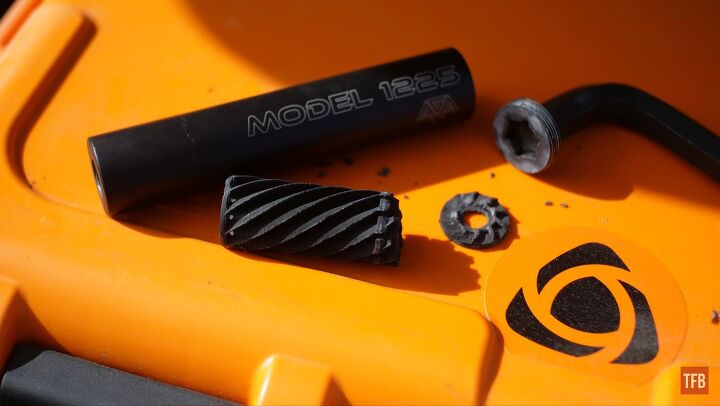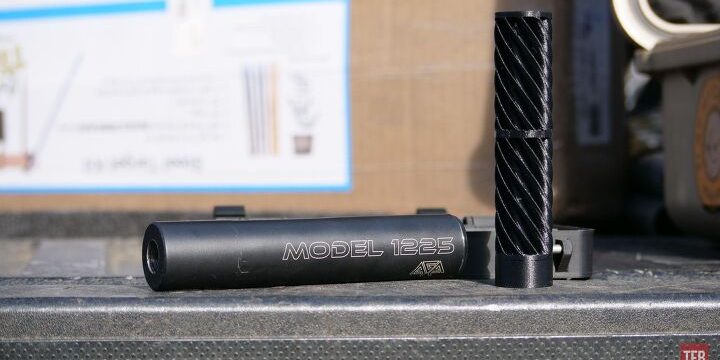
Rimfire suppressors have traditionally been relatively expensive compared to the firearms they’re mounted on and the ammo that is shot through them. The idea of a cheap, 3D printed polymer suppressor is not a new one, but Shift Zer0 Ballistics (operating under their former Zer0 and Sons name) is testing a still-affordable, yet hybrid alternative with the Model 1225: an aluminum outer tube suppressor that uses a replaceable 3D printed polymer stack as its core. Priced at an MSRP of around $300, the 1225 attempts to solve the biggest barriers to rimfire suppression: the upfront cost, and the subsequent servicing/repairs should they be damaged. By making the internal suppression stack a consumable item that can be replaced for free by the manufacturer or printed at home by the owner, James and Shift Zer0 Ballistics hope to change the way end-users look at cheap 3D printed suppressors.
More Rimfire Report @ TFB:
Overview / Specs
Product Link: https://shiftzer0ballistics.com/suppressors/model-1225/
- Manufacturer: Shift Zer0 Ballistics (Mine currently has Zer0 and Sons branding)
- Model: 1225
- Caliber: .22LR (dedicated rimfire suppressor, not rated for higher-pressure cartridges such as 5.7×28)
- Dimensions: 1 inch diameter × 5 inches overall length
- Construction: Aluminum outer tube with user-replaceable 3D printed polymer stack (PA6, PET-GF, or PA12CF)
- Mount: Direct thread 1/2×28
- Weight: Not publicly specified
- Core Concept: Hybrid metal/polymer design where the internal stack is treated as a wear item. The manufacturer offers lifetime free stack replacements (customer pays shipping). Owners can legally print their own replacements subject to NFA rules.
- Price: $250 (current listed price as of writing)
The 1225 is clearly aimed at casual plinking and light varminting rather than high-volume or hard-use applications. It is a regulated NFA item requiring a tax stamp, but thanks to recent legislation that passed, the cost of the stamp is now $0; the paperwork still needs to be filled out and filed.
Suppression Effectiveness
When the core is fresh and using subsonic .22LR ammunition, the Model 1225 produces a decently quiet report in my testing across my Frankenstein 10/22, Sig P322, and S&W M&P 22X, which is the firearm I settled on for the majority of my testing.
The suppression quality starts good while the printed stack is intact, but declines as the polymer accumulates lead fouling and heat damage, which is accelerated if you’re like me and decide to run about 100 rounds through it back to back using high velocity bulk ammo. While we don’t have any independent laboratory decibel testing for this suppressor, I think the most reasonable performance you can expect from this suppressor is “hearing safe” but only when the core is new, and you’re shooting subsonic ammo through a relatively long barrel – bonus points if you’re using a bolt-action, which I think is what I’d likely keep this on if I didn’t want it to break so often.
I’ve noticed that as 3D printed rimfire suppressors have become more popular, they all share a major drawback, which is not often shared with most other 22LR suppressors – interior space. While the 3D printed core is quite complex and no doubt reroutes the expanding gases more effectively than a plain tube or bare muzzle, the sheer amount of material required to make the core even remotely durable takes up a lot of the empty space that metal suppressors would typically use for a blast chamber, or just empty space for the gases to expand into. This is something that metal 3D printed suppressors can circumvent simply by their more durable nature via the material, while still taking advantage of the complex geometries that 3D printing allows.
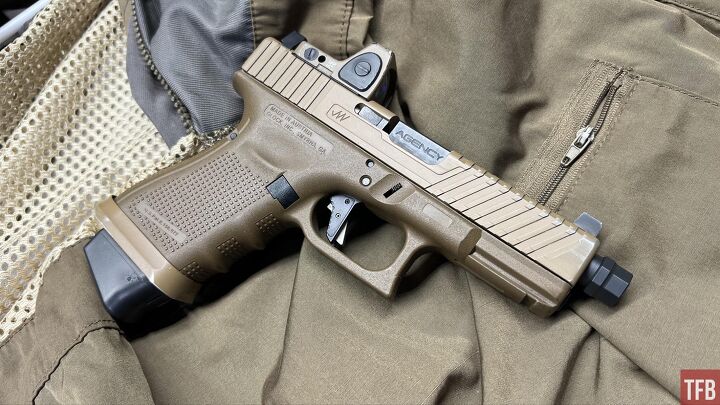
One final note on the shooting experience is that the suppressor overall remains relatively cool even after repeated magazines of fire. On the reverse side of that, I own 3D printed DMLS rimfire suppressors that heat up in just a handful of rounds and are hot to the touch.

Durability and Replacement

While it seems like less of a concern now with $0 tax stamps, durability in a suppressor, even a rimfire suppressor, is still one of the most critical aspects. In my testing, core replacements were regularly required, at least when using my homebrew PETG-CF cores. On that note, if you do happen to go the route of replacing your own baffles/cores, the ATF “allows” you to have only an exact replacement amount for the destroyed parts. The Model 1225 is really good about letting you know when the core needs replacement, as it either blows plastic confetti out of the front of the suppressor or has a sharp increase in the report from the suppressor.

Following James’s recommendation, the owner of Shift Zer0 Ballistics, I will be moving to PA12CF filament for replacement cores. James has told me that PA12CF delivers noticeably better print quality and cleaner parts than many of the other filaments he’s tested, and the resulting cores survive a basic “hit it with a ballpeen hammer” test reasonably well. PET-CF can be printed with the same settings, though it does not print as cleanly. While PA12 filament is more expensive, the improved results should be worth the added cost for both repeatability and durability. I now know he’s right because his 9mm “Rubato” core is holding up beautifully on my 9mm PCC even after about 300 rounds of rapid plinking and a few cheeky bump fires.

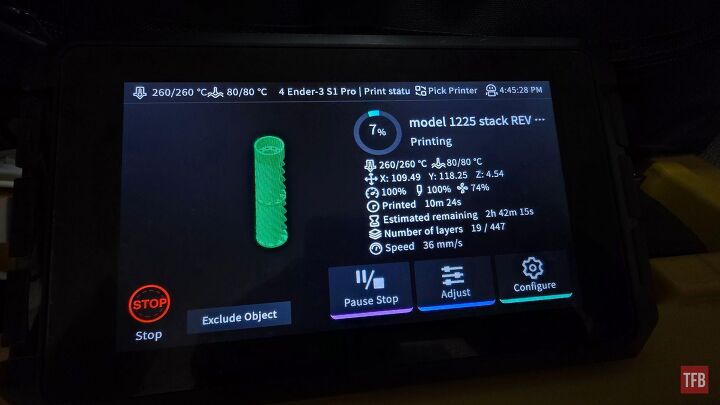
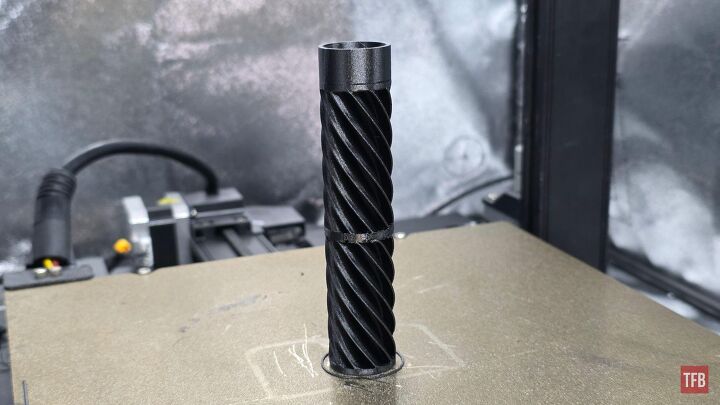
Back to the rimfire suppressor, after a few weeks of testing, I received a subtly updated 1225 stack design from James, scaled to fit the .900-inch bore of my test article. Changes include a 0.010-inch-thicker inner wall and one less baffle in the inner stack, which I think will help with the volume issue I mentioned earlier.
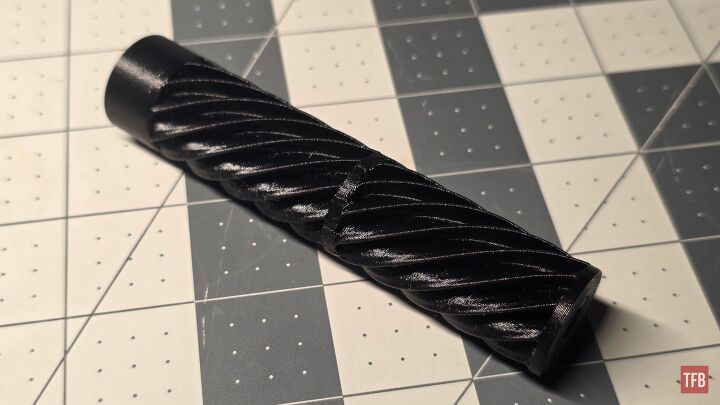
After printing is done, due to my lackluster print skills I had to ream out the center of the suppressor to eliminate any obstructions, and also did some light sanding of the overall length for proper fit since we are dealing with already tight tolerances, and an ever-increasing amount of fouling on the interior of the tube, which will constantly get worse until you clean it, which I suppose is another drawback you typically don’t have with metal suppressors and their tighter tolerances.
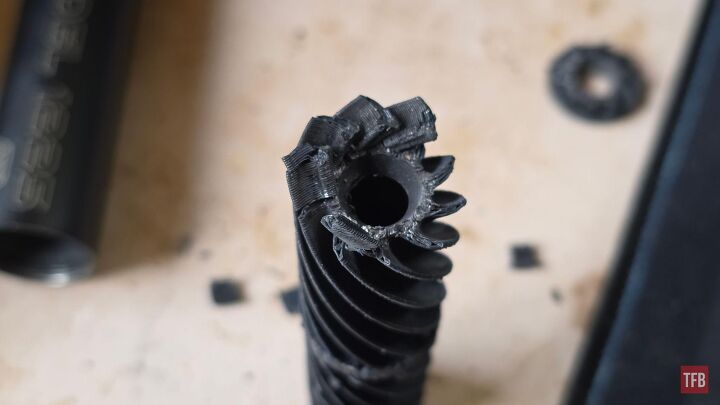
My early testing of the included PA12CF core showed core failure occurring around 200 rounds. I may have exacerbated this destruction of the first core by using high-velocity bulk ammo, which is typically neutered by pistol-length barrels, but when adding in the extra constraint of the suppressor, it seemed to deteriorate the relatively weak core quickly. The first core failure, like the others, was accompanied by the expulsion of polymer debris and a shower of plastic confetti. My own experience confirms that periodic core replacement is a normal part of ownership with the Model 1225 rather than an occasional repair or cleaning, like with a traditional suppressor, which makes it a shame that the ATF has barred us from having replacement parts on standby as regular citizens.
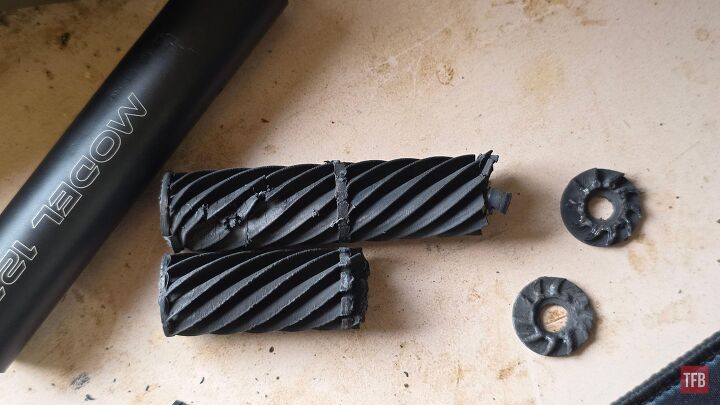
However, James has told me that he offers a manufacturer’s lifetime free replacement policy for failed cores. That, combined with the ability to print cores at home, keeps long-term costs very low, but it will certainly add up over time and likely wind up ultimately costing more than a cheap, far more durable all-aluminum suppressor.
Final Thoughts
So with all that in mind, do 3D printed rimfire suppressors make sense? Yes, but probably only for the right user. While 3D printed suppressors have been tried in the past, the Model 1225 gives the end user the ability to start with something that works, and then endlessly iterate on it to their heart’s content at home as they go through successes and failures of their own. While it’s less durable and practical than a traditional suppressor, it offers one of the lowest entry prices into suppressed .22LR shooting, delivers pleasant suppression when the core is fresh, and is likely perfect for the hobbyist 3D printing crowd, which also often intersects with the firearm crowd. Bottom line is that if you like to tinker and don’t have access to a lathe, but you do have a 3D printer, then this might be a fun partial DIY for you.
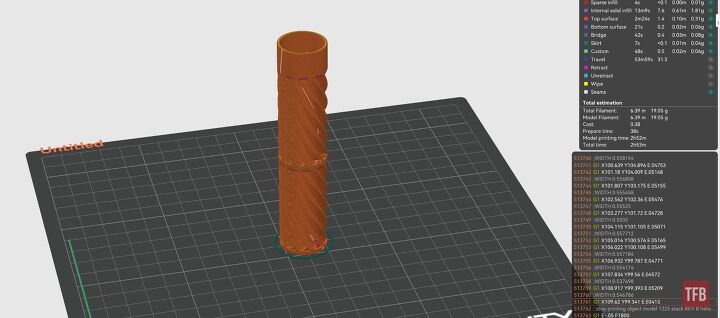
So while it has a low purchase price, a lightweight design, cross-platform consistency, and an convenient user-replaceable core system that turns what is usually an expensive repair into a 3-hour print, it’s current limitations like modest core durability (best suited for moderate round counts and sub-sonic or standard velocity ammo), lack of effective sound suppression, and the reality that the polymer stack will never match the longevity of traditional titanium or stainless monocores mean that I think this is more of a novelty rather than a hard-use suppressor – at least for now.
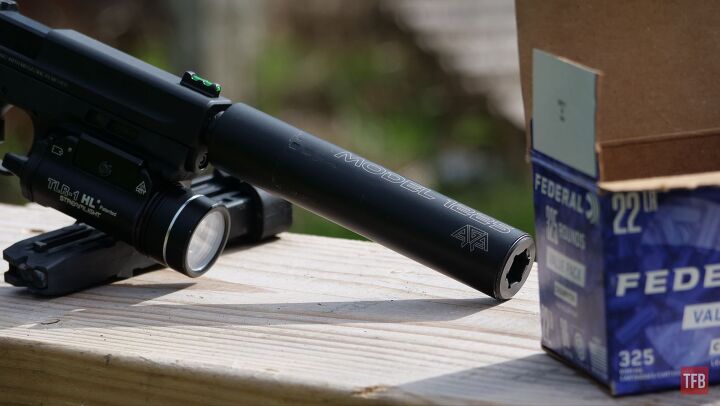
As more users test home-printed suppressor materials, cores, and maybe even suppressor bodies might start seeing better suppression and higher round counts before they start to fail. As a result, as is often the case in the firearms industry, the increased adoption and end-user testing of these types of suppressors and firearms components will just give us clearer data on whether this approach represents the future of affordable rimfire suppression or if material limitations will have it remain a niche solution in favor of metal materials.
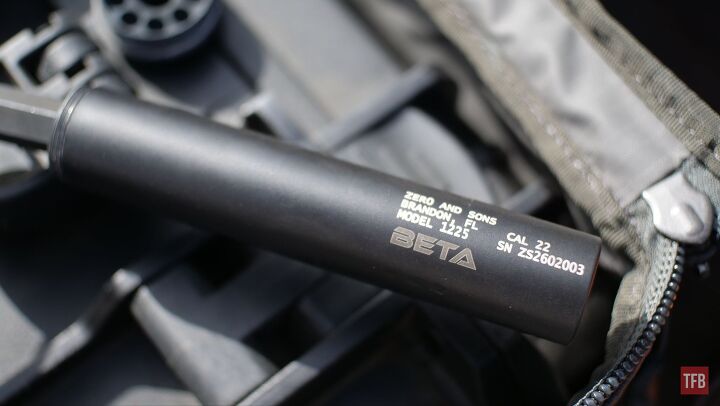
Either way, I’d love to hear your thoughts in the comments about this one. Do you think polymer 3D printed suppressors will ever have a permanent place in the rimfire suppressor world, or are they destined to be a footnote in suppressor history? Thanks as always for stopping by to read The Rimfire Report, and we’ll see you all again next week!