
What the sleep deprivation research actually shows about decision-making degradation, how rotating shifts disrupt circadian function in ways that compound over a career, and what the data says agencies and officers can do that is not just advice to sleep more.
Welcome back to Front Line Friday. This week is an editorial week, and the topic is fatigue: specifically, what the performance science says about how sleep deprivation and shift rotation affect the cognitive and physical capabilities of patrol officers, and how far the profession’s operational assumptions diverge from what the research actually shows. Law enforcement has a long tradition of treating fatigue as a character issue rather than a physiological one, and that framing has real operational and safety consequences. Front Line Friday is brought to you by Dead Air Silencers, whose support keeps this column going every week.
This is not a discussion of what to eat or how to manage shift discomfort. Week 13 already covered patrol car gear and sustenance habits, and this is not a repeat of that ground. This is about the underlying physiology of fatigue, what happens to decision-making and motor performance when that physiology is ignored, and which agencies structurally perpetuate conditions that make the problem worse than it has to be.
Front Line Friday @ TFB:
- Front Line Friday #15: Suppressor Review: Dead Air CT5P
- Front Line Friday #16: Body Armor Selection and Fit for Patrol
- Front Line Friday #17: Use of Force Documentation That Holds Up
- Front Line Friday #18: Patrol Boots and Foot Care Over a Career
What Sleep Deprivation Actually Does to Performance
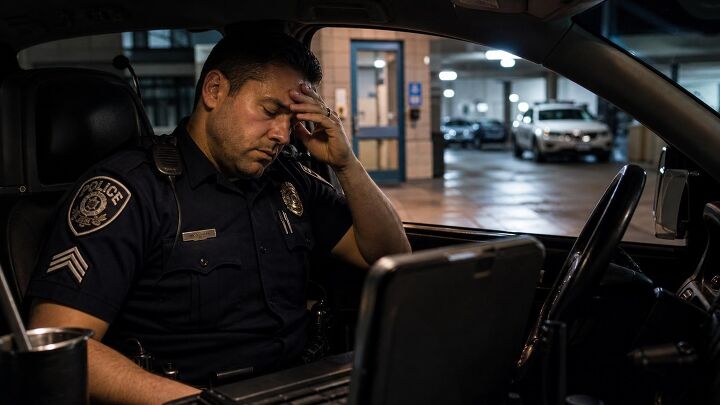
Research on sleep deprivation is unambiguous about the effects on human performance following extended wakefulness or insufficient sleep accumulation. After 17 to 19 hours of wakefulness, cognitive performance degrades to a level equivalent to a blood alcohol concentration of 0.05 percent. After 24 hours of wakefulness, the equivalence is roughly 0.10 percent, which exceeds the legal driving limit in every U.S. jurisdiction. An officer finishing a 12-hour night shift, already sleep-restricted from a previous day shift, is operating in that range, and the profession largely treats this as a scheduling reality rather than a safety concern.
The specific cognitive functions that degrade under sleep deprivation are not evenly distributed across mental tasks. Sustained attention, working memory, inhibitory control, and risk assessment are disproportionately affected relative to basic motor tasks and well-rehearsed procedural performance. That distribution matters specifically for patrol work. The tasks most degraded by fatigue are exactly the ones that matter most during threat assessment, use-of-force decision-making, and complex incident management. Driving a route and operating a radio on a routine call are largely preserved. Accurately reading ambiguous social situations, calibrating proportional responses under stress, and maintaining inhibitory control during extended interactions are not.
There is also a well-documented gap between subjective fatigue and objective performance. Research consistently shows that sleep-deprived individuals underestimate how impaired they are. An officer who reports feeling fine at hour fourteen of a shift is not necessarily fine in any functional sense. The subjective confidence is one of the insidious features of sleep deprivation rather than evidence against it. Agencies that rely on officer self-report as the primary gauge of fatigue-related fitness for duty are relying on an instrument that is systematically wrong in the direction that creates problems.
Rotating Shifts and Circadian Disruption
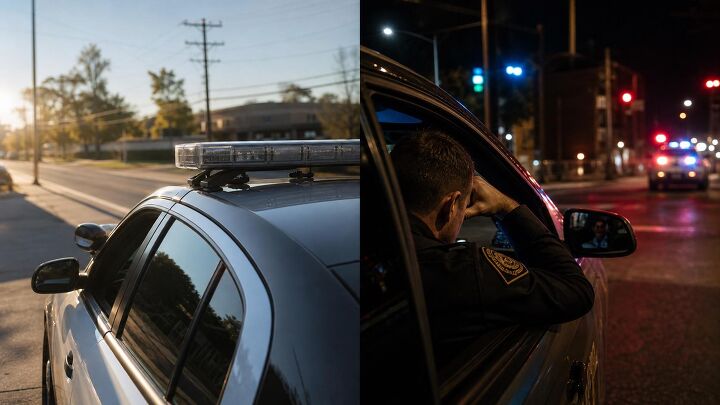
The human circadian system is not a flexible scheduling tool. It is a biological clock with a period of approximately 24 hours that regulates sleep-wake cycles, hormone release, body temperature, cardiovascular function, and immune response according to an internal schedule that was calibrated over evolutionary time to align with the light-dark cycle. Rotating shift work disrupts that system at a fundamental level, and the research on the health and performance consequences of chronic circadian disruption is unambiguous about direction: the effects are negative and cumulative.
Circadian disruption specifically impairs the quality of sleep achieved during off-hours recovery, not just the quantity. An officer who sleeps six hours in the afternoon after a night shift is not getting the same restorative sleep as an officer who sleeps six hours at night with circadian timing aligned. The slow-wave and REM sleep architecture that handles memory consolidation, emotional regulation, and physical recovery is less accessible when sleep timing conflicts with circadian phase. Patrol officers on rotating schedules are not just sleeping at inconvenient times. They are systematically getting lower-quality sleep per hour than their schedules appear to allow, which means the sleep debt accumulates faster than it appears to from the outside.
The research on fixed night shifts versus rotating shifts consistently shows that fixed shifts, even on the least socially convenient schedule, produce better cognitive performance and health outcomes than rotation. The body adapts poorly but consistently to a fixed schedule. It does not adapt to rotation at all in any meaningful biological sense. An officer on a rapidly rotating schedule is perpetually in a state of circadian disruption, with too few consecutive days on any single schedule for even partial adaptation. Many agencies rotate shifts on a weekly or bi-weekly basis, which is among the worst possible configurations from a circadian physiology standpoint, and it is common primarily because it distributes the social burden of night shifts more evenly across the workforce, not because it is better for performance or officer health.
Decision-Making Under Fatigue: The Operational Implications
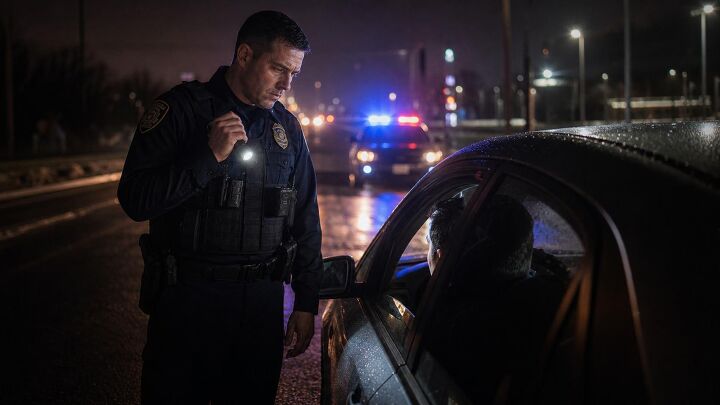
The connection between fatigue and use-of-force outcomes has been examined in law-enforcement-specific research, with consistent findings. Officer-involved shootings, vehicle pursuits with adverse outcomes, and use of force complaints are all elevated during the latter portion of extended shifts and during overnight hours, which correlates with both circadian low points and accumulated shift fatigue. The research does not establish simple causation because incidents during overnight hours also correlate with different call types and different environmental conditions. But the pattern is consistent across multiple studies and jurisdictions, and fatigue is a documented contributing factor, not just a coincidental one.
The specific mechanism is the degradation of inhibitory control. Inhibitory control is the cognitive function that suppresses prepotent but contextually inappropriate responses, meaning it is the mechanism that allows an officer not to escalate when an escalatory response is available but wrong. It is also the function most reliably degraded by sleep deprivation in laboratory research. An officer running on inadequate sleep is not operating with the same inhibitory capacity as when well-rested, and that difference is not visible from the outside and is not reliably detectable by the officer themselves.
The vehicle operation data is even cleaner. Drowsy driving research estimates that sleep deprivation is a contributing factor in approximately 20 percent of fatal motor vehicle crashes. Law enforcement officers drive significantly more miles annually than the general public, often at speed, often at night, often at circadian low points. The fatigue-related risk of vehicle crashes is not a minor occupational footnote. It is a primary safety exposure that gets substantially less systematic attention than firearms training, defensive tactics, or body armor.
Agencies that schedule mandatory overtime at the end of shifts, require court appearances immediately following night shifts, or maintain shift structures that produce chronic sleep restriction across the workforce are not making neutral operational choices. They are making choices that predictably affect performance on the specific tasks where performance failures have the most serious consequences.
What the Research Says Agencies Can Actually Do
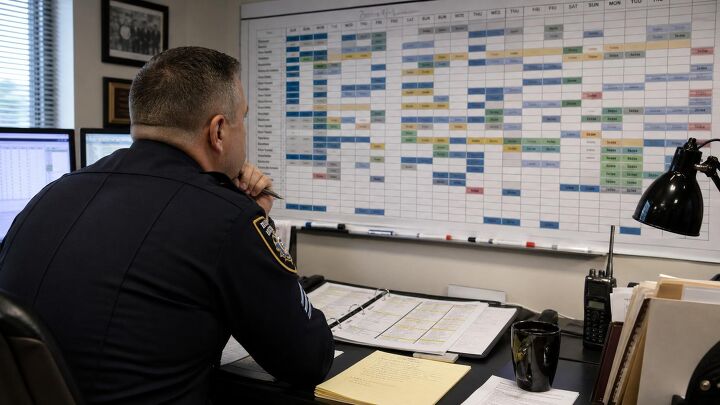
Intervention research on shift-work fatigue in high-stakes occupations, including aviation, medicine, nuclear power, and law enforcement, points to a consistent set of structural modifications that reduce fatigue-related performance degradation. The list is not exotic, and none of it requires solving the fundamental problem of 24-hour patrol coverage requirements. What it requires is treating shift scheduling as a performance and safety variable rather than purely as a personnel management variable.
Shift direction matters. Forward-rotating schedules, moving from days to evenings to nights, align better with the circadian system’s natural tendency to phase delay, meaning the body adjusts to later sleep times more readily than earlier ones. Backward-rotating schedules, moving from nights to evenings to days, work against the circadian system and produce greater disruption. The majority of research on this point is consistent, and a significant number of agencies run backward rotations because of tradition or contractual precedent rather than evidence.
Shift length interacts with fatigue in nonlinear ways. The performance data on 12-hour shifts versus 8-hour shifts in patrol contexts is genuinely mixed, because 12-hour shifts reduce the number of shift transitions and can allow for longer recovery periods between shifts when scheduled correctly. The problem is not the 12-hour shift per se. It is the 12-hour shift combined with mandatory overtime, court appearances, secondary employment, and inadequate minimum rest periods between shifts. An officer scheduled for a 12-hour shift who has been awake for 18 hours before that shift starts is not in a 12-hour shift scenario. They are in a sleep deprivation scenario that the scheduling system does not recognize.
Minimum rest periods between shifts are the most well-supported single intervention in the scheduling literature. A minimum of 10 hours between the end of one shift and the start of the next is the threshold most commonly supported by research as necessary for adequate recovery sleep. Many agencies do not have this as a formal policy, and those that do often have exceptions applied so routinely that the policy is functionally meaningless. Mandatory overtime attached to the end of a shift, with the next shift starting less than 10 hours later, is a structural fatigue generator that no amount of individual officer effort can compensate for.
The Fire/EMS Parallel
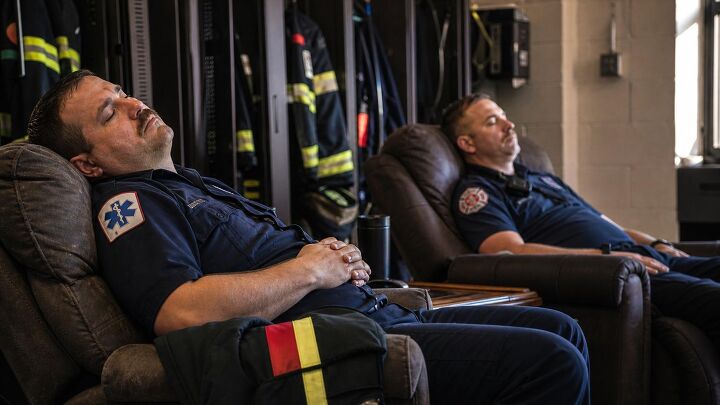
Fire and EMS personnel face a version of the same fatigue problem with a structural feature that patrol does not have: the 24-hour shift. The 24-on, 48-off schedule common in the structural fire service looks generous on paper but is physiologically demanding in a specific way. Sleep during a 24-hour on-duty period is frequently interrupted by calls, and the research on sleep interruption shows that fragmented sleep produces significantly more cognitive impairment per hour of lost sleep than consolidated sleep deprivation. An EMS provider who has been called out four times during a 24-hour shift has not slept the hours their log shows. They have accumulated fragmented sleep that is restoring less than its face value.
The fatigue-related error data in emergency medicine and paramedicine mirrors the law enforcement pattern: adverse events and near-misses are elevated during extended shifts, overnight hours, and following shift sequences that produce accumulated sleep debt. The mechanism is the same. The operational stakes, when a medication error or a missed clinical finding is the failure mode, are different in character but not less serious in consequence.
Structural solutions in the fire and EMS space have included protected sleep time during low-call-volume hours in some systems, crew rotation policies that limit consecutive overnight shift assignments, and fatigue risk management systems modeled on aviation frameworks. None of those approaches is universally adopted, and the resistance to them in fire and EMS cultures mirrors the resistance in law enforcement: the professional identity has historically incorporated fatigue tolerance as a virtue rather than recognizing it as a managed risk.
Bottom Line / What to Do Monday
- Track your actual sleep hours for two weeks against your shift schedule, including commute time and pre-shift preparation. Most officers who do this exercise find they are running a consistent sleep debt that they have adapted to as normal. The adaptation does not mean the deficit is not there. It means the baseline has shifted.
- If you are experiencing microsleeps during drives, falling asleep within minutes of sitting down in a quiet environment, or consistently requiring caffeine to function at the start of a shift rather than as a preference, those are clinical markers of sleep debt, not personality traits. They are worth taking seriously as performance indicators.
- On scheduled days off after night shifts, prioritize sleep timing before social obligations where possible. Attempting to shift immediately to a daytime schedule on the first day off after nights accelerates circadian disruption rather than resolving it. A gradual shift over the first 24 to 48 hours of days off produces better recovery than an abrupt schedule change.
- FTOs: the new officer who is struggling with performance on overnight shifts in the first months of their assignment is often due to sleep deprivation, not a capability problem. Performance on complex tasks during circadian low points after inadequate sleep is not representative of what that officer can do under better conditions. Remediation conversations should account for this before they become part of the documentation.
- Supervisors: mandatory overtime attached to the end of shifts, court subpoenas that require attendance immediately after night shifts, and scheduling that produces fewer than 10 hours between the end of one shift and the start of the next are not neutral operational decisions. They are performance and safety choices. Documenting the incidence of these conditions in your unit gives you data to bring to a scheduling conversation, with actual numbers to back it up.
- Agencies: research on forward-rotating shift schedules, minimum rest-period policies, and the performance consequences of chronic sleep restriction in law enforcement is neither new nor contested. If your agency’s shift scheduling structure was designed primarily around personnel equity and contractual precedent rather than performance and safety data, that structure deserves a review against the current literature. The IACP and the National Institute of Justice have both published guidance on this. It exists, and it is accessible.
- Fire/EMS: protected sleep-time policies during low-activity overnight hours in 24-hour shift systems have empirical support in the EMS literature and have been successfully implemented in multiple jurisdictions. If your department does not have a formal policy on this, the absence is a choice, not a default, and it carries documented consequences for clinical performance and crew safety.
That’s Front Line Friday for this week: fatigue is a physiological condition with measurable performance consequences, not a scheduling inconvenience or a resilience deficit. The research on its effects on decision-making, threat assessment, and vehicle operation is consistent and has been so for decades. Agencies that structure schedules around everything except what the performance data shows are not being operationally neutral. They are making a choice about what kind of risk they are willing to accept. Next week, we are on in-car first aid and trauma kit configuration, covering what should be in the vehicle, how it should be staged, and the difference between a kit that works under stress and one that only works when conditions are ideal.