
The use of optics was limited until the Global War on Terror. Choices were scarcely available for military use. It was the necessity of survival that gave way to innovation as combat and civilian use of optics came into its own. Today, it’s the use of iron sights that has given way to the standard use of optics on virtually all firearms. As prices come down and technology grows, Swampfox has a clear view of the future.
Heritage Meets Prophecy
The market for weapon sights and optics is saturated; there is a narrow way forward for a company to truly become known for both quality and budget-aligned products. In the true American spirit, the company is named for The Swamp Fox, General Marion, who was an American Revolutionary hero who was able to accomplish greatness through meagre means. Swampfox Optics, too, has ensured to offer great weapon sights to the masses, allowing a solid-built optic with purpose-designed optics while ensuring the people can afford them.
To truly appreciate Swampfox Optics, it’s important to know this is not a company that simply uses others’ designs out of China or other outlets. Swampfox is an OEM designer, not only for themselves but for other customers. Starting from its roots to create optics for US Special Operations, Swampfox has been OEMing for other companies since 2018. Their strict adherence to excellence through hand assembly, QC, and controlling their own production by means of keeping designs and testing in-house, they have been able to cut costs and pass along profits to their customer base.
Swampfox has their gaze fixed on future designs while remaining hungry for improvements in illumination and clarity. They also noted early to find the balance of saving weight without sacrificing combat durability. A close friend and fellow special operator introduced me to Swampfox via his interactions. While at a shooting event, he was encouraged to drop his personal rifle from a significant height to test the durability and quality of the product. My friend was concerned his weapon could be ruined and he was assured that if anything broke, Swamp Fox would replace it. He dropped his weapon, and it fell over 10 feet to the ground. Not only was his weapon ok but the optics did not break or lose zero. As a Ranger, he was naturally impressed. I, too, became interested in this company. Swampfox puts their reputation to the test on a regular basis because they believe in their products.
Keep Your Musket Ready
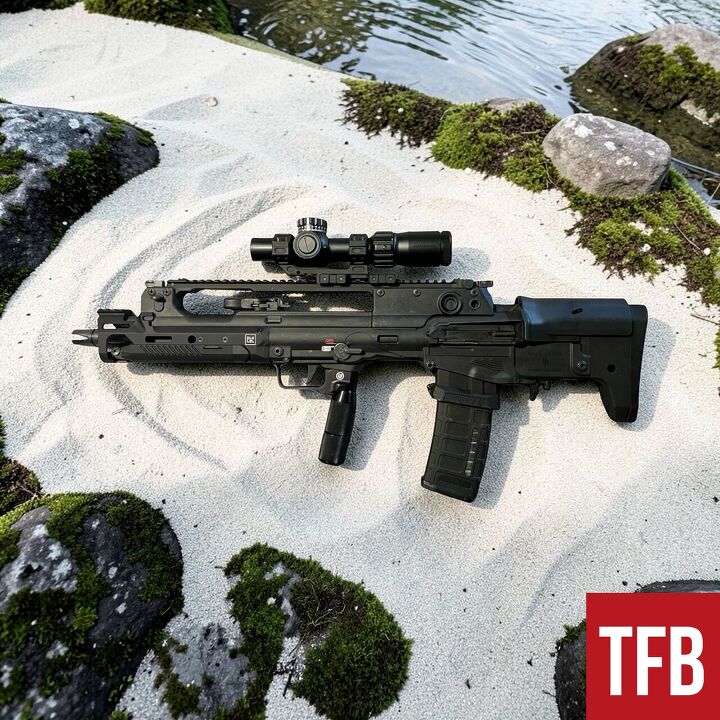
Swampfox is a company focused on quality of design, but that standard is not static. There is a constant upgrading process by which Swampfox is looking to improve and, in essence, make their optics obsolete by means of improved designs. Even now, as I write this article, many of the optics have already been improved upon. Let’s look at a few different offerings ranging from mini red dots to low-power variable optics.
Swampfox has taken notes over time, analysing the focus of their intent and the offerings Swampfox provides. To preface this, we are not going to discuss the differences between mini red dots, red dots, prismatic, LPVOs, and longer-range high-power variable optics; at this point, I can safely assume all of you reading this know the differences. The optics listed are the optics we have on hand. There are optics that we have not tested, so I can not attest to those, but I can safely assume they meet the same standards as the other optics tested.
A point that should be covered is reticle choices. Swampfox also offers more than the standard dot or circle dot as seen on red dot optics across the globe. For the discerning, there is a choice of the BDC or Bullet Drop Compensation, MOA, Mil Dot, Dragoon, Sharpshooter (Mil and MOA), and the Recce (Mil and MOA). Swampfox is now also offering its fibre optic illumination for beyond daylight bright.
Swampfox also recognises the need for well-engineered and manufactured optics mounts. Like their optics, a premium mount doesn’t have to cost hundreds of dollars. Swampfox offers various red dot and offset mounts along with 30- and 34-mm scope mounts with and without offset red dot mounts. The idea is to ensure the customer has a single location to acquire both the optics and the requisite mounts needed.
Mini Red Dots
The first optics we will look at are the mini red dots; these are the Liberty II, Justice II, and the Kraken.

Liberty ll & Justice ll
These two more traditional mini red dots are machined from 7075 aluminium, have a choice of red, green, or multi reticle designs with a 3 MOA dot (Liberty ll) and a 6 MOA dot (Justice ll) and utilise an RMR footprint. The glaring differences are the objective window size. The Liberty ll offers a 24 mm window, and the Justice ll offers a 30 mm window. Both are very well made, machined from aluminium, and the body of each is extremely robust. Both optics offer 10 different illumination settings and offer shake-awake technology. There are different offerings for mounting in turn for more than just pistols, but again, because they use the RMR footprint, the market provides near limitless options for these two MRDs (Mine Red Dots).
Kraken
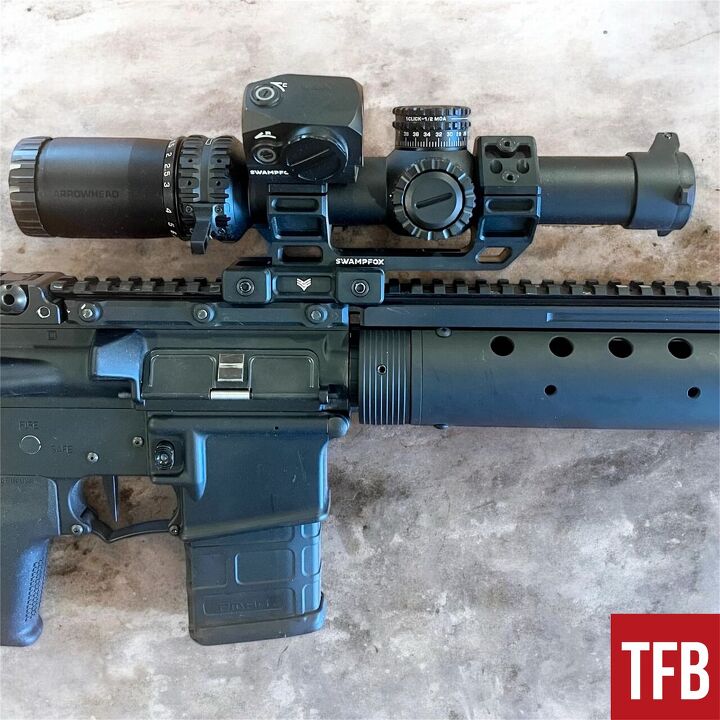
The Kraken is another MRD that took its roots from the Aimpoint Acro, but it’s a ground-up, in-house design. Like the others, the Kraken is machined from 7075 aluminium with a closed emitter housing with shake-awake technology. The Kraken was designed to fill civilian and special operations needs, with the optic having not only the 10 illumination settings but also 2 night vision settings. The footprint is designed to engage both RMR and MOS. This provides a greater option for a multitude of uses, even in the most stringent professional uses. The Kraken is just at home on a rifle as it is on a pistol; its robust closed emitter dual tube housing provides exceptional protection and illumination in all conditions.

Prismatic Sights
The next optic tested was the Raider Micro Prism prismatic sight. Prismatic optics have etched reticles that do not rely on an emitter to create a reticle. The Raider is a 1x red dot with a 20 mm objective lens. It is cast from a zinc alloy body to reduce weight without giving up strength or durability. The design is small and functional and utilises an Aimpoint T-2 footprint to optimise a near universal mounting solution that is now an industry standard. The Raider provides an option for red or green illumination and two choices of reticle designs; the user can choose to run a single dot or a horseshoe with BDC (bullet drop compensation). The illumination still operates off shake-awake. The Raider brings the best of both worlds, providing a long-lasting professional lightweight red dot that will function in all conditions.

Low Power Variable Optics
The LPVO has become all the craze over the last 10 years, with some still swearing by these optics and others swearing them off completely. With give and take being a core component of any optical choice, the LPVO offers a lot of capability, balancing target identification with ranging options, making it a first-line choice for professionals and civilians alike. There are three LVPOs we will look at: the Tomahawk II, Warhorse and Warhawk.
Tomahawk ll
The Tomahawk is an SFP LPVO (second focal plane low power variable optic), that’s a mouthful. The LPVO offers an extended eye box with exceptional clarity, providing an optic that is fast to acquire and provides a clear picture. To utilize the BDC, the optic does necessitate the optic to be at its maximum power, hence it’s an SFP. The Tomahawk is easy to index the magnification ring and has 12 illumination settings. Generation 2 has intermittent on/off between settings and offers an optional third color for the new fibre optic variant of the reticle. The Tomahawk is a 30 mm tube; light gathering is excellent, and with the focus set to the shooter, the picture is clean and crisp. The BDC reticle offers ACOG-like rapid acquisition of targets. Zeroing offers a push/ pull locking with a return to zero. The system is a complete package, and with the other offerings in rings or offset mounts, the end user can set up offset red dots for CQB options while leaving the Tomahawk II in its maximised magnification.

Warhorse
The Warhorse is a slight step up from the Tomahawk in offering higher magnification and a First Focal Plane reticle. The FFP is the ability for the reticle to be used in any magnification to optimise the preferred level of magnification to suit the situation. There is the choice of mil dot or MOA Dragoon reticle, offering a mixture of functional reticle designs providing ranging based on fixed markings. The generation 1 Warhorse LPVOs are offered in a 1-6x and 1-10x configuration in a 34mm tube. The Warhorse also offers 12 illumination settings and a push/ pull locking system with a return to zero turrets.
Warhawk
The Warhawk is a premium lineup of higher magnification optics configured in the FFP with 34mm tube dimensions. This offers maximum flexibility for ranging and magnification needs while allowing for excellent field of view and light collection. The optics are available in 2-10x, 3-15x, 4-20x, and 5-25x coupled with push/pull lockable and zeroable turrets, so the selection offerings and configuring your optic to your personal zero is completely customized.
Final Thoughts
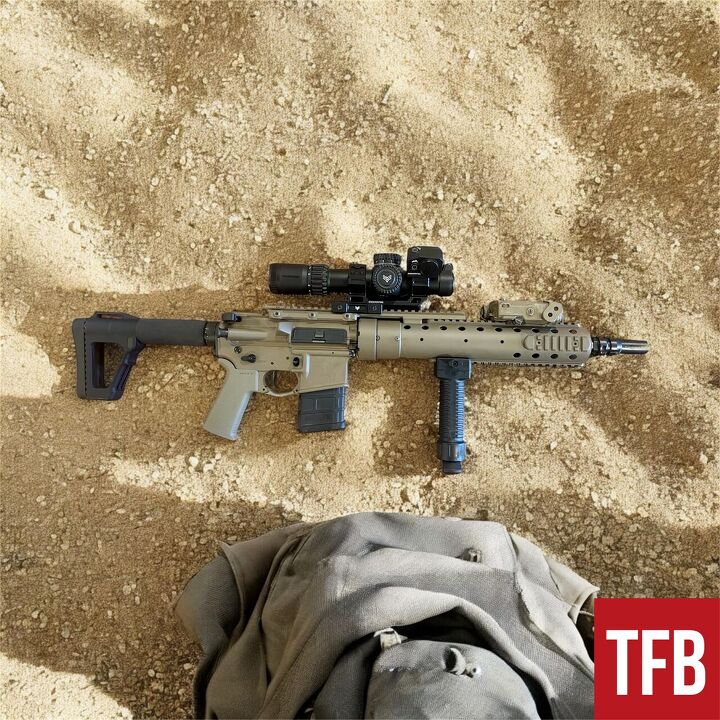
The market for weapons optics is flooded with all variations of optics, ranging from selections focused on quality to some on quantity. Swamp Fox has taken a more unique approach to designing their own optics, but priced them in a space that both professionals and private citizens can both afford. Swampfox’s approach to quality is of the highest standards, with a no-nonsense warranty backing up their products; they believe in standing behind what they sell. Whether you are running the ridges of North Iraq or the Texas Hill Country, Swampfox Optics is ready to support your needs with a dependable quality optic designed to meet the highest standards.