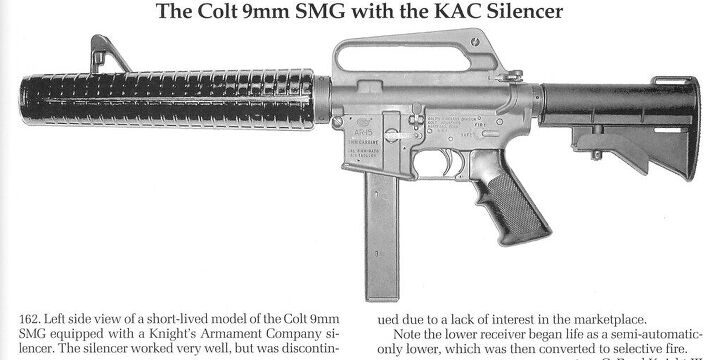
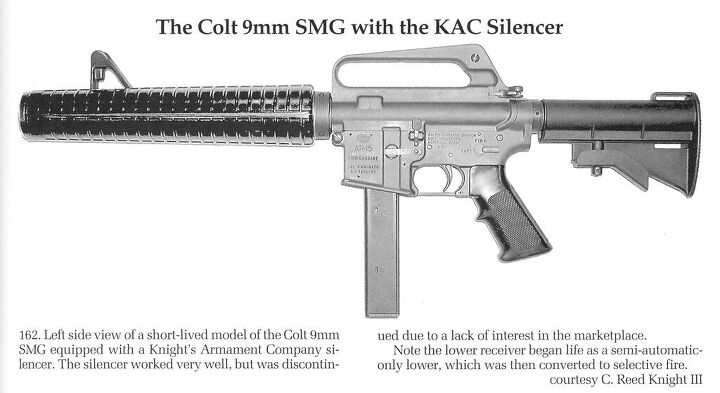
Good afternoon, everyone, and welcome back to TFB’s Silencer Saturday, brought to you by Yankee Hill Machine, manufacturers of the new Victra 20-gauge shotgun suppressor. This week we are taking a look at a lesser-known integral suppressor upper. This is the Clandestine Laboratory Enforcement Team upper that Knight’s Armament created for the Drug Enforcement Administration.
Silencer Saturday @ TFB:
- Silencer Saturday #439: America 250 And Legal News
- Silencer Saturday #438: Wheel Gun Suppression With Revolver Seal
- Silencer Saturday #437: Precision Armament TiTrex 300Ti Review
- Silencer Saturday #436: Subsonic Loads With Trail Boss Powder
- Silencer Saturday #435: Father’s Day Gift Guide 2026
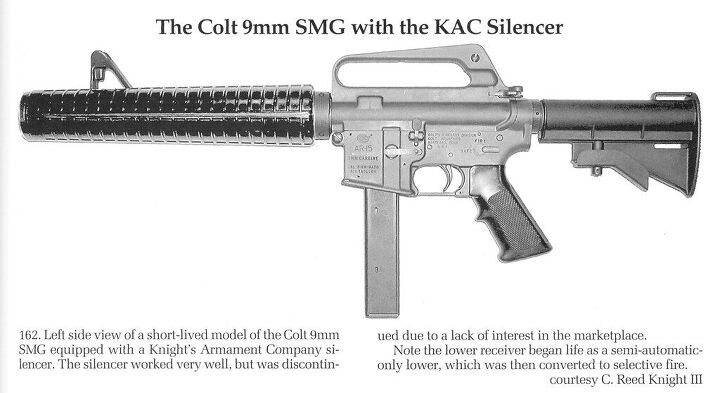
The DEA’s history with firearms has, for the most part, been unremarkable. In the 1980s and 1990s, at the height of the Cocaine Wars DEA agents were often seen toting Colt Model 635 9mm submachine guns. These guns were a perfect embodiment of the era. Building on the M16 platform, they provided a compact, concealable, and reliable step-up from the average handgun without requiring much training. Many agents of this era had served in the military, particularly in Vietnam, and were already well accustomed to the M16. Slapping a 9mm bolt and magazine into that gun offered a simple solution for up-arming agents without putting another caliber of ammo into inventory.
The DEA’s mission centers on illegal drugs. One of the most prevalent in the 90s and early 2000s was methamphetamine. The most common way that reached the streets in the US was being cooked in a “lab” in the US. Now, lab has a certain connotation you might think of white coats or hair nets, perhaps those inflated suits that prevent hairs from falling on the circuit chips and ruining them in the factory. But the term is far more loose in the world of illicit drugs. The precursor chemicals used to create meth were extremely hazardous. Even inhaling the smallest bit of certain chemicals could kill you instantly. DEA agents trained to clear these labs, and developed specialized units known as Clandestine Laboratory Enforcement Teams, or CLETs. The chemicals in these labs were not just toxic, many of them were also flammable or explosive depending on the concentrations. This created a real conundrum for the DEA. What do you do if you have to clear a meth lab and a gunfight ensues? The combustion necessary to fire a bullet is a real problem.
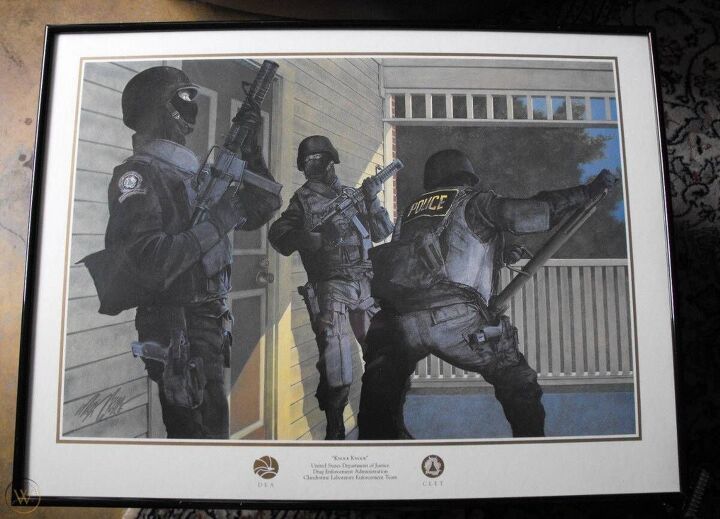
Enter the CLET upper. The idea with this upper was not just sound suppression, it was to trap as much flame as possible inside the firearm to reduce the risk of causing an explosion. Knight’s Armament won the contract to produce these uppers but details are very scarce. Some originals are purported to have entered the civilian Market but there were also clones made around this time as well. Based on my research (reading a bunch of posts on ARFCOM threads). It seems that one of the key distinctions was the material inside the suppressor body. The KAC guns had a mesh (like a Brillo pad) between the barrel and the tube. This caught the sparks and the noise and kept them internal. Later clones, particularly those made by Norrel, were filled with rivets. It seems that both the original and the clone had large washers separating the inside of the tube into three sections. A cut-down front sight post was fitted to the outer tube and the entire assembly fits inside a traditional A2 handguard set.
Ultimately the CLET uppers were short-lived. The internals only lasted a few hundred rounds before they needed replacement and that made it very difficult to train with them. There’s also the issue that a straight blowback 9mm like a Colt SMG also emits a significant amount of flash and sparks from the ejection port. Even if this silencer mitigated 100% of the explosion risk at the muzzle, it would not entirely alleviate this concern. The frequency of encounters with clandestine meth labs has also reduced substantially, as most is now imported from south of the border rather than being made here.
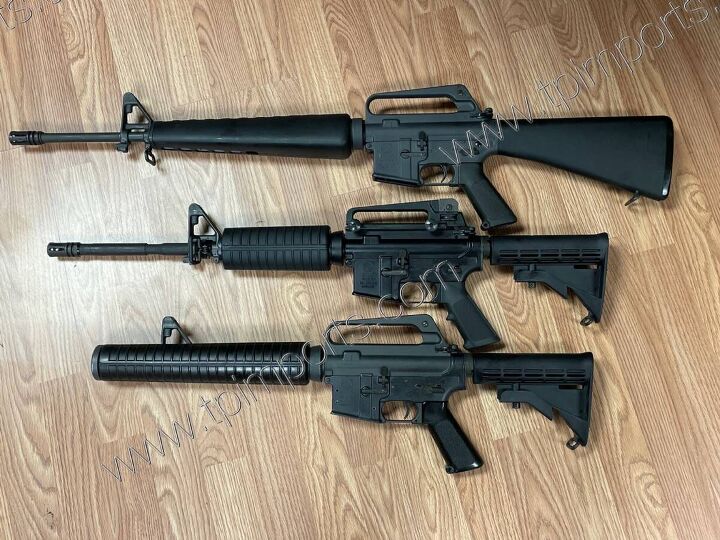
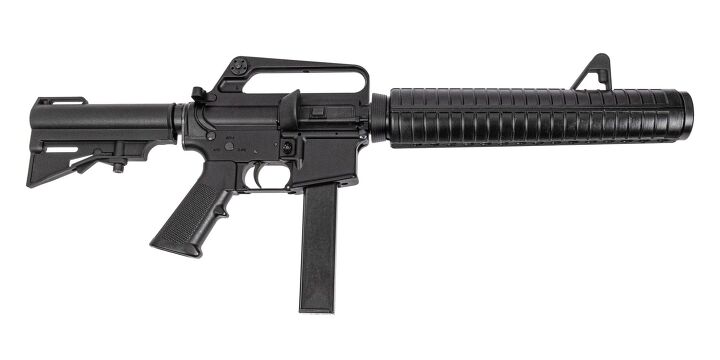
I did a review of the Harrington and Richardson 635 pistol and had a great time doing it. As unrefined as these guns are, they are still a hoot. At SHOT Show, one of the first years that H&R was present, they had a Model 635 clone prototype on display. I asked Mike Wetteland, the head of that operation, if we might someday see the elusive DEA integrally suppressed upper. He laughed and said maybe. Given how odd of a gun that is, my expectations were low.
Well much to my surprise H&R did bring back a version of this gun. There are two major differences from the original. The first is that it is available for purchase on the PSA website whenever you want one, rather than being an elusive ghost that can only be tracked down on the auction sites. The other major difference is that there is no suppressor under the H&R handguard. In our world of free tax stamps, I would bet that some enterprising individual comes up with a good way to convert these guns to having functional suppressors.
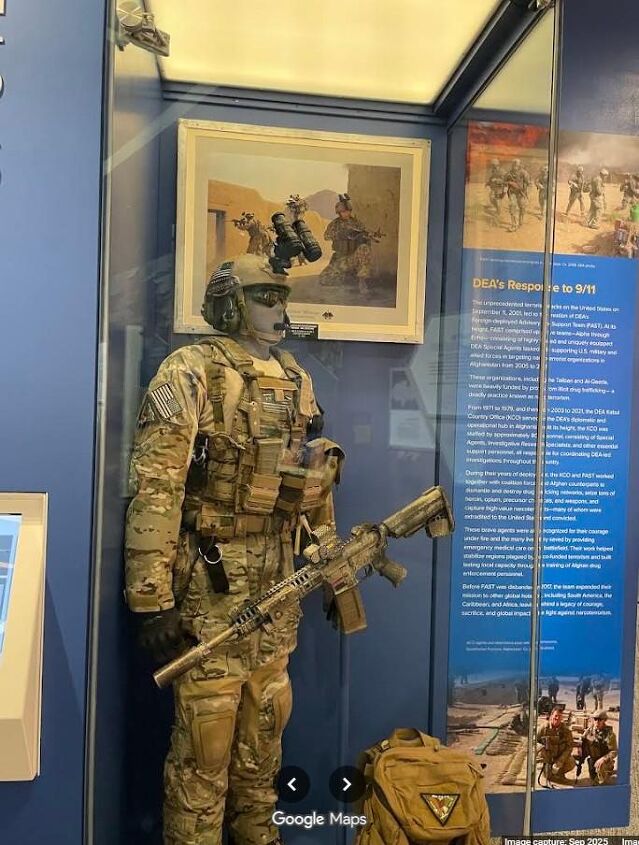
While the CLET has long been the most famous DEA silencer, I did come across a couple other interesting items while researching this article. One is a Surefire SOCOM shown in the DEA museum FAST Team exhibit. The FAST Teams were a DEA component that operated in high-risk environments like Afghanistan and looked a lot more like a military unit than a typical group of special agents. This unit worked side-by-side with special operations forces and had similar training and equipment. FAST went on to operate in Latin America as well before ultimately being wound down after US forces withdrew from the Middle East, and an investigation by the DOJ Inspector General into a series of shootings in Honduras.
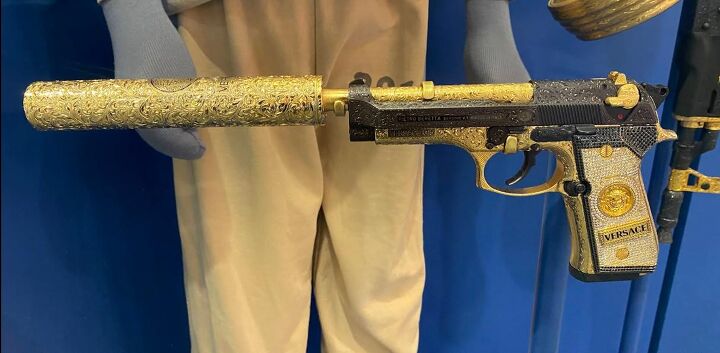
One other interesting silencer in The DEA’s possession is from the other side of the law. The museum also contains a suppressed Beretta seized from the notorious Chapo Guzman. This blinged-out pistol is complete with Versace branding. There are almost no details about this silencer and it seems unlikely to be a commercial production item. But given that it is on a fixed barrel pistol and would not need a Nielsen device, a simple homemade tube silencer would still function on this gun. This level of engraving and decorating is unlike anything I have seen on a silencer before, and one has to wonder how it would hold up to the kind of heat buildup inherent to silencer use.
The official description of the gun from the Museum’s website is as follows:
“Joaquín “El Chapo” Archivaldo Guzmán Loera is the former leader of the Sinaloa Cartel and was one of the most powerful and dangerous drug traffickers in the world. He is currently serving a life sentence plus 30 years in a federal maximum-security prison. This pistol was found in one of Guzmán safe houses before his infamous and deadly career came to an end. The diamond-encrusted 9mm Beretta Parabellum pistol looks to be gold plated and starkly contrasts the brutal effects of Guzmán’s illicit drug trade on countless lives. Guzman may have had the pistol custom made for two of his children.”
Thanks for joining us for another edition of Silencer Saturday. We will see you back here for more silencer coverage next week. Would you run a CLET upper clone? Or is this a gun best left as a footnote in silencer history?
SILENCER SHOP – HANSOHN BROTHERS – DEADEYE GUNS
MAC TACTICAL
ALL YHM PRODUCTS AT BROWNELLS
DEALERS: If you want your link to buy YHM suppressors included in future Silencer Saturday posts, email: silencers@thefirearmblog.com