The radio works. The harder problem is everything else.
Welcome back to Front Line Friday. This week is an editorial, and the topic is one of those problems that every first responder has opinions about and nobody has solved cleanly: interagency interoperability. The phrase usually draws attention to radio systems and frequency coordination. That’s the visible layer. Underneath it is a much more complicated set of human, organizational, and procedural problems that no frequency plan actually addresses. Front Line Friday is brought to you by Dead Air Silencers, whose support keeps this column going every week.
The reason interoperability stays on the problem list year after year, despite significant investment in radio systems and mutual aid agreements, is that the technical layer is actually the easiest part to fix. When departments buy compatible equipment and work out frequency sharing, the radios talk to each other. That problem is largely solved in most jurisdictions. What hasn’t kept pace is the organizational and operational layer that determines whether that technical capability actually gets used effectively when it matters.
Front Line Friday @ TFB:
- Front Line Friday #6: Duty Belts, Vests, and Real Load Management
- Front Line Friday #7: Writing SOPs That Actually Stick
- Front Line Friday #8: The Small Gear That Prevents Lost Workdays
- Front Line Friday #9: Range Qualification Realities
- Front Line Friday #10: The Patrol Vehicle Setup That Actually Works
What Interoperability Actually Means
The standard definition of interagency interoperability is the ability of different public safety agencies to communicate during joint operations. That definition is technically accurate and operationally incomplete. Communication is necessary but not sufficient. Effective interoperability requires:
- A common language for describing what’s happening and what’s needed
- Shared understanding of the operational picture at any given moment
- Compatible tactics and organizational structures that can be integrated under pressure
- Pre-established command protocols that don’t require on-scene negotiation in real time
- Trust between responding agencies that comes from training together, not just from formal agreements
Most interoperability investments have focused primarily on the first item: the ability to transmit voice across agency boundaries. The other four elements have received far less systematic attention, and the gap is most pronounced in large-scale incidents where multiple agencies operate in the same space for extended periods.
The Radio Problem Is Mostly Solved
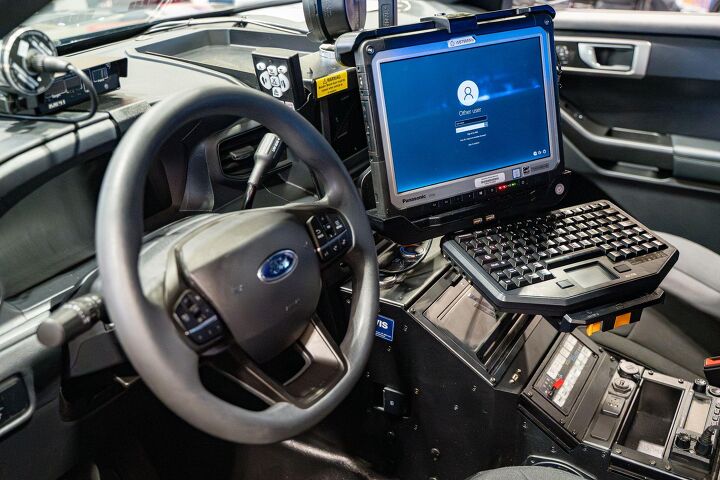
The technical barriers to radio interoperability have largely been addressed. Interoperable frequencies, shared channels, cross-agency agreements, and modern digital radio systems that support multiple agencies on the same infrastructure are now standard in most metropolitan areas and increasingly available in rural regions through state-level interoperability networks.
Where the radio problem persists is typically not a technology gap. It’s a gap in training and familiarity. Officers who have never practiced using the interoperability channel are slow with it under stress. Agencies that have the technical capability but don’t regularly drill on it produce officers who default to their home department channels even when a shared channel would better serve the incident.
This is a solvable problem. It requires making interoperability channel use part of regular training, not just part of the mutual aid agreement that nobody looks at until something goes wrong.
The Real Gaps
Incident Command Structure
The single most common interagency coordination failure is not radio communication. It’s the incident command. When multiple agencies respond to a large scene, the question of who is in charge, how the command structure integrates across agencies, and how decisions get made is frequently answered differently by each agency involved.
Law enforcement, fire, and EMS each have their own command traditions. Police command structure typically vests authority in the senior on-scene officer for law enforcement operations. Fire uses the Incident Command System, which has a specific chain of command and role designation protocol. EMS often operates under medical direction that comes from off-scene medical control, creating a parallel command line that intersects with the on-scene structure in ways that aren’t always clearly delineated.
These are not abstract organizational concerns. They produce real operational failures. Scene safety announcements that only reach the law enforcement personnel because the fire command didn’t hear the radio. EMS crews were entering an area that law enforcement believed had already been cleared. Priorities set by one agency that conflict with another’s operational plan.
The fix is not a better radio channel. The fix is joint training on incident command integration, with specific attention to the role designations and authority questions that arise when agencies with different command traditions work the same scene.
Common Operational Language

Agencies that don’t train together regularly develop idiosyncratic operational language. Terms that mean something specific within one department may be interpreted differently by another. Radio traffic that makes perfect sense to the originating agency can be ambiguous or confusing to the receiving agency.
This is a narrow and concrete problem. A joint training exercise in which the first thing tested is whether all participating agencies understand the same things by the same terms will almost always reveal ambiguities that nobody noticed in their home-agency drills. Building that check into regular interoperability training, rather than discovering the language gap for the first time at a real incident, is a low-cost, high-value investment.
Jurisdiction and Authority
Officers working outside their jurisdiction face an authority problem that doesn’t have a clean technical solution. An officer from Department A working in Department B’s jurisdiction under a mutual aid agreement has law enforcement authority but may have uncertainty about the specific scope of that authority, the legal basis for actions taken outside their home jurisdiction, and the notification and coordination requirements that apply.
This uncertainty creates hesitation at exactly the moments when hesitation is most costly. An officer who is uncertain about whether they have authority to take a particular action in another jurisdiction will default to waiting for jurisdictional confirmation. That delay can be the difference between a successful outcome and a bad one.
Jurisdictional authority questions are not solved by radio interoperability. They are addressed by clear mutual-aid agreements that specifically address the most likely scenarios, by training that includes cross-jurisdictional scenarios, and by command-level communication that removes uncertainty as quickly as possible when the question arises at the scene.
Resource Typing and Requesting
When an agency requests mutual aid, the receiving agency needs to understand what they’re being asked to send. Fire departments use resource typing to classify apparatus and personnel by capability. Law enforcement has no equivalent systematic classification. When a police department requests “units” from a neighboring department, what they actually get depends on what that department chooses to send, which may not match what the requesting department needs.
This is a procurement and coordination problem more than a radio problem. Agencies that have worked out specific mutual aid requests in advance, that know what each neighboring agency has available and what it can do, are far better positioned to get useful help quickly than agencies that are discovering the resource landscape in real time during an incident.
What Good Interoperability Programs Look Like

The agencies that handle multi-agency incidents well share several characteristics that have nothing to do with radio equipment:
They train together on a regular schedule, not just once a year at a required exercise. The goal of joint training is not to check a box. It’s to build the relationships and institutional familiarity that allow agencies to function as an integrated team under pressure. Annual training is better than no training. Quarterly or semi-annual training produces measurably better outcomes.
They have specific, written agreements that address the most common scenarios in detail. Vague mutual aid agreements that say agencies will “cooperate” and “coordinate” are not operational plans. Specific agreements that address command integration, resource requesting, jurisdictional authority, and communication protocols give officers the framework they need to act without waiting for on-scene negotiation.
They designate liaison personnel trained for interagency coordination roles. A properly trained liaison officer who knows the capabilities, limitations, and operating procedures of partner agencies is worth more than a shared radio channel. Agencies that invest in building a small group of people who specialize in this role get better outcomes than agencies that try to sort it out with whoever shows up.
They run their interoperability exercises as problem-solving sessions, not just radio checks. An exercise that identifies gaps in command integration, language ambiguity, or resource requesting and fixes them before a real incident is far more valuable than an exercise that simply confirms the radios work.
The Fire/EMS Parallel
Fire and EMS agencies face interoperability challenges that mirror law enforcement’s in structure but differ in specifics. Fire departments working with EMS agencies face ongoing tension over scene safety determinations, patient access, and the authority to call for additional resources. EMS agencies working across municipal boundaries face jurisdictional questions affecting how and where patients are transported.
The common thread across all three disciplines is that technical communication capability has outpaced organizational integration. The radios work. The harder problem is building the human and procedural systems that allow that technical capability to be used effectively.
Common Objections + Straight Answers
“We have a mutual aid agreement. That covers it.”
A mutual aid agreement is a legal document. It is not an operational plan. The question is not what the agreement says. The question is whether every officer in your department can explain, under pressure at 2 AM at a scene in a neighboring jurisdiction, exactly what they have authority to do, who they need to notify, and how the command structure integrates. If the answer requires looking at the agreement, the agreement is not enough.
“We train with the other agencies every year.”
Annual training is the floor, not the ceiling. If your interoperability exercise is a radio check and a tabletop discussion, you are not building the kind of familiarity that produces effective joint operations. Joint training should include realistic scenario-based exercises where command integration, resource requesting, and cross-agency communication are actually tested.
“Our radio system is compatible with everyone in the region.”
Compatibility is necessary but not sufficient. An officer who has never used the shared channel under realistic conditions will be slow and awkward with it when it matters. Radio compatibility that isn’t practiced regularly produces the same outcomes as no compatibility at all.
“Interoperability is a command-level problem. Officers just need to do their jobs.”
Officers are the ones who show up first. The decisions they make in the first minutes of an incident, before command structures are fully established, shape everything that follows. Officers who understand the interoperability framework, who know what they can do without waiting for clearance, and who have trained in cross-agency scenarios make those early decisions better than officers who are improvising.
Bottom Line / What to Do Monday
- Identify the two or three agencies your department most frequently operates with and review your mutual aid agreement with them. Does it address command integration, resource requesting, and jurisdictional authority in specific terms? If any of those are vague, request a meeting to tighten them.
- Find out when your department last ran a joint training exercise with any partner agency. If it was more than six months ago, propose a date for the next one.
- At your next interoperability training, don’t just check the radio. Run a realistic scenario that requires cross-agency communication, command integration, and resource requesting. Identify the gaps and fix them.
- Identify who your department’s liaison officers are for interagency coordination. If you don’t have designated liaisons, propose creating that role.
- Practice using the interoperability channel in your regular training, not just at the annual interoperability exercise. Make it familiar.
- For officers: if you’ve never read your department’s mutual aid agreements, read them. Know what authority you have outside your jurisdiction and the notification requirements.
- For supervisors at scenes: designate a liaison role early in any multi-agency response. Don’t wait for the command structure to get complicated before starting that conversation.
- For Fire/EMS: apply the same analysis to your interoperability with law enforcement. The command integration questions are real, and they come up at scenes whether you’ve planned for them or not.
- At your next training planning meeting, ask: Are we training for the interoperability we actually need, or the interoperability we think we’ve already solved?
- If your region doesn’t have a regular interoperability working group that includes law enforcement, fire, and EMS, find out why not and whether there’s interest in starting one.
Sign-Off
That’s Front Line Friday for this week: the radios work. The harder problem is whether we built the human systems that make the technical capability useful.
Next week: FLF #12. This was scheduled for a Dead Air suppressor review, but that suppressor isn’t in hand yet. We’re holding that one for when the product arrives. Next week: a reserve editorial on a topic that doesn’t have a scheduled slot yet. Suggestions welcome if there’s something you want addressed before we loop back to the suppressor review.