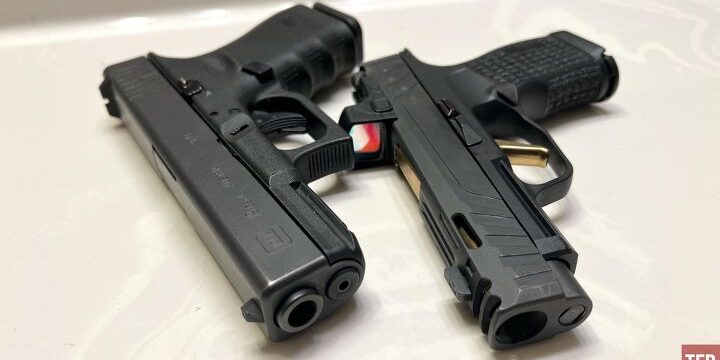
Welcome back to another edition of Concealed Carry Corner. Last week, I went over whether or not you should carry the exact setup no matter the situation. If you happened to miss that article, be sure to click the link here to check it out. This week, I want to take a deeper look at why there has been an increase in compensated handguns for the concealed market. In the last few years, there has been an absolute explosion in the number of model variants with either exterior or built-in compensators. Are they worth it, though? Let’s take a closer look at carrying with compensators.
Why People Carry Comped Guns
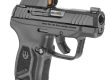
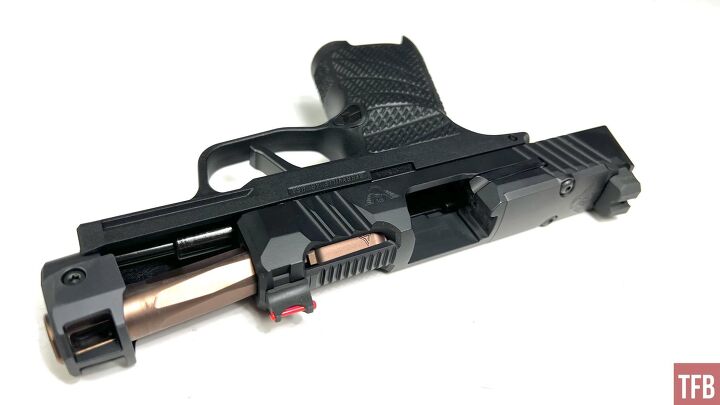
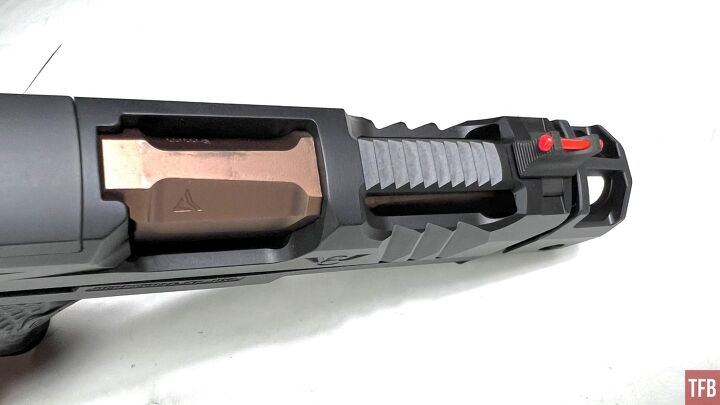
The biggest point about compensators on the end of carry guns is the fact that they cut down on the amount of felt recoil transferred to the shooter. The role of a compensator is essentially to force expanding gas from the barrel upward, creating downward movement to combat the muzzle rising, effectively allowing for flatter shooting and quicker follow-up shots. These compensators are done a few different ways, whether it’s a barrel-attached compensator or something like the SIG P365 line of slide-mounted internally compensated pistols that have an expansion chamber built into the end of the slide. Compensators do a fantastic job of cutting down the amount of muzzle rise as well as felt recoil, allowing shooters to fire shots more rapidly with less deviation from the intended target position.
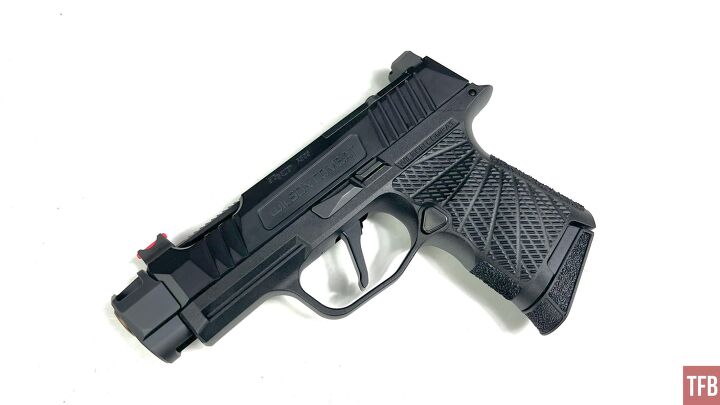
With smaller carry guns, the effects really do make a difference when it comes to snappy pistols, allowing for faster follow-up shots as well as a tighter group in closer distances. When practicing at the range, smaller handguns with compensators are much easier to fire rapidly, with most of the muzzle rise being cut by the expansion chamber doing its job, which not only allows for a much more pleasant shooting experience but also offers upgraded performance with the right grain weight bullet. On paper, if you started shooting on a regular basis and wanted the most out of your carry gun, it would make sense to either grab one of the internally compensated slides or purchase a barrel-mounted compensator to give you that added boost in performance.
Length is Length
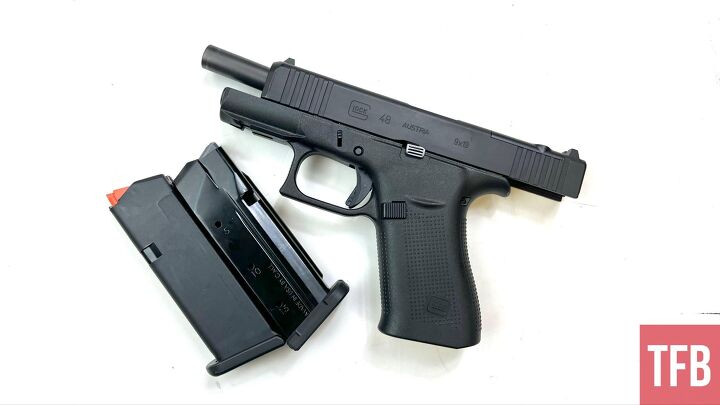
What most people don’t think about is the added length that comes with tacking on a pistol compensator to your carry gun. While it certainly offers benefits for recoil management, the addition in length cannot be overlooked. Depending on the model of the aftermarket compensator you install, you will add roughly an inch or more onto the end of your gun. Part of the issue I personally take with compensators is the fact that you don’t really gain anything else other than slightly better recoil management. At the end of the day, the length of your handgun will be length and I’d prefer having a longer handgun with a longer barrel as well as an extended sight picture. Some compensator models do allow for an extended sight picture, which has its benefits of giving you more accurate shots, but it only addresses one out of the two aspects of this problem.
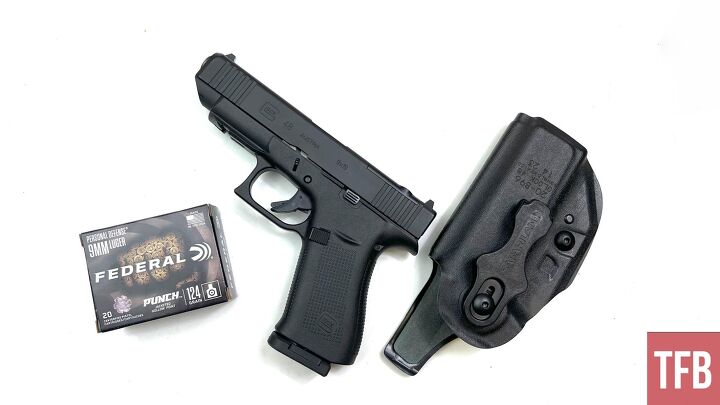
Having a longer barrel and sight picture allows you to not only be more accurate, but the weight out front does allow for less muzzle rise as well, even with no compensator. For a few months, I went back and forth on whether or not I wanted a Glock 43X with a Radian Ramjet installed or just stick to the slightly longer Glock 48. After firing both, I ended up choosing the regular Glock 48 since it was just as long as the 43X with a Ramjet and shot equally as well with slightly more muzzle rise. The biggest benefit for me, at least, was the fact that the Glock 48 actually was more accurate at 20 yards or further. At a distance, the longer barrel truly does make a difference, which adds more value than the reduced muzzle rise that a compensator adds.
What’s Best?
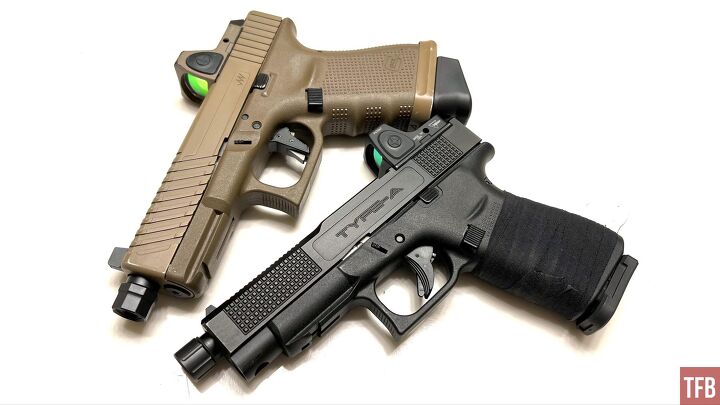
The million-dollar question of the article is what exactly is the best course of action when looking at carrying guns with or without compensators. The short, simple answer is that compensators are great for the range to cut muzzle rise, but between adding a compensator or having a longer barrel and sight radius, I would take the longer slide and sight radius any day.
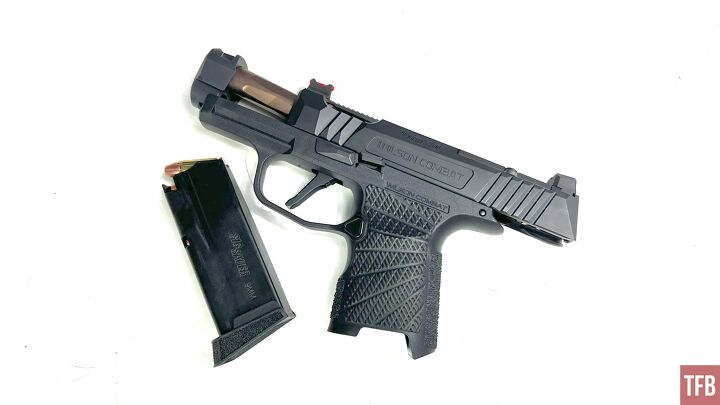
Some of you just love tinkering with your carry guns for the sake of adding new crap to them, and I completely understand that feeling. It’s fun to customize your carry gun, but having a compensator on a 9mm pistol is going to marginally make a difference other than shooting full-power 115-grain ammo. With lower pressure, heavier-grained bullets, the round is oftentimes too slow to activate the comp, which means you’re just adding length to your gun for litttle to no benefit.
Overall Thoughts
Are compensators the cool trend right now with all the aftermarket options? The short answer is yes, but getting a slightly longer barrel and slide on your handgun would add so much more value than just a compensator for reduced recoil management. I know they look cool, but they don’t offer enough benefit to the extra weight and length in my humble opinion and the internally slide cut compensators chop the barrel so short on those models that it’s hard to get the velocity out of the round that you should.
There’s no real benefit to compensators, but if you think they are cool and want one, I say go for it, but don’t argue how they dramatically change the function of your carry gun when that’s not always the case. What do you guys think about compensators on carry guns? Let me know in the comments below. If you have questions about compensators or firearms in general, feel free to shoot me a message on Instagram @fridgeoperator. Stay safe out there and we will see you next week for another edition of Concealed Carry Corner.
TFB’s Concealed Carry Corner is brought to you by GLOCK