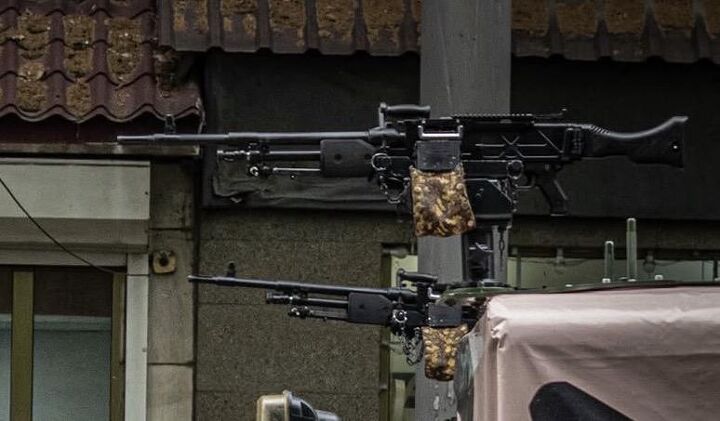
This year marked the first military parade in a decade in Armenia for the Republic Day, on 28 May. The parade offered a clear glimpse into the country’s changing defense posture, as Armenia showcased a range of newly acquired weapons amid a broader effort to reduce its reliance on Russian arms and ammunition while modernizing.
For decades, Armenia, like many former Soviet states, depended heavily on Soviet-era systems and later Russian supplies to sustain its military inventory. That legacy shaped not only its equipment but also its logistics and ammunition stockpiles. Now, however, Yerevan appears to be expanding its procurement network and seeking new partners abroad. One of the most notable shifts in small arms is the introduction of weapons chambered in 7.62x51mm NATO. This caliber adds a fresh layer of complexity to Armenia’s supply chain and may be a glimpse of the replacement of legacy Soviet weapons and calibers.
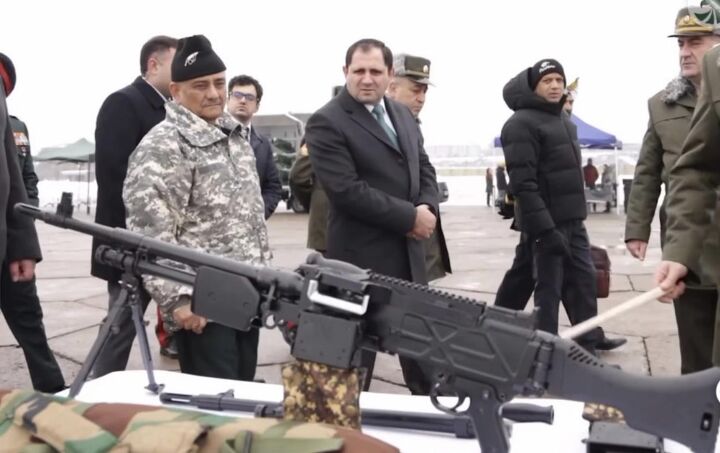
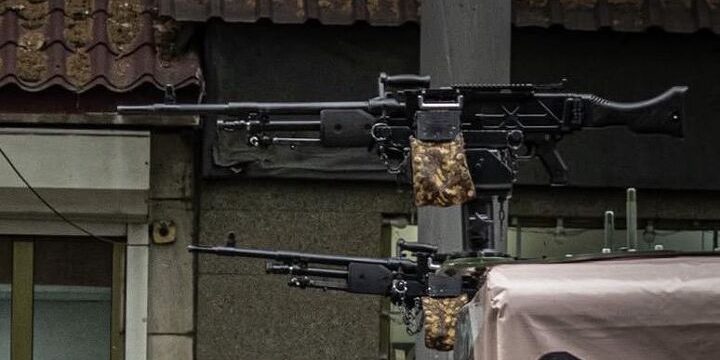
Among the foreign suppliers gaining attention is India, which has emerged as a significant partner in recent Armenian purchases. During the Republic Day parade, medium machine guns of Indian origin were displayed, revealing a continuing effort to diversify sources of military hardware. These new weapons reportedly first appeared in Armenian service last year before being publicly shown in the parade.
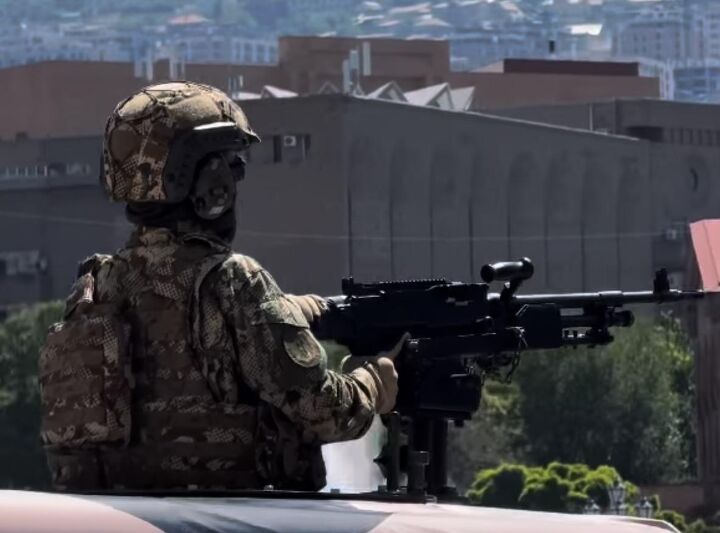
The machine gun is reportedly a licensed and locally adapted version of the MAG-58 design. Some sources simply designate it as a 7.62x51mm medium machine gun, while others refer to it as the OFB/ARDE 7.62×51 GPMG. Lokesh Machines Ltd. reportedly developed the modified machine gun in collaboration with India’s Armament Research and Development Establishment (ARDE). The MAG-58 was originally produced under license by the Ordnance Factories Board; since its dissolution and re-consolidation in 2021, the new machine is reportedly produced by Lokesh Machines Ltd.
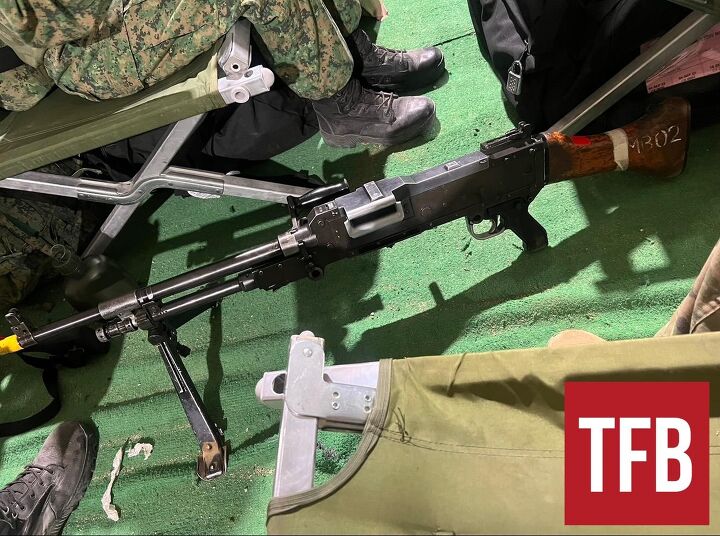
The design appears to retain the general layout and operating concept of the MAG-58, while incorporating modifications such as a reduced-weight receiver, reportedly 25% lighter (possibly putting it in the 19.5 lb range) than the legacy MAG-58, and other changes intended to suit local production requirements and reduce costs. Whatever the exact technical designation, the weapon represents more than just a new machine gun for Armenia. It also reveals a wider strategic shift in the Armenian military, moving away from single-source dependence and toward a more diversified arms procurement model, for better or worse. Other unknowns include the Armenian designation and the scale of the new machine gun’s integration.
For Armenia, the parade was not only a ceremonial event. It was also a signal of evolving partnerships, modernization, and an armed forces increasingly shaped by suppliers beyond its traditional Russian orbit.