There are a lot of things in life I don’t understand, and one of those things is why some people in the AK community look down on 5.56 AK rifles.
Many think that 5.56 AKs are some kind of novelty, created specifically for the US civilian market, and therefore a Kalashnikov rifle chambered in 5.56 is somehow “less authentic”. But that cannot be further from the truth. In fact, 5.56 AKs have been around as long as 5.45, if not longer. But let’s start from the beginning.
The Soviet engineers started experimenting with small-caliber high-velocity ammo in the mid-60s, after receiving the first samples of American 5.56 ammo from Vietnam. When I worked with Larry Vickers and James Rupley on their book ‘Vickers Guide: Kalashnikov’, they photographed an early prototype of the AK-74 chambered in experimental 5.6 caliber, which was made around 1968.
In 1974, the first batch of AK-74 rifles chambered for 5.45×39 was tested by the Soviet Army, and the new caliber was adopted by the Ministry of Defense and (on paper) the entire Warsaw Pact.
By that time, Israel had been producing their 5.56 AK for over two years. In 1972, IMI Galil, the first mass-produced 5.56 AK, was formally accepted into service. Finnish engineers made prototypes of RK 62 and M71 even before that, in the late 1960s, at the same time when Soviet engineers were still experimenting with a new round.
So, arguably, 5.56 AKs exist longer than 5.45 AKs. And Galil was not a one-time fluke; in the mid-1970s, Finland started exporting their M76 chambered in 5.56 NATO, which was available on the US civilian market.
In the early 1980s, the Yugoslavian factory ‘Crvena Zastava’ (Red Banner) developed several AKs chambered in 5.56: M80 with fixed wooden stock, M80A with folding stock, and short-barreled M85. While those weapons were officially presented for the first time only in 1985, there is at least one dealer’s sample of M80A in the US that was manufactured in 1983.
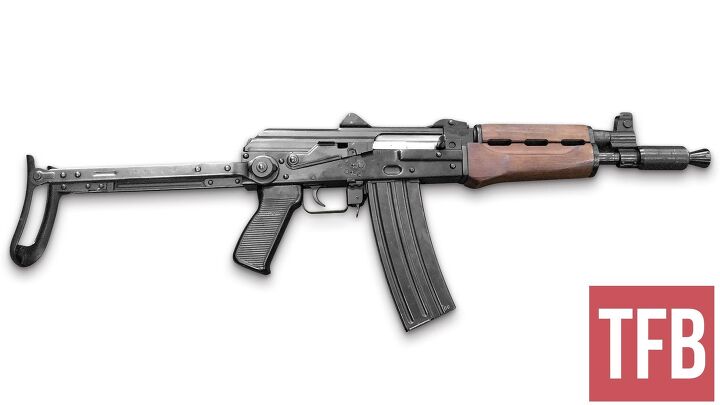
At the same time, China started manufacturing 5.56 AKs: Norinco Type 84. Even the most practical people, Germans, decided that 5.56 AKs have a bright future ahead and attempted to monetise this idea. In 1985, the prototypes of Wieger StG 940 were designed by the East German Wiesa factory. The new 5.56 AK quickly became popular – Peru and India ordered large batches. But with the unification of Germany, contracts were canceled and the remaining rifles destroyed.
In the early 1990s, after the collapse of the Soviet Union, the Russian Izhmash factory began developing the 5.56 AKs, AK-101, and AK-102. According to AK-info, by October of 1993, the first 20 prototypes of short-barreled AK 102 were produced, and two years later, in August of 1995, mass production of AK-101 began.
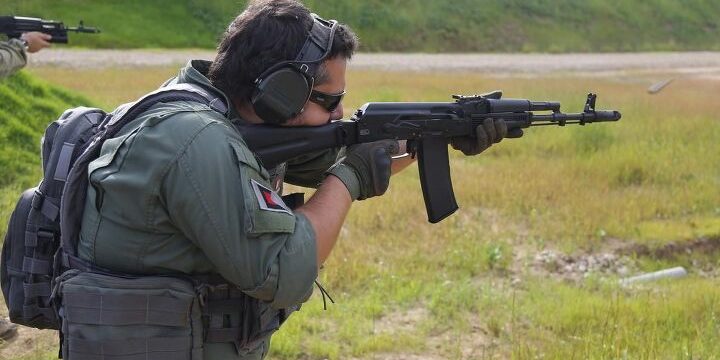
I personally participated in many tests and trials of AK-101 and AK-102. Often, they were tested alongside AKs in other calibers, namely 7.62×39. There was never any difference in performance or requirements: 5.56 AKs were always just as reliable, just as durable, just as accurate as AKs in other calibers.
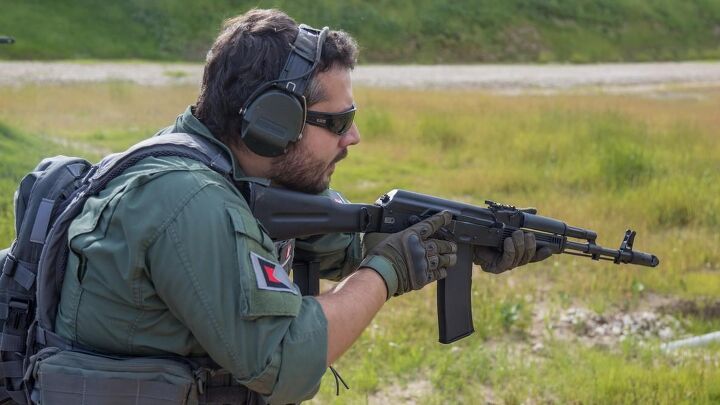
The only consistent problem was idiots accidentally loading 5.45 rounds into 5.56 magazines, but you can’t fix stupid. And it was easy to deal with. Every time it happened, I just did a standard double-feed clearance drill and slapped the guy who loaded my mags on the back of the head.
Russian ammo factories even developed and produced their own armor-piercing ammunition called RS101, which penetrated a half-inch armor plate at 100 yards. Talking to Russian gun designers, I never heard any claim about the inferiority of 5.56 AKs compared to other calibers.
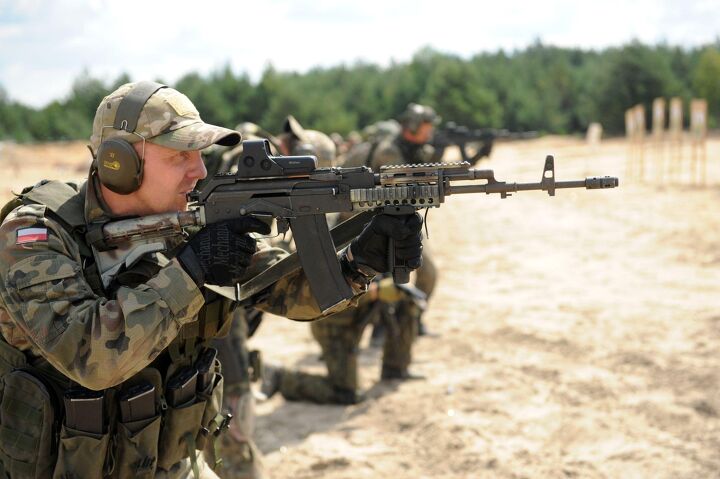
Over the years, 5.56 AKs were also produced by Poland, Romania, and Bulgaria, and used by countless militaries all over the world. So where does this prejudice towards 5.56 AKs come from?
Some part of it is caused by the lack of reliable 5.56 magazines in the early days, as well as the obvious quality problems of some manufacturers, who were slapping together parts kits with very little understanding of what quality control is.
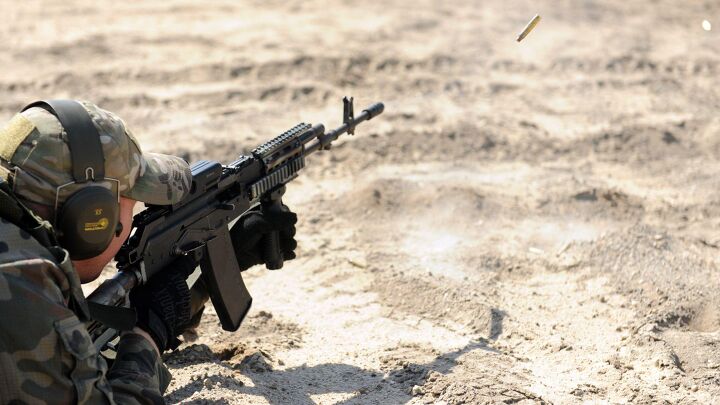
But now, there are plenty of reliable 5.56 AKs on the market, and there is no shortage of magazines and spare parts. The ammo is relatively affordable; better quality of 5.56 ammo results in better accuracy, and there is no reason to look down on Kalashnikov rifles chambered in this caliber – they’ve been around for over half a century and are not going anywhere.
The appearance of U.S. Department of War (DoW) visual information does not imply or constitute DoW endorsement.