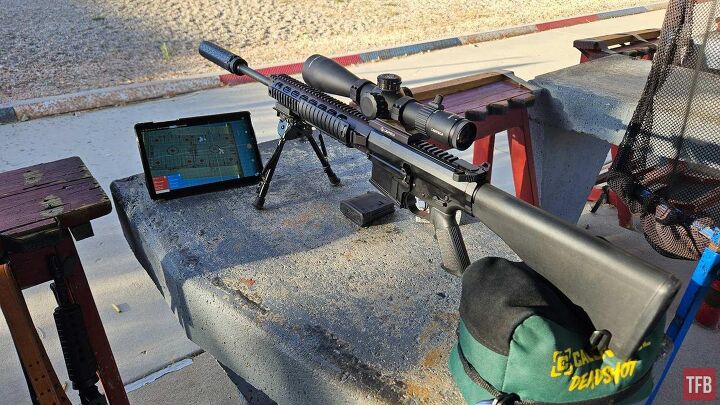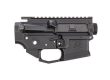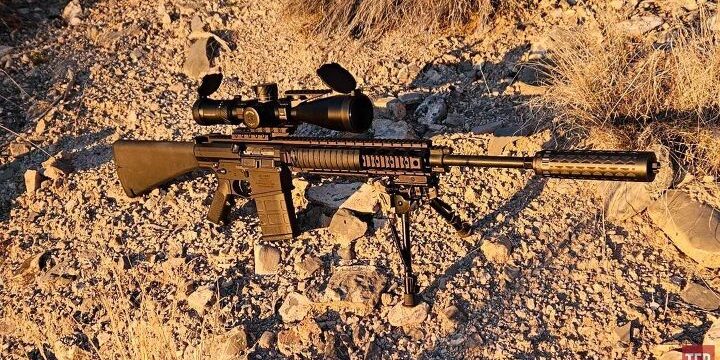
Palmetto State Armory’s Sabre line is their “duty grade” range of products. It started with the AR-15 and has grown to include a range of AR-10 models as well. The Sabre M110 clone has gotten a lot of attention online, but I wanted to go a little older on the styling while opting for the 6.5 Creedmoor chambering. PSA supplied me with the gun, and I put it to work.
PSA @ TFB:
- PSA Teases M14, Offers New Budget Mk18
- [SHOT 2025] PSA New Releases & Concept Guns
- TFB Review: PSA Soviet Arms “Krink” in 5.56
- PSA Releases the Soviet Arms AKS-74U “Krinkov” In 300BLK
- PSA’s NEW 9mm X9 PDW
Disclosures: I have done many reviews previously for PSA and have a relationship with the company. They provided this gun to me. I purchased the ammo.
Features & Overview
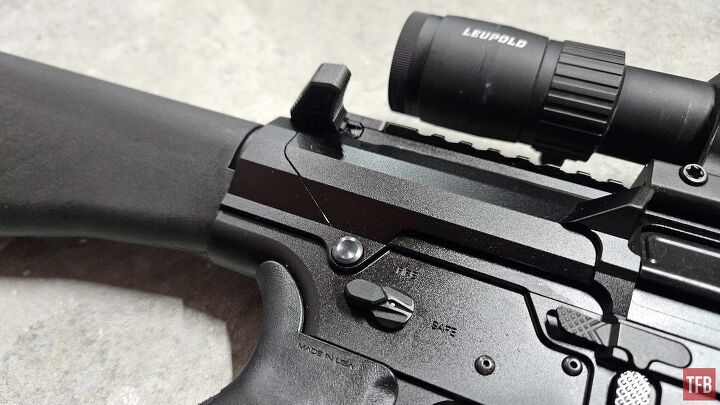
The PSA Sabre-10 series comprises many models. Guns with forged receiver sets follow the DPMS LR-308 upper style, with a rounded cut where the rear of the upper fits into the lower. Guns with billet receivers have the Armalite and KAC-style slanted cut. The billet models also feature an ambidextrous bolt catch.
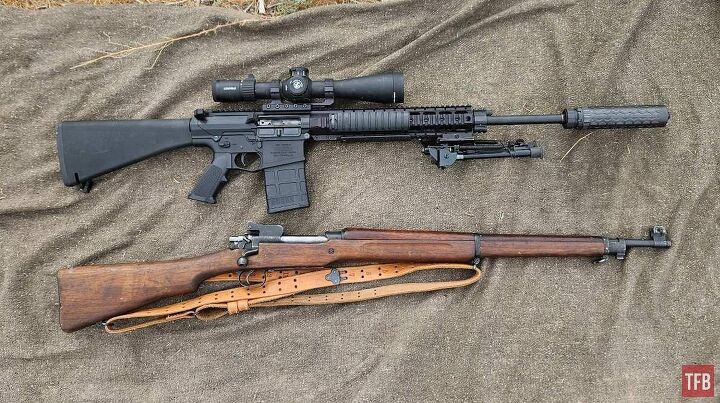
The M110 clone gets a lot of play because of how classic the M110 is, and how visible it was in GWOT-era US military operations. But before the M110 there were other SR-25 rifles in service. SR-25 Match Rifles were tested by special operations forces in the early 1990s, leading to a few small batches being purchased and used by various units. The first real standardized and adopted SR-25 version was the Mark 11. That is not a typo; this is one “mark” before the much more famous Mark 12.
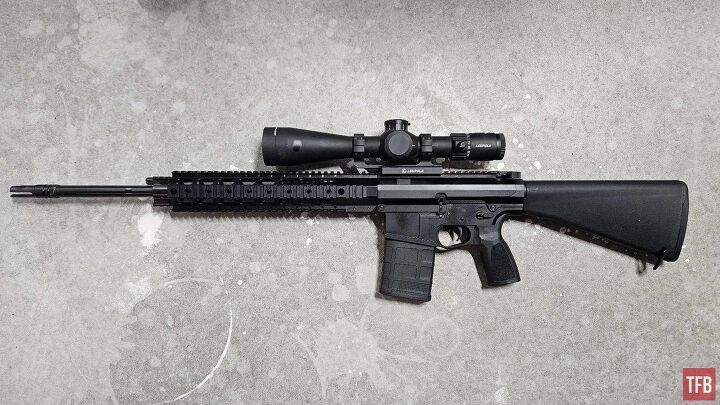
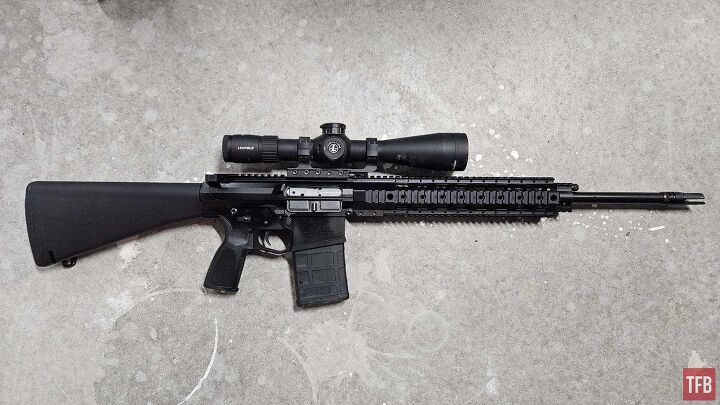
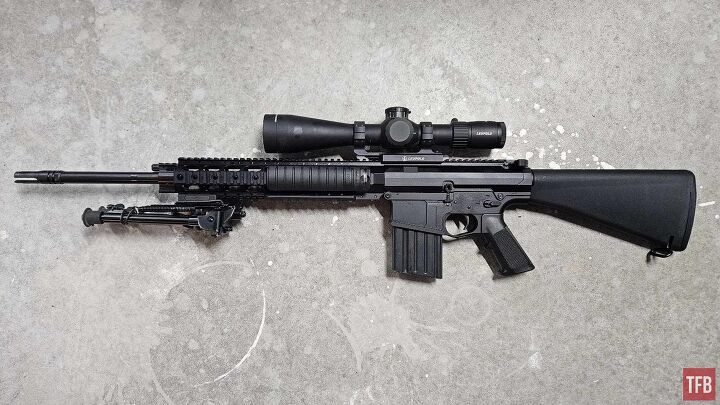
The Mk11 later developed into the basis for the M110, and there is a lot of overlap in features between the two. Obvious visual differences are the color (the M110 is FDE) and the stock design, with the Mk11 having a standard non-adjustable stock.
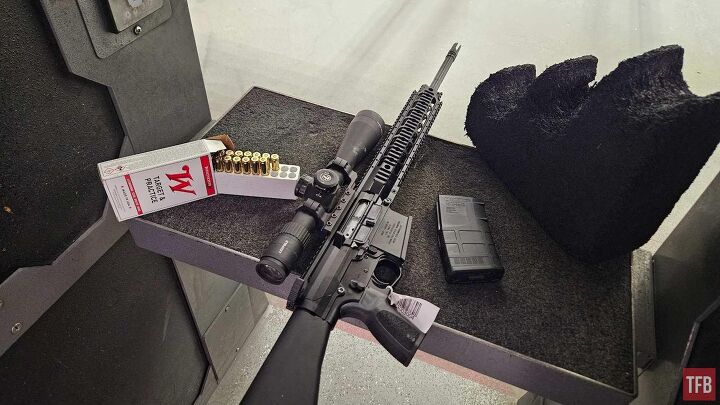
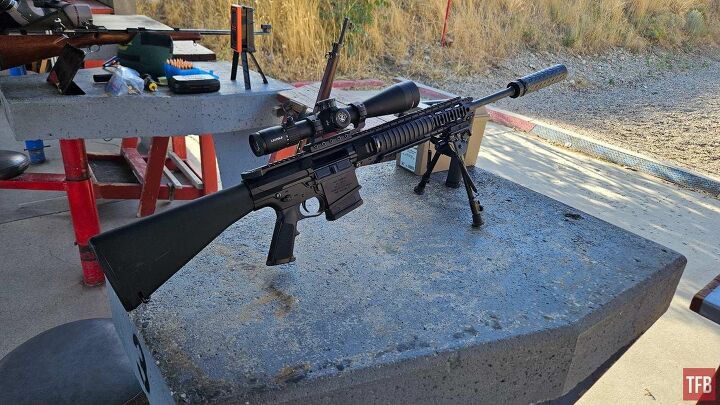
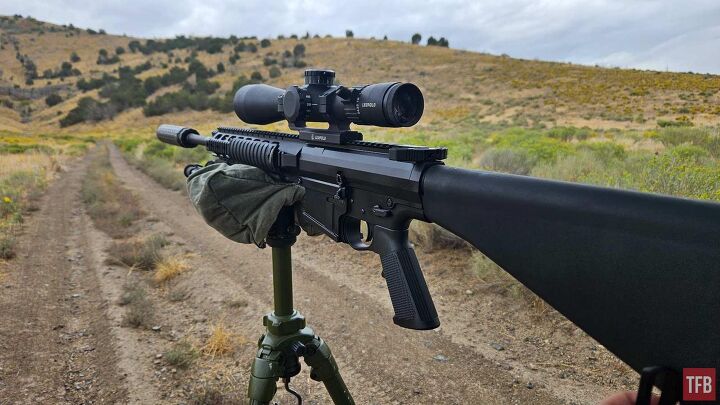
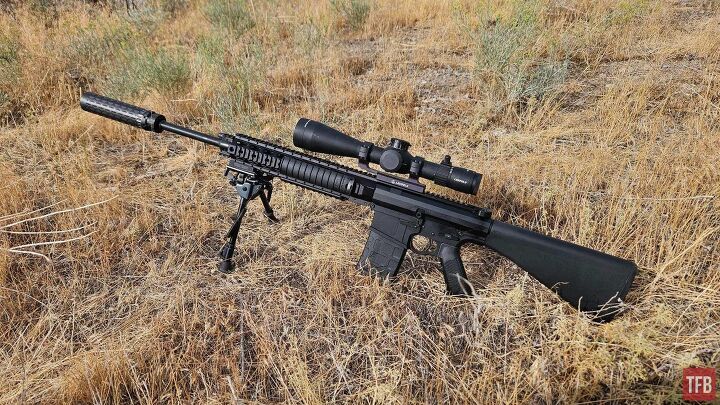
This particular version of the Sabre 10 is not a true clone of the Mk11. It is just close enough for vibes, with a few tweaks. My first order of business was swapping out the pistol grip with the clone-correct A2 grip. Some people hate on this grip, but I have always liked it. This one change made a huge difference in making the Sabre look right. Next were the rail covers. I had several KAC rail panels on hand, so I picked a few out and slid them on. These did not fit the rail perfectly, and took a little forcing to get them to stay. An old Harris-style bipod, attached to what I think is a GG&G mount, rounded out the gun nicely.
On The Range
I shot this gun a lot during this review, with about 800 rounds through it over the better part of a year. That round count was not cheap, but it was fun, and I wanted this review to be a real look at how this rifle operates and performs rather than a simple overview with less than a hundred rounds.
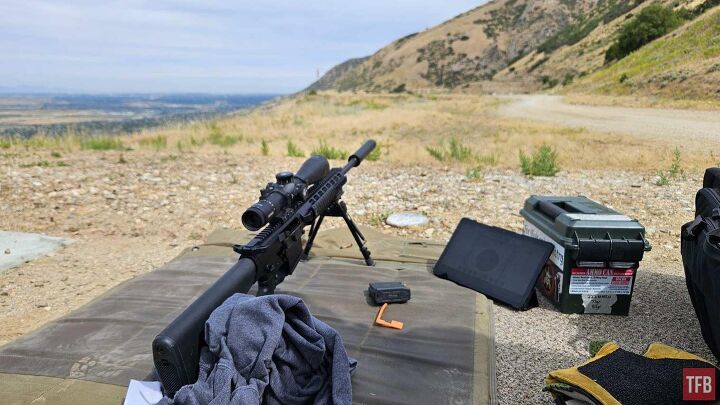
The first step of most reviews is basic shooting and zeroing on the range. You want to make sure the gun is fully operational before delving into more adventurous use. The Sabre-10 was no different. First steps were shooting a few loads to make sure things cycled, that the magazines worked and fed well, and getting an optic set up. Most of the review shooting used a Leupold Mark 4HD 6-24x scope (which is a great optic, BTW).
Messing with the gas system is also an important first step. Unsuppressed, with the gas fully open, the recoil was a little punchy. No 6.5 Creedmoor could be considered an abusive recoiling gun, but turning down the gas setting helped the gun cycle in a more civilized way.
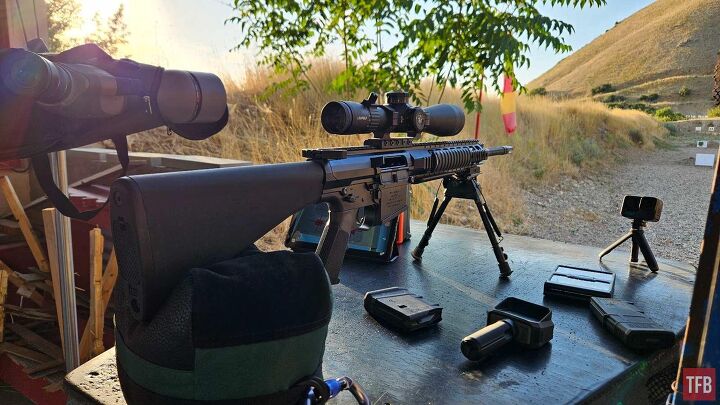
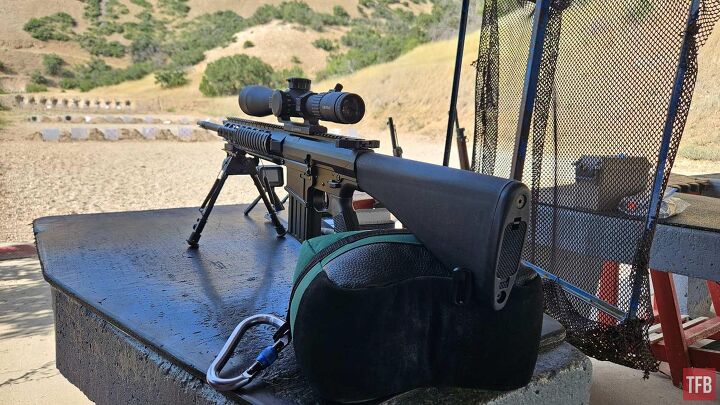
PSA ships the 6.5 Creedmoor versions of the Sabre 10 with Magpul magazines. These work exceptionally well, with no feeding problems to report. I also have metal magazines from various manufacturers, and while these look more period correct for the Mk11, they are not as reliable. The shoulder angle and case taper seem to be different enough from the .308 to cause hiccups. There are newer metal magazines optimized for 6.5 Creemoor use, but I do not have any of those to test.
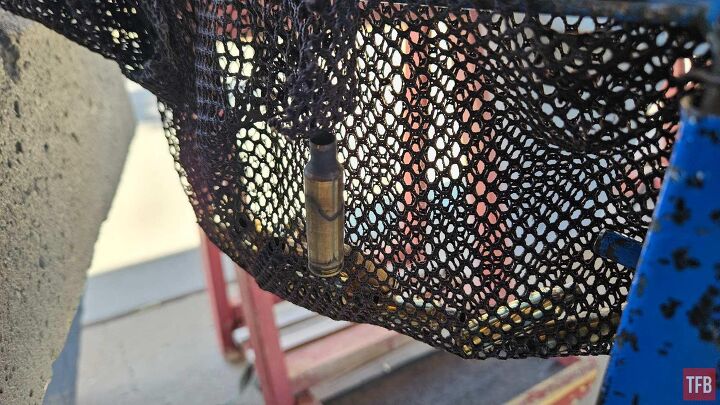
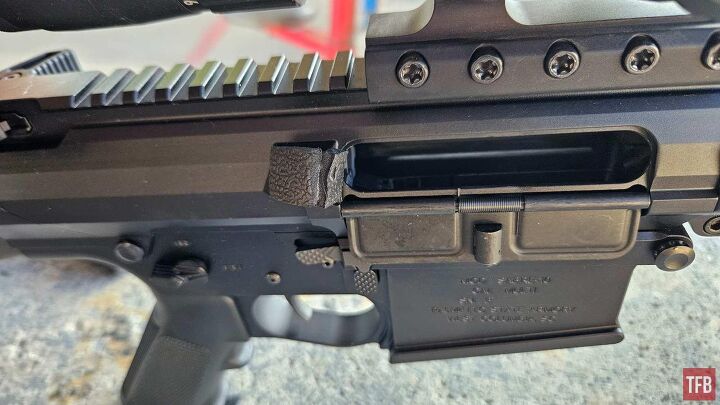
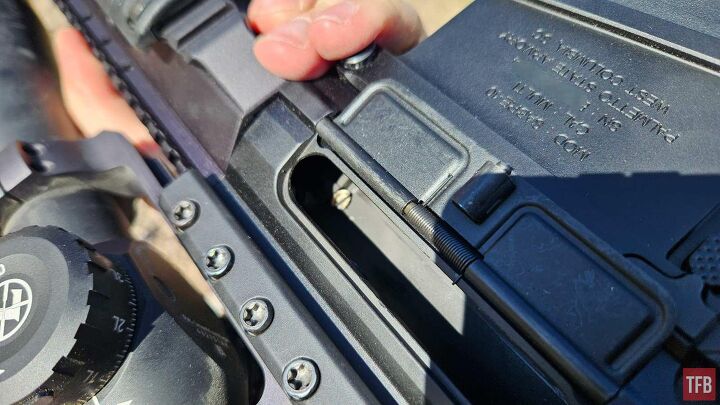
The Sabre 10 has a case deflector behind the ejection port, but unlike the standard AR-style ones we are all accustomed to, this one slants forward. This places a sharp edge as the main contact point for the ejecting brass. I found that all of my brass had a very uniform dent midway down the case body from impacting that surface.
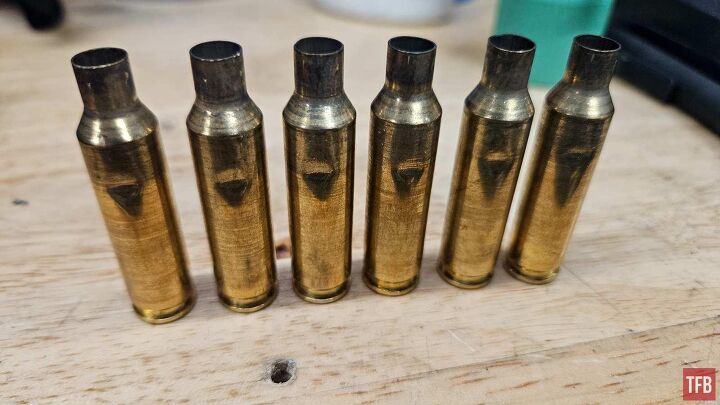
I do reload, and I would like to recover my brass in decent condition where possible, so I set out to try and fix this. My first attempt was with adhesive Velcro, but that did not work. The brass was still dented. What did work was cutting a piece of adhesive foam used for protecting floors from furniture legs. This stuck out enough to get in the way of the dust cover, but in exchange, the brass was perfect when recovered.
Overall reliability was great. There were a few misfeeds in the first 20 rounds, and nothing to speak of after that. I intentionally did not clean the gun, and after about 300 rounds, mostly suppressed, the bolt was getting sluggish. I wiped some oil on the bolt, and that resolved the issue enough for a few hundred more rounds. I gave the rifle a more thorough cleaning at about 600 rounds, and it was badly needed. But once that fouling and crud were removed, it returned to perfect operation.
PSA includes some nice upgrades on this Sabre-10. The trigger is a Sabre design with a two-stage pull. PSA lists a 3.5-pound nominal pull weight, and this one hovered right around that pull weight on average. The ambidextrous bolt catch on the right side of the gun is a huge addition compared to basic large-frame guns. Being able to drop the bolt with the trigger finger is just nice to live with.
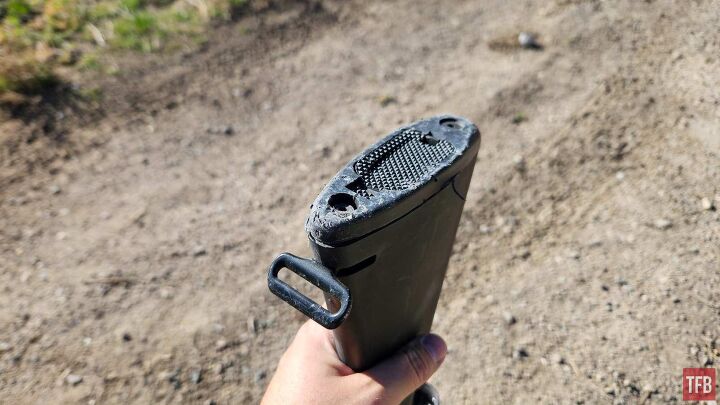
There was only one really notable malfunction during the test. Other than the bolt getting a little slow after a bunch of suppressed shooting or using the wrong magazines and inducing malfunctions, there was one cartridge that blew a primer. This isn’t a failing on the gun’s part, but getting the bolt unstuck was a serious process. I could not get the bolt back and mortared the rifle on rocky ground without a second thought because it has a fixed stock. I should have had a second thought, because I smashed the buttplate of the stock and partially broke it. It was not too broken to use, and it still worked for the rest of the review, but I would have hoped that a fixed stock would survive that level of foreseeable abuse.
Accuracy
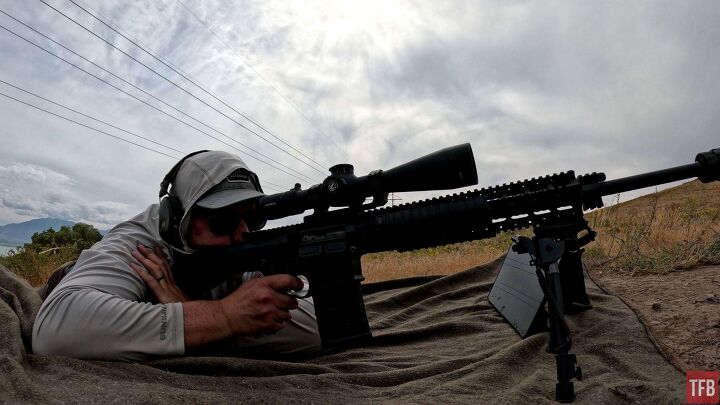
I spent a fair amount of time shooting groups with this gun. That is typically not what I like to spend my precious range time on, but with the precision design intent for this gun, I wanted to see what it could do.
This gun fills a “sniper support rifle” or DMR role. It needs to be accurate enough to clean up after a precision rifle, but it doesn’t need to shoot 0.5 MOA groups. I shot some groups with a few different types of ammo in the first 50 rounds, and the results were just OK. Most 10-round groups would have a center cluster of seven or eight rounds, with a few rounds opening the group substantially.
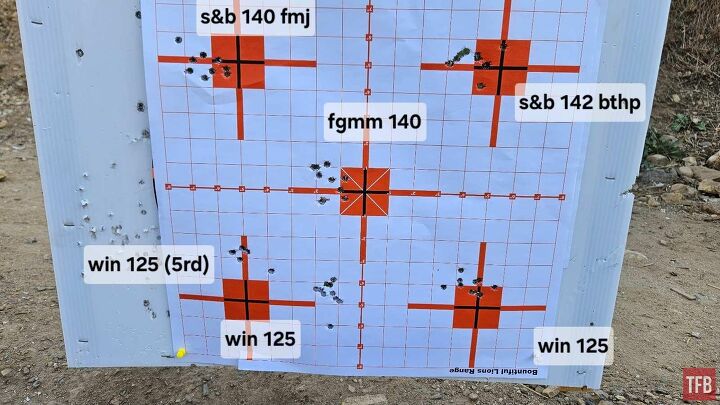
I tested the accuracy again once I had about 500 rounds through the gun. In the past, I have seen guns go from unacceptable to superb accuracy once they had enough rounds down the bore to smooth things out. The Sabre-10 showed definite improvement after a lot of shooting, but the groups still usually had one round that would go wide of the remainder. Not all groups showed this, though, and S&B posted some very respectable 10-round groups.
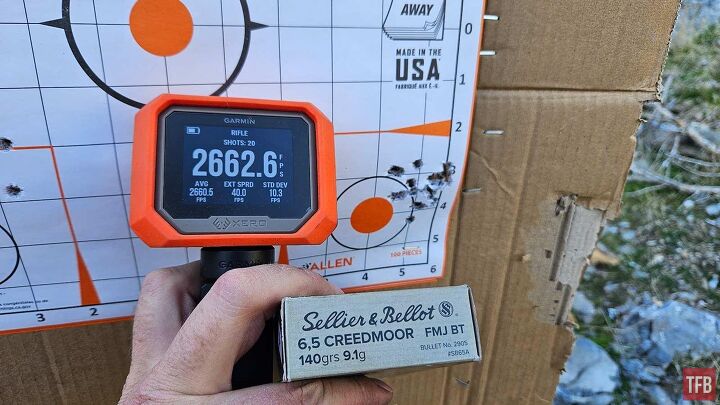
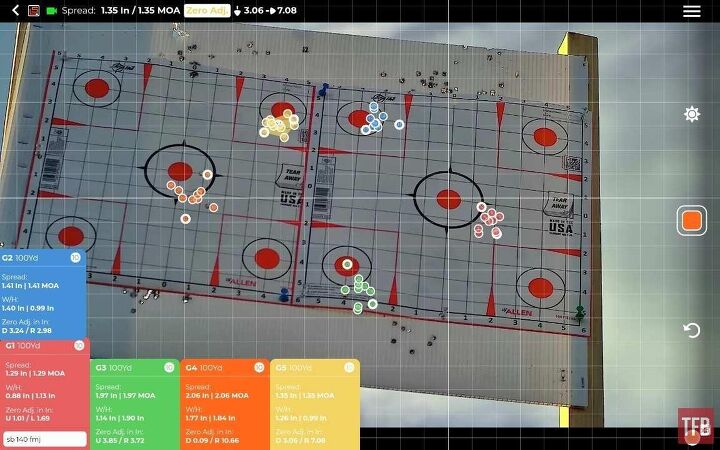
Here is a 1.48 MOA group with ten rounds of S&B 140-grain FMJ:
Here is another series of 10-round groups fired on a different day. I don’t recall which ammo each group was, but it shows a consistent 2 MOA or less accuracy potential.
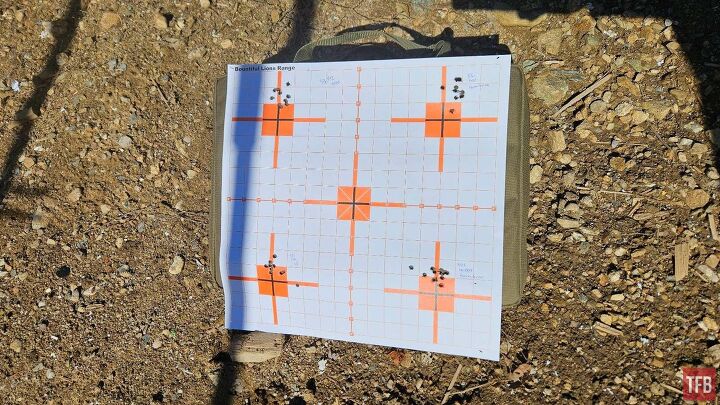
In the style of my friends at 9-Hole Reviews, here are some other groups I shot at 100 yards:
|
Ammunition |
“9-of-10” Group Size |
10-Round Group |
|
Federal 140gr Gold Medal |
1.34” |
1.93” |
|
Hornady 140gr American Gunner |
1.36” |
2.17” |
|
S&B 131gr SP |
1.1” |
2.25” |
|
S&B 142gr BTHP |
1.07” |
1.42” |
I could cherry-pick three or five shot groups with the gun and claim it is well under an MOA, but ten rounds give a more realistic idea of what the gun will do. It will consistently put ten rounds under 2 inches with the right ammo, and can do very well with ammo it likes. This level of accuracy is more than adequate in a semi-auto with quick follow-up shots available. But I do wonder what this gun could do with a very high-end barrel on it. Perhaps when I shoot this one out, it will get a Bartlien or Proof, and we can revisit the topic.
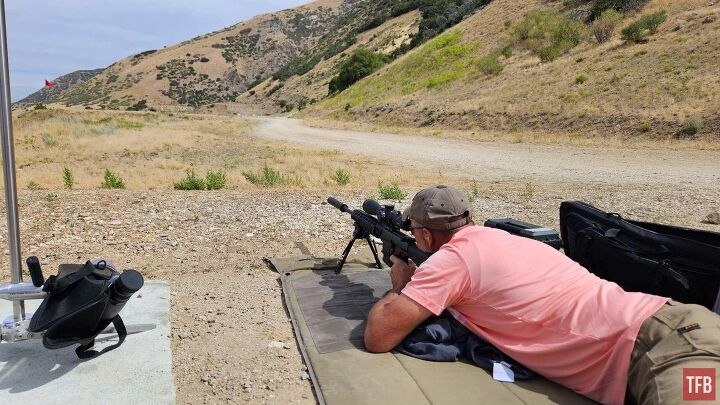
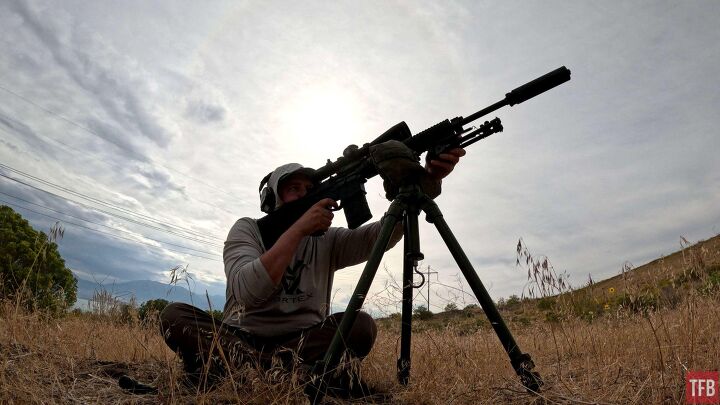
I also took the Sabre-10 to a local highpower rifle match. I did not compete with it (it is not legal for the class I compete in), but we all took turns shooting on the 600-yard electronic targets. Even with a load that the gun just shot OK, we all were landing a lot of hits in the 10-ring despite shifty wind conditions. With one of the loads that grouped closer to 1 MOA, it would have been able to hang with the other guns on the line.
Suppressor Use
PSA puts an adjustable gas block on this gun to help regulate the gas pressure. Moving from fully open to fully closed changed the ejection from about 3 o’clock back to 4 o’clock, and the gun cycled harder with the block more open. But at all positions, it ran fine and locked open.
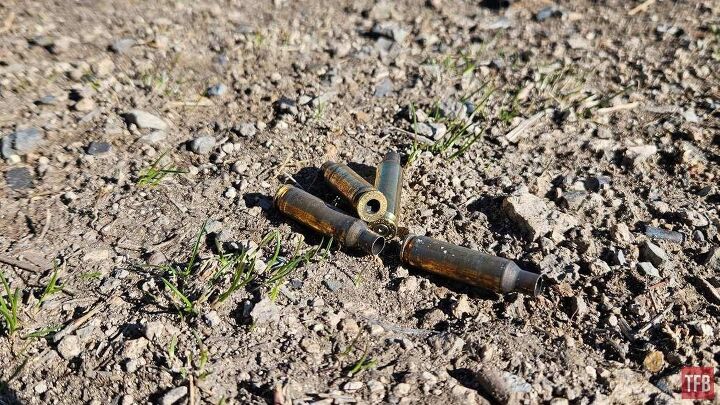
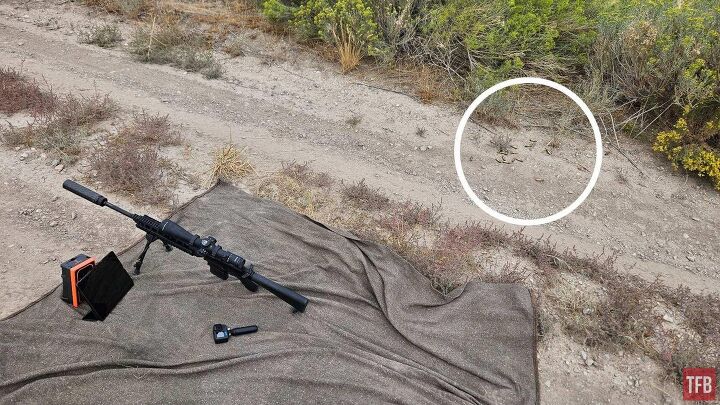
Dialing the block down to a lower setting helped when running a silencer. I ran a few different cans over the course of the review, but had the best luck with the BOE Suppression Mod1 in .30-caliber. With the vented end cap, it felt like the gun was running unsuppressed. The brass still looked like it was fired in a silenced AR, but there was no gas to my face.
This is a gas-operated 6.5 Creedmoor, so it’s not a gun with abusive recoil unsuppressed. With the Mod1 silencer attached, the recoil was reduced even further, and spotting my impacts was easy. The gun felt right with that silencer, and it essentially lived on the gun for the bulk of the review. The brass ejection is very consistent with the suppressor attached as well.
Conclusion
So, with many hundreds of rounds through the Sabre-10 turned into a “Mock 11” clone-ish rifle, is it a worthwhile purchase? Yes, I think so. Even in 6.5 Creedmoor, which is not the easiest cartridge to get to feed in a semi-auto, this gun ate everything and posted lots of respectable groups, and some very good groups. PSA squeezed a lot of performance into this gun without breaking the bank. The Sabre series has lived up to the duty-grade marketing, and the Sabre-10 is no exception.