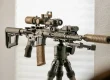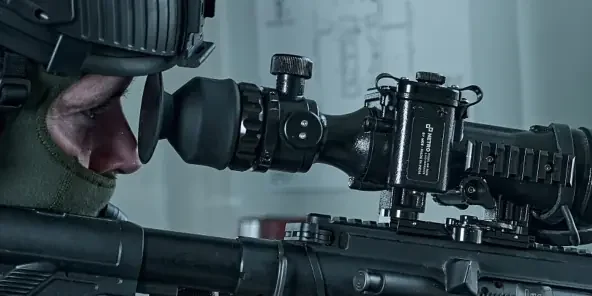
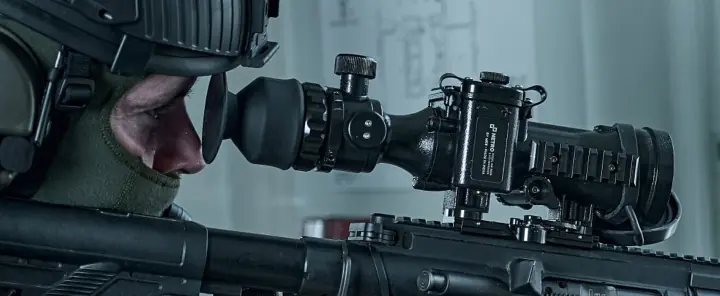
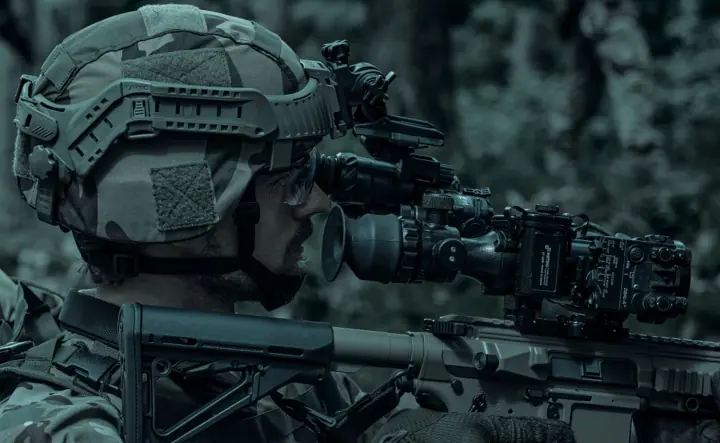
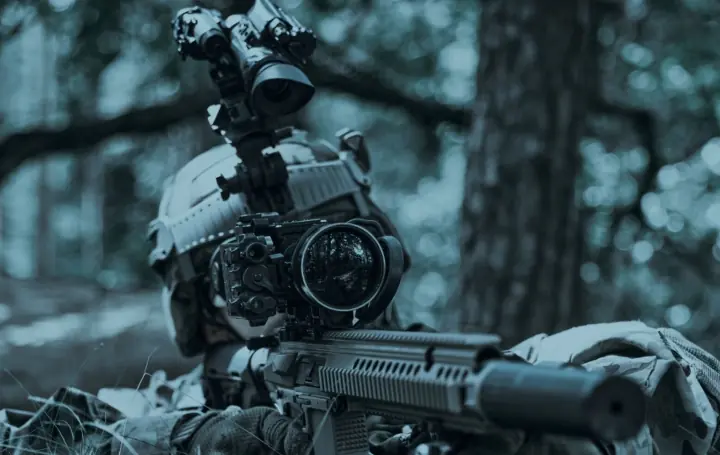
The Indian Army is fielding a locally produced night vision weapon sight on its SIG 716 assault rifle in 7.62x51mm, with the first batch of roughly 4,000 MKU Netro NW-3000 Gen 3 units scheduled to arrive by year’s end. The broader procurement spans 29,762 sights valued at USD 62.1 million, effectively standardizing night vision across rifle-armed infantry formations operating along contested northern and western frontiers.
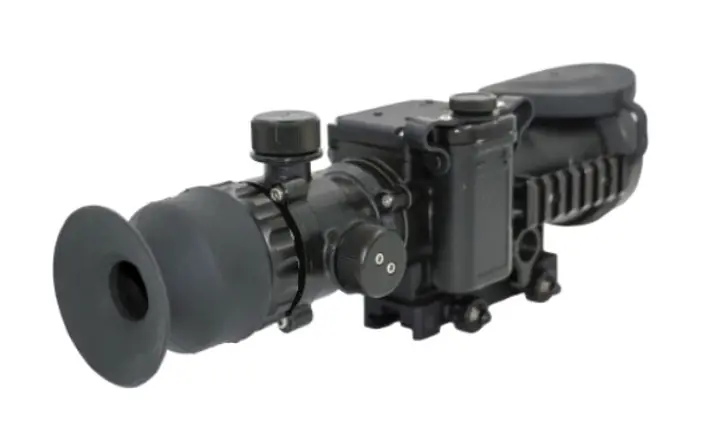
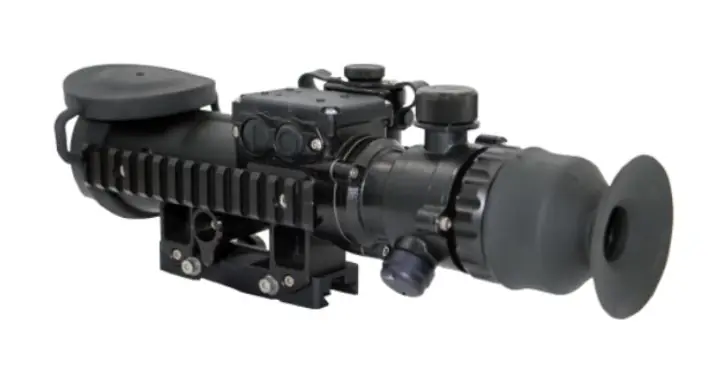
The NW-3000 incorporates an integrated iron sight, meaning operators retain a fallback aiming solution if the electronic sight fails.
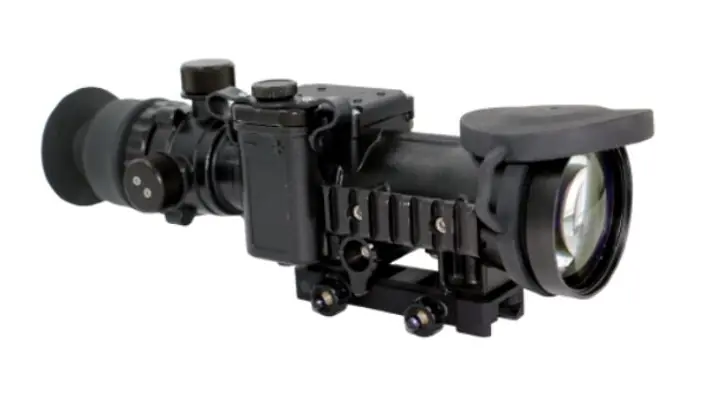
MKU specifies the NW-3000 with automatic gain control and either P43 or P45 phosphor, configured to deliver a 10-degree field of view with 22mm eye relief. The optical design supports detection of personnel targets at 500 meters, recognition at 300 meters, and identification at 100 meters. Against vehicle platforms, detection reaches 600 meters, recognition extends to 400 meters, and identification occurs at 150 meters.
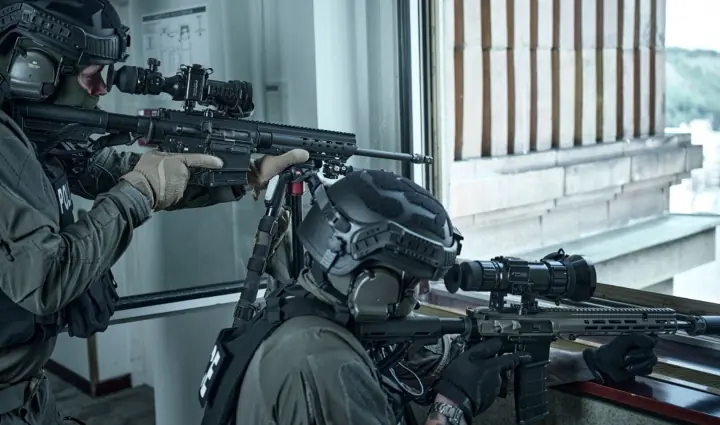
Those ranges assume zero ambient light with only the built-in infrared illuminator and whatever starlight remains available. Windage and elevation adjustments span ±40 MOA with 0.5 MOA per-click.
Before procurement, the NW-3000 underwent nearly a year of field evaluation by India’s Ministry of Defence, tested across high-altitude freezing posts and extreme heat environments to validate reliability on the SIG 716 and other weapon platforms, across the operational terrain soldiers would actually encounter. That testing cleared the path to Buy (Indian-IDDM) classification, the government’s indigenous procurement category. The project carries over 51 percent indigenous content.
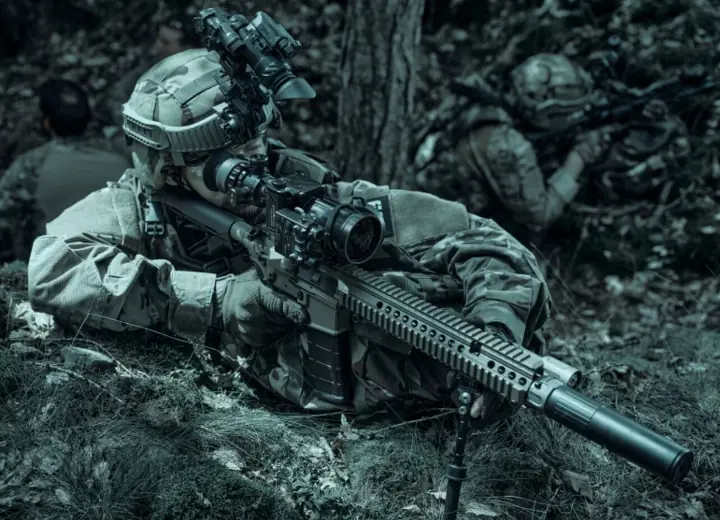
The sight’s five-level reticle brightness control, user-defined crosshair patterns, and auto-gating protection against bright source saturation address the specific operational demands of night combat. The integrated IR illuminator means rifle teams don’t need separate IR equipment to engage targets in complete darkness, simplifying logistics and keeping soldiers mobile.
The procurement includes a 10-year or 10,000-hour operational lifespan guarantee with decade-long maintenance and training support.
Meanwhile, Indian military observers have noted that allied forces are transitioning toward Generation-4 night vision systems with higher figures of merit, a capability gap that may eventually shape decisions about how Special Forces units get equipped versus standard units.
NW-3000 Night Vision Weapon Sight Specifications:
- Generation-3 Image Intensifier with automatic gain control
- P43 or P45 phosphor
- 10° ± 1° field of view
- 22mm minimum eye relief
- Diopter range: -6D to +2D
- Windage and elevation: ±40 MOA (0.5 MOA per click)
- Reticle brightness: 5-level cyclic control
- Built-in infrared illuminator
- Integrated iron sight
- MIL-STD-1913 Picatinny compatible
- Auto-gating and bright source protection
- JSS-55555 and MIL-STD-810 compliant
- 10-year or 10,000-hour operational lifespan with maintenance support
What’s your read on whether a Gen-3 sight paired with a 7.62x51mm battle rifle covers the operational requirements Indian forces face at night, or should that capability jump to Gen-4 tech sooner? Or rather, a thermal, or a thermal clip-on?
All images by MKU Limited.