The gear that actually makes a difference over a career is the stuff that never made it onto any list.
Front Line Friday is a weekly column on duty-grade realities for first responders.
Welcome back to Front Line Friday. This week is an editorial, and the topic is one that comes up in every squad room and roll call eventually: the gap between what policy issues you and what the job actually requires. Every officer starts with the same baseline: flashlight, duty belt, radio, badge, the items on the academy gear handout, and the ones checked off at issuance. The policy covers the baseline and keeps you legally covered. But the gear that actually makes a difference over a career is the stuff that never made it onto any list. Front Line Friday is brought to you by Dead Air Silencers, whose support keeps this column going every week.

This isn’t about bypassing protocol. It’s about building on it. The items below are what experienced officers reach for again and again, the gear that survives contact with real shifts and proves its worth the first time you need it, when you don’t have it. None of it is exotic. Most of it is cheap. All of it is chosen on purpose before the moment it’s tested, rather than discovered as a gap at 3 a.m.
Front Line Friday @ TFB:
Lighting and Illumination
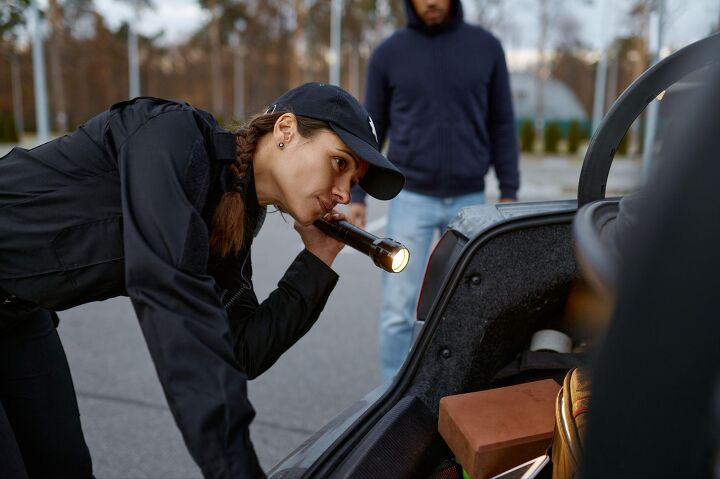
Policy will issue you a flashlight. What policy will not tell you is that the issued flashlight is a single point of failure, and a single point of failure in your primary illumination source becomes a problem the moment it matters.
The case for a backup handheld is straightforward. The primary fails. The primary gets handed to someone else. The primary stays clipped to the dashboard while you’re already out of the car. A pocket-clip secondary that lives on the body, not in the bag or the console, covers all three scenarios. The Streamlight Polytac is the model I keep coming back to for this role. It runs on CR123A batteries, takes a momentary tail switch, and disappears under a jacket. For officers who’d rather not maintain a separate CR123A inventory, the 5.11 Rapid PL-1AA runs on a single AA. Same pocket-clip footprint, and AA cells are easier to source and rotate alongside the rest of your gear. Either one works. Reach should not require thought, and neither of these requires it.
A headlamp is the piece that officers tend to underrate until the first time they’re working a scene at night with both hands occupied. Writing in a notebook, performing care on a casualty, working under a vehicle, and processing evidence. Every one of those is a two-handed task, and a handheld light makes it harder. The Coast FL97R covers most duty-use cases. It’s rechargeable, has a red-light mode for night-vision preservation and notebook work, and produces a beam pattern that doesn’t blind everyone you talk to. Red filter capability is the feature most worth specifying. White light into a notebook at 0200 wrecks night vision for the next several minutes. Red doesn’t.
Battery management is the part most officers get wrong. Lithium primaries (CR123A, AA lithium) hold a charge for years and tolerate temperature extremes that drain alkalines. They cost more per cell, and they’re worth it.
Rechargeables are fine for a headlamp that comes inside at the end of every shift, but they’re a bad fit for a backup light that lives in the car between uses. A depleted backup is no backup at all. Standardizing on a single battery format across your lights, where possible, makes rotation simpler and reduces the odds of a “wrong cell, wrong light” moment in the dark.
What I’d Watch
I’d watch for: A primary flashlight that hasn’t had its batteries replaced in over a year. Alkaline cells leak. A leaking cell ruins the light, and the light it ruins is the one you were planning to depend on.
I’d watch for: Backup lights stored loose in the center console or door pocket. A backup that rolls under the seat during a pursuit is not a backup. It needs a fixed location.
I’d watch for: Headlamps without a red mode. A white headlamp pointed into your notes is also pointed at every nearby officer’s face when you look up.
What I’d Change
I’d change: Quarterly battery rotation as a habit, not an event. Set a recurring calendar reminder. Replace the primary cells, move the still-good cells to the secondary, and discard anything that’s been sitting more than two cycles.
I’d change: The default assumption that one flashlight is enough. Two lights, two power sources, two carry locations. The cost of redundancy here is under $50, plus a pocket clip.
Vehicle Recovery
Patrol cars break down. Other people’s cars break down worse. A patrol car sitting dead on the side of a highway with no way to flag down help is a bad position that compounds fast, and the calls where you’re the one who happens to be there when a civilian needs a pullout of a ditch tend to come at the worst possible time of year.
Before discussing any of the gear, check your agency policy. Some departments prohibit officers from providing recovery assistance to motorists, full stop. Others allow it within specific parameters around equipment, training, and risk to the cruiser. Know which you are. The gear below assumes your policy allows its use. If it doesn’t, the gear stays in the trunk for your own vehicle, and the civilian gets a tow truck.
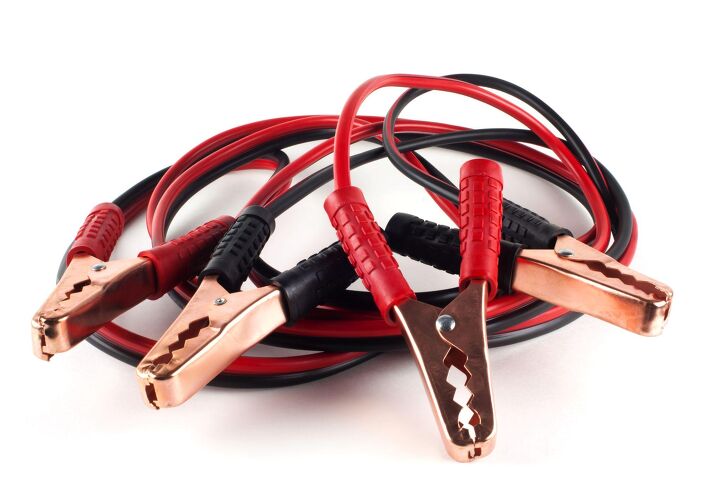
For your own vehicle, the most common failure mode is a dead battery. A quality set of booster cables handles it. Look for 4-gauge cables with copper conductors and clamps that grip a corroded terminal without fighting you. The 10-gauge discount-bin cables that ship with most roadside kits do not carry enough current to start a duty vehicle with all its accessories. They are theater, not equipment. A self-contained jump pack is a reasonable alternative, with the caveat that lithium jump packs lose capacity in cold weather and lose it faster if they sit in a hot trunk all summer. If you carry one, charge it monthly, and replace it when it no longer holds a full charge.
For pulling someone else out of a ditch, the Safe-Xtract SX-20000 MX/TX Pack is the kit I’d point officers toward. It’s a no-winch system built around two tree savers, a kinetic recovery rope, and four soft shackles, sized for the 6,000 to 9,000 lb vehicle class that most patrol cars and pickups fall into. The components are rated, documented, and Made-in-USA Berry Amendment compliant, which matters if your agency procurement requires it. The companion app walks through rigging and load calculation, which matters because the failure mode for recovery work is not “the strap doesn’t pull hard enough.” The failure mode is a 30-pound shackle launched through a windshield because somebody used a snatch strap as a tow strap, anchored to a tow ball, or eyeballed the load rating. Recovery gear kills people every year. The math is not optional, and Safe-Xtract themselves note that users should be professionally trained before fielding the gear.
Be honest about the cost. The SX-20000 MX/TX Pack runs around $676 at the time of writing, and the larger kits cost more. That is real money for an individual officer, and it is squarely in the category of equipment that should be funded at the department level if the department allows officers to perform recovery in the first place. If your agency permits motorist assists but expects officers to source recovery gear out of pocket, that is worth raising with your fleet or equipment manager. A single recovery injury costs the agency more than outfitting a shift’s worth of cruisers. If the department won’t fund it and you decide to carry your own, that is a personal decision, and it should come with personal training to match.
Two more items that pay for themselves the first time you need them. A folding shovel or small entrenching tool handles snow, mud, and the occasional need to dig a wheel out of a soft shoulder. A set of traction mats or a bag of sand or kitty litter handles the situations where a shovel won’t. Reflective triangles or LED road flares matter more than most officers think. A patrol car with its overheads on is visible. A patrol car parked behind a disabled motorist with its overheads off, while you’re walking up to the driver’s window, is a target. Triangles set 100 feet behind the scene give passing traffic the warning that the cruiser doesn’t.
What I’d Watch
I’d watch for: Booster cables that have been in a trunk for 5 years without being tested. Clamp springs weaken, insulation cracks, and corrosion builds up at the connection points. Pull them out, look at them, and exercise the clamps before you need to depend on them.
I’d watch for: Recovery straps and ropes stored next to sharp tools, shovels, or anything else that can abrade the synthetic fiber. A nick in a kinetic rope is not cosmetic. It’s a failure point under load.
I’d watch for: Jump packs that have been in service more than two years without a capacity check. Lithium chemistry degrades, and the LED indicator on the case may not accurately reflect remaining capacity.
What I’d Change
I’d change: Any recovery kit that doesn’t include written load ratings for every component. If you can’t tell at a glance what the working load limit is, you can’t make a safe rigging decision under pressure.
I’d change: The assumption that recovery is a skill you’ll figure out when you need it. Read the manual. Run the app. Take the training if your agency offers it. The first time you rig a recovery should not be at 0300 in a snowstorm with someone else’s family in the ditch.
I’d change: Triangles or flares stored where they require unloading half the trunk to access. Recovery situations are time-sensitive on the warning side. If the triangles are buried, they don’t get deployed.
Hand Protection
Front Line Friday #8 covered duty glove selection, fit, and the compliance gaps that come from gloves officers won’t actually wear. This section is the other half of that conversation: redundancy and accessibility for the gloves that already work. The right glove on your duty belt does no good if it is the only pair you have, and it does no good if the backups are buried in a duffel bag in the trunk.
The case for a backup pair starts with the fact that primary gloves get lost. They tear during a fight or a vehicle extrication. They get soaked while walking a perimeter in the rain and become useless until they dry out. They become contaminated with blood, fuel, or other fluids and must be removed from the body and placed in a biohazard bag before you can do anything else. They get left in a locker because you grabbed your spare belt and forgot the gloves. Each of those is a recoverable situation if you have a second pair in the car. Each of them is a problem if you don’t.
For the backup duty pair, Mechanix gloves are the standby for a reason. They cost a fraction of a tactical-rated glove, they hold up to vehicle work and recovery rigging, and they fit close enough to the hand to preserve the dexterity needed for radio operation and basic manipulation. They are not a replacement for a cut-resistant or needle-resistant glove on the belt, and they should not be your search glove. They are a workhorse second pair that handles the situations the primary wasn’t designed for: changing a tire, helping push a vehicle, sorting through debris at a scene, or any of the dozen tasks that would chew up a more expensive duty glove for no good reason.
A separate cold-weather pair is worth carrying if your jurisdiction has real winter. The gloves that work for the bulk of duty tasks at 50 degrees do not work at 15 degrees with a wind, and the gloves that handle 15 degrees do not provide enough dexterity for routine work above freezing. Trying to make one pair cover both ranges produces a glove that is mediocre at both. A dedicated cold pair, kept in the vehicle from October through April, depending on where you work, removes the daily decision and means the cold-weather option is there on the morning the temperature actually drops.
Nitrile reserves are the third category, and the one most officers underprovision. A box of nitrile exam gloves in the car is not optional gear. It’s the difference between gloving up before a medical contact and improvising afterward. The box belongs in a door panel or center console, not in the trunk. If retrieving a pair requires you to walk to the back of the vehicle and open a duffel, the gloves will not be on your hands when they should be. Carry enough to reglove between contacts on a shift where you’re running back-to-back medicals, because reusing nitrile between patients is not a thing that should happen.
What I’d Watch
I’d watch for: A backup duty pair stored in the same place as the primary. If both pairs are on the belt or in the bag, a single failure mode (a soaked belt, a forgotten bag) takes out both pairs. Spread them across the body and the vehicle.
I’d watch for: Nitrile gloves that have been in the car through a full summer or winter cycle. Heat degrades the material, cold makes it brittle, and a box that’s been baking on the rear deck since June is not going to perform when you tear it open in November. Rotate the box twice a year.
I’d watch for: Cold-weather gloves selected on warmth alone with no consideration for trigger finger fit and radio operation. A glove you have to remove to operate the radio or run the lights is a glove that comes off and stays off.
What I’d Change
I’d change: The default assumption that one pair on the belt is enough. Two pairs in two locations, plus a box of nitrile within arm’s reach of the driver’s seat. Total cost under fifty dollars. Total time to set up, ten minutes.
I’d change: Nitrile rotation as a habit tied to a season change. Spring forward and fall back are good triggers. Pull the old box, open a new one, done.
I’d change: Any glove inventory in the vehicle that hasn’t been audited in a year. Pairs go missing, boxes get raided, and the inventory you think you have is rarely the inventory you actually have. Five minutes with the trunk open at the start of a shift fixes most of it.
Communication and Documentation
Radio communication is the part of the job most officers stop thinking about until it fails, and it tends to fail at predictable moments. Loud scenes. Wind. Crowd noise. Anywhere the speaker mic on your collar is competing with the environment, the conversation between you and dispatch becomes harder to hear and harder to keep private. Both of those matter, and both have the same fix.
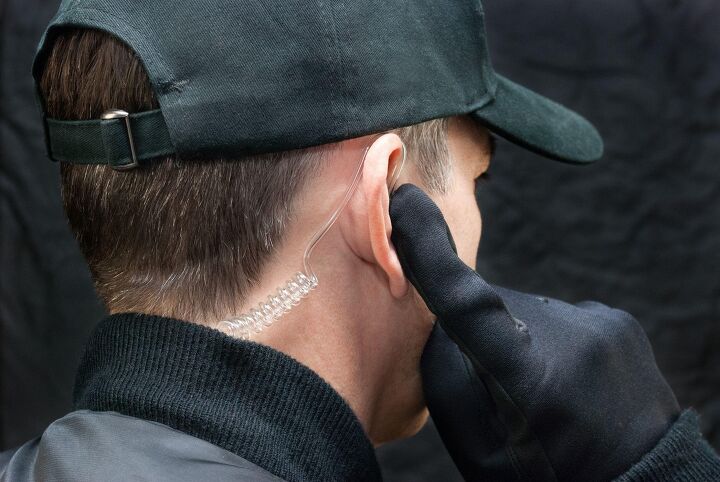
A personal radio earpiece is not standard issue in most departments, but the officers who run one tend not to go back. The audio quality is better in a noisy environment because the speaker is in your ear instead of being clipped six inches from your shoulder. Privacy is better because dispatch traffic is not broadcasting to every civilian within 20 feet of you. And there’s a durability angle most people don’t think about until it bites them. I worked a call once where my partner’s speaker mic clip broke on his shoulder lapel, and he spent the rest of the shift with the mic tucked into his vest carrier, fishing it out every time dispatch called and trying to manage it one-handed while doing everything else the call required. An earpiece with cabling routed under the uniform shirt would have prevented the problem entirely. The cable doesn’t snag on door frames, suspect grabs, or vest panels because it isn’t exposed. The mic clip can’t break if there isn’t one carrying the load.
The earpiece category breaks down into a few options worth knowing. A standard surveillance kit with an acoustic tube is the cheapest entry point and works fine for most patrol applications. A bone-conduction or in-ear receiver offers better audio fidelity but comes at a higher cost. A throat mic lets you transmit quietly in situations where speaking into a chest mic would announce your position. Pick the category that matches your role and your noise environment. Whatever you pick, route the cable under the uniform shirt or vest carrier rather than over it. Exposed cables snag. Concealed cables don’t.
On documentation, calling cards are a small thing that pays back disproportionately. Not business cards. Cards with your name, badge number, agency, and case or report contact information that someone can use to follow up after the contact. The person you’re handing it to has just had a bad day. They’re not retaining what you tell them verbally, and a handwritten note on the back of a receipt does not survive the drive home. A clean printed card means the follow-up call to your records division actually happens, which means fewer “I never got the report number” calls back to dispatch and fewer victims falling through the cracks because they couldn’t read your handwriting.
Comfort and Sustenance
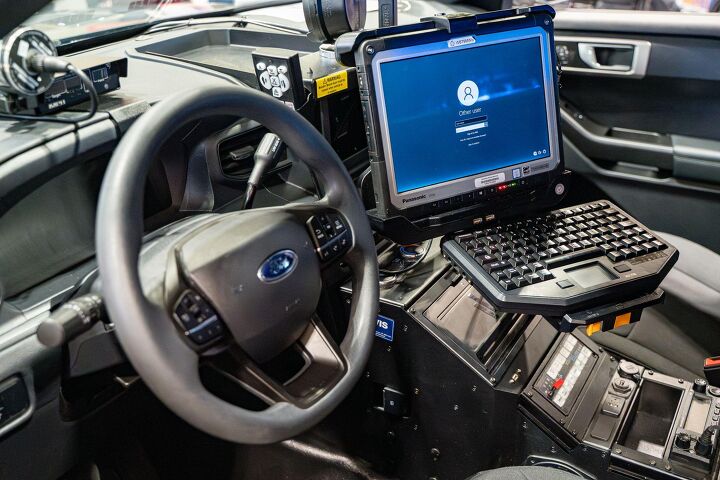
This category sounds soft until you’ve worked a 10-hour shift fueled by gas station coffee and whatever was in the vending machine in the lobby. The cumulative effect of poor hydration, blood sugar swings, and a factory patrol seat compounds across a career, and the cost shows up in performance long before it shows up in a workers’ comp claim. Treat this section as injury prevention, because that’s what it is.
Hydration is the easiest thing to get wrong because every officer has competing reasons to drink less water. Bathroom access is unpredictable on patrol, scenes run long, and there’s no easy way to step away from a domestic call to use a restroom. The result is officers who deliberately underhydrate at the start of a shift to avoid the problem, only to pay for it in the back half with headaches, fatigue, and slower decision-making. The fix is not “drink more water” in the abstract. The fix is a sealed bottle in the cruiser with a known capacity (32 ounces is a reasonable target for most shifts), consumed on a schedule that you control rather than reactively. If bathroom access is genuinely the limiting factor on your beat, that’s a sector or scheduling conversation, not a hydration one.
Food is where most officers self-sabotage without realizing it. The standard patrol fueling pattern (skipped breakfast, fast food at hour six, gas-station snacks after midnight) produces blood sugar swings that affect cognition, irritability, and reaction time at exactly the points in the shift when those things matter. A sugar crash at 0200 during a difficult interview is not a discipline problem. It’s a fueling problem that started six hours earlier. Keep something with real protein in the glove box: jerky, a protein bar that isn’t 30 grams of sugar, or a packet of nuts. Keep something with fast-acting sugar separately for the moments when you actually need a quick correction (low blood sugar mid-pursuit is a real risk, and a glucose tab or a small candy works better than trying to find a vending machine). The point is not to eat well on shift. The point is to keep the bottom from falling out.
Caffeine timing matters more than caffeine quantity. The end-of-shift coffee that gets you through report writing also wrecks the sleep that you need to function the next day, and rotating shift workers are already fighting their circadian rhythm without help. A general rule that holds for most people: nothing caffeinated within six hours of when you need to be asleep. That’s a hard rule on a graveyard shift, where the coffee at 0400 is the difference between making it home awake and not making it home at all, and the same coffee guarantees a bad sleep at 0900. There’s no clean answer to that tradeoff, but being aware of it is the first step toward not stacking five-hour energy drinks at the end of every rotation.
The seat cushion is the comfort item that most officers underrate the most. Eight to twelve hours per shift in a factory patrol seat, with a duty belt loading the lumbar spine asymmetrically every time you sit down, produces back problems that show up in five-year and ten-year increments. A simple closed-cell foam cushion or a gel insert costs under forty dollars, takes up no meaningful trunk space, and changes how your back feels at the end of a long shift. Officers who switch from a duty belt to a load-bearing vest get part of the benefit (covered in #6), but the seat is the other half of the equation. If you’re already managing low back pain, a lumbar support roll between your back and the seat is the cheapest physical therapy you’ll ever buy. If you’re not managing low back pain yet, the cushion is what keeps you in that group.
A few smaller items round out the kit. A pair of dry socks in a sealed bag handles the shift where you stepped in something you shouldn’t have or worked an hour-long perimeter in the rain. A roll of paper towels and a pack of disinfectant wipes handle everything else. A small trash bag keeps the cruiser from accumulating the wrappers and bottles that turn the front seat into evidence of how the shift actually went. None of these is exciting. All of them get used more than the gear that is.
The Honest Truth
No list like this survives every scenario. Your jurisdiction, your vehicle, your shift, and your assignment all change what matters and what’s worth carrying. An officer working rural patrol in Montana has a different gear calculus than an officer working downtown foot beats in a major metro, and the recovery kit that makes sense for one is dead weight for the other.
The point of this column is not the specific items. The point is the gap between what policy gave you and what the job actually requires of you, and the discipline of closing that gap on purpose rather than discovering it at 3 a.m. when something has already gone wrong.
Start with one item. Add it deliberately, give it a defined location in your kit, and see whether it earns its place over the next thirty days. If it does, keep it and add the next one. If it doesn’t, take it out and try something else. The officers who carry the most useful gear are not the officers with the most gear. They’re the officers who’ve been auditing their kit for a decade and discarding what doesn’t pull its weight.
Bottom Line / What to Do Monday
- Pick one item from this column and actually put it in your car this week. Not next pay period, not when you have time. This week.
- Audit your current flashlight situation. One primary, one backup, both with fresh batteries, both fixed in place in the vehicle. If any of those are missing, fix them.
- Set a reminder on your phone to rotate the battery quarterly. Tie it to a date you’ll remember (the first of the season, the day clocks change, your anniversary date with the agency). Rotate primaries to secondaries, replace primaries, and discard cells that have been in service through two cycles.
- Pull your booster cables and exercise the clamps. If they’re 10-gauge or older than five years, replace them. Same check for any recovery gear you carry: visible damage to webbing or rope, corrosion on hardware, working load limits clearly marked.
- Verify your glove inventory. One primary pair on the body, one backup pair in the vehicle, and one box of nitrile within arm’s reach of the driver’s seat. Spread the storage locations so a single failure doesn’t take out all three.
- Check your nitrile box for heat or cold damage. If it’s been in the cruiser for a full season, replace it.
- Evaluate your radio audio in a noisy environment. If a speaker mic on the lapel isn’t cutting it, an earpiece is worth the conversation with your supervisor or your own pocket.
- Stock the glove box. Sealed water bottle, real-protein snack, fast-acting sugar option, and a small first-aid item or two. Total cost under twenty dollars. Total effort, one trip to the grocery store.
- Add a seat cushion if you don’t have one. Closed-cell foam or gel, under forty dollars, the cheapest piece of long-term back insurance you’ll buy.
- For FTOs and supervisors: this is a roll-call conversation waiting to happen. Ask your officers what they carry that isn’t on the policy list and why. The answers are usually instructive, and cross-pollination across a shift yields better outcomes than any single gear list.
- For agency procurement: if your department permits motorist-assist recoveries, fund the recovery gear and the training that goes with it. Allowing officers to freelance their own kits at their own expense is a liability exposure waiting to develop, and it leads to inconsistent capability across the shift.
- For Fire/EMS: the parallels are obvious. Your apparatus carries a lot of gear, but the personal kit each crew member maintains in their locker or their go-bag follows the same logic. What policy is issued to you is the baseline. What you’ve added on purpose is what carries you through the shifts that don’t go as planned.
Sign-Off
That’s Front Line Friday for this week. The gear that actually matters over a career is often the gear policy doesn’t list, not because policy got it wrong, but because policy is designed to handle the baseline. The items that survive a career are the ones you choose on purpose, based on what the job has actually required of you. Make those choices deliberately, and make them before the moment they are tested.