
Canada’s massive, continent-spanning firearms seizure plan is currently on hold as the country’s strongest firearms advocacy group has finally gotten their day in the Supreme Court—but that hold is only temporary.
Canucks and their guns @ TFB:
What’s happening?
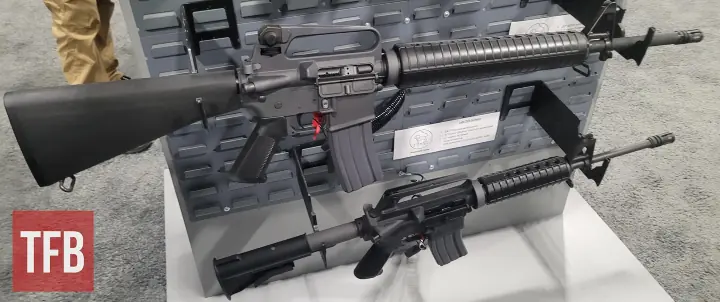
Basically, starting back in 2020, the Canadian federal government has been working on banning a wide list of firearms, particularly almost any modern AR-style rifle. The feds were set to enact a mandatory turn-your-gun-in-for-money program through 2026, with the self-declaration period ending on March 31 of this year.
In the weeks leading up to the end of the self-declaration period, gun owners were already unhappy about being forced to participate in a mandatory seizure program, but they were even more incensed when they saw the prices they would be offered for their firearms. Some owners said that under the official government program, they were offered practically pennies on the dollar for their guns, with no recognition of the hundreds or even thousands spent on accessories that were now worthless without the gun they were attached to.
This unhappiness led the gun rights organizations to double down on their call for non-participation, and it led provincial leaders to double down on their talk about not cooperating with federal leadership. Canada is a place where crimefighting budgets are cash-strapped, and indeed, many of the gun owners affected by the cuts are actually crimefighters themselves (many Canadian cops bought ARs for range practice). As a result, significant law enforcement groups such as major police unions as well as provincial justice department leaders said they opposed the gun grab, as it would be ineffective and expensive. Indeed, a big smuggling bust in late May proved what law-abiding Canadian gun owners have been saying all along: That they aren’t the problem, and criminals will continue to smuggle massive amounts of illegal firearms into the country with or without the planned seizures.
So, by the end of spring, the federal government had itself backed into a corner. Despite years of planning and millions of dollars spent, they had no truly effective plan to accomplish their seizures, and there was little will outside urban areas to see the seizures go through. Even in urban areas, police leadership often opposed the move, and regular citizens questioned the expense.
The turn-ins have indeed been going forward for a few months now, particularly from businesses who had no choice but to participate. However, no national seizure program has yet started as there is an amnesty in place until October 30, 2026. Many speculated as to how the federal government would play out its hand at that point. And then, somewhat surprisingly, the feds were thrown a lifeline by the Supreme Court of Canada.
CCFR vs. Canada
Private gun owners and firearms advocacy organizations have been battling the government in court ever since the first major gun bans were announced in spring of 2020, but at every turn, the feds have seen the legal wrangling go in their favor. Then, in late March, the Supreme Court of Canada said it would hear four appeals that were related to the firearms buyback program.
Until the appeals are decided, there will be no change to the status of Ottawa’s plan to seize these firearms. However, the appeals will give gun owners and the Canadian Coalition for Firearms Rights (CCFR) the chance to have another day in court, where things might finally go their way—and that’s a lot better than their chances have looked for a while.

But just as importantly, the amnesty for Canadian gun owners has been extended past the end of October. Given that court cases can drag on, many firearms owners could have faced a problem where the case was still in court, but their firearms were now illegal and the amnesty ended. With that in mind, the government program saw the amnesty extended again until the court offers its opinion. As per the feds’ website:
“… the Amnesty Orders have been extended and set to expire 90 days following the date the Supreme Court of Canada renders its decision, which is expected next year. By extending the amnesty period, the Government is providing certainty to individual owners and businesses that they will continue to be protected from criminal liability while the Supreme Court hears the appeal and renders its decision.”
So that means that there will probably be no involuntary seizures until at least 2027, and this is good news for both gun owners and for the feds. Both were holding a bad hand; the gun owners would have been criminalized had they not cooperated with the program by the end of October of 2026. The federal government had not really figured out how to make the program work, nor how to pay for it. No doubt the feds are trying to plan their next move, even as gun owners are praying for success when their day in court comes, with the appeal hearing scheduled for November 9-10, 2026.