The RPL-20 is a fascinating machine gun as it represents a shift in Russian small-arms design, combining legacy ideas with more modern trends, primarily the full 12 o’clock M1913 rail real estate for enablers. While my earlier RPL-20 article covered the weapon and its development, recently released Telegram footage provides a closer look at it in operation. In this article, I will focus on the gun’s mechanical bits.
The Gun
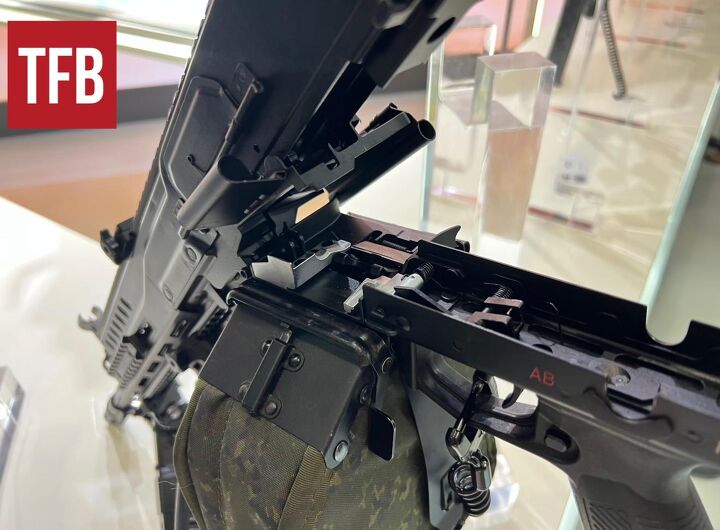
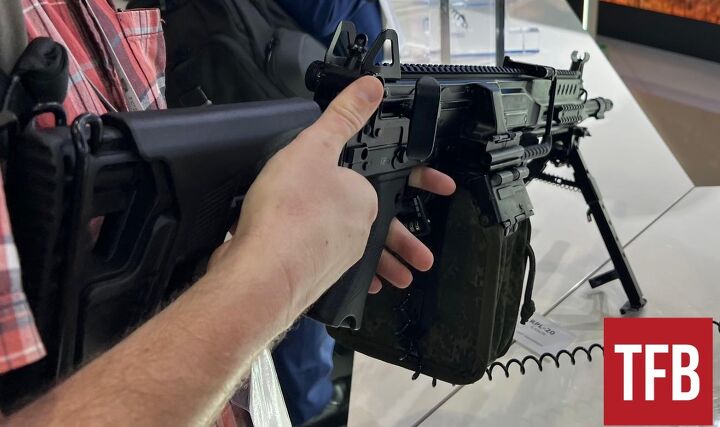
The RPL-20 follows typical Kalashnikov design trends but features a unique bottom-feed tray cover arrangement rather than a conventional top-feed tray cover. The weapon is chambered in 5.45×39, a cartridge well known for its relatively mild recoil impulse and soft shooting. When paired with the RPL-20’s overall weight and operating system, the result is a firing impulse that appears unusually smooth. In the video, the recoil impulse appears consistent with a rearward push, similar to a constant-recoil system. However, it is unlikely that the RPL-20 employs a true constant recoil in the technical sense for such a short receiver.
Instead, this perceived smooth operation is likely the result of careful balancing among the operating bits, the gas system, moving mass, and the soft-shooting cartridge for such a lightweight weapon, which weighs 11-12 lbs depending on configuration. Combined with the relatively low recoil of the 5.45 cartridge, this produces a highly controllable full-auto fire, especially during long bursts. For a machine gun intended to support infantry at the squad level or more so special units, this controllability is a significant advantage.
Operating bits
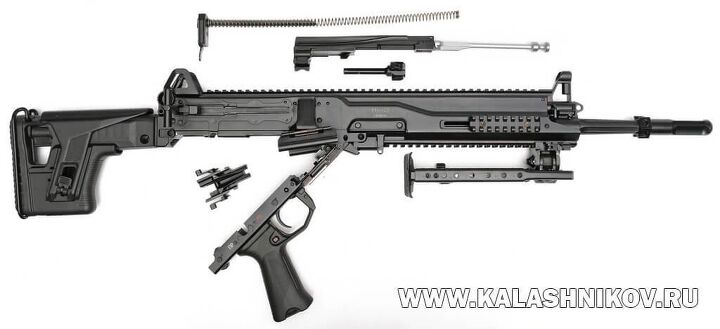
Mechanically, the RPL-20 draws heavily from the proven Soviet-era PK/PKM. The internal layout can be thought of as an inverted and scaled-down PKM. This inspiration from the PK/PKM should have sped up development. This approach is not surprising, given that Izhevsk, home to Kalashnikov Concern, was the original site of PK prototype production before it was transferred to the Degtyaryov plant in the 1960s.
The RPL-20 uses a conventional gas-operated system with a long-stroke gas piston and a one-position gas cap, which does not allow the user to adjust the weapon’s gas for different environmental conditions, levels of fouling, or when running a suppressor. This is a standard feature in many modern machine guns and ensures reliability across a wide range of operating conditions and environments. Going back from the gas block is the hinged gas piston and the bolt carrier. This design mirrors the PKM and simplifies disassembly. The locking is achieved with a rotating bolt with two lugs, which is also very familiar. It also uses a main spring reminiscent of that of the PK/PKM. There is no use of a mechanical or hydraulic buffer assembly.
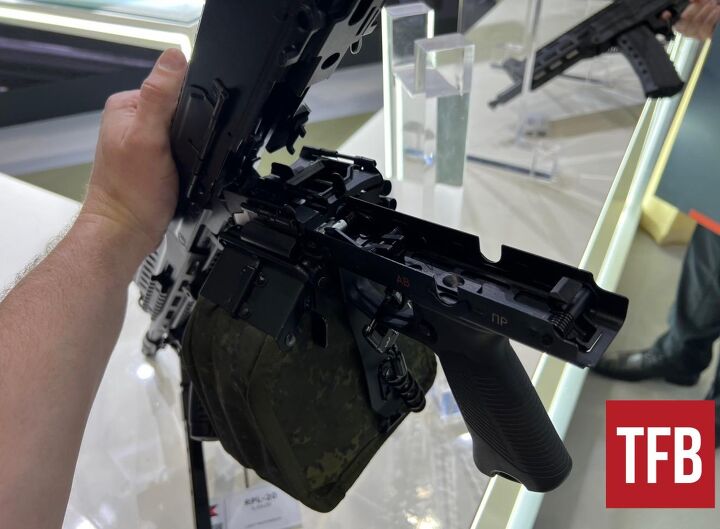
The feeding system is another area where PKM influence is evident, though not a two-stage feed system, but instead a push-through system like the old RPD. The RPL-20 uses a feed pawl assembly that rides in a track on the bolt carrier. This greatly simplifies the feed tray cover and reduces the number of components. As the bolt carrier reciprocates during operation, the feed paw pulls the belt through the feed tray. This system is both robust and time-tested, inspired by the PK/PKM, and contributes to the weapon’s reported reliability.
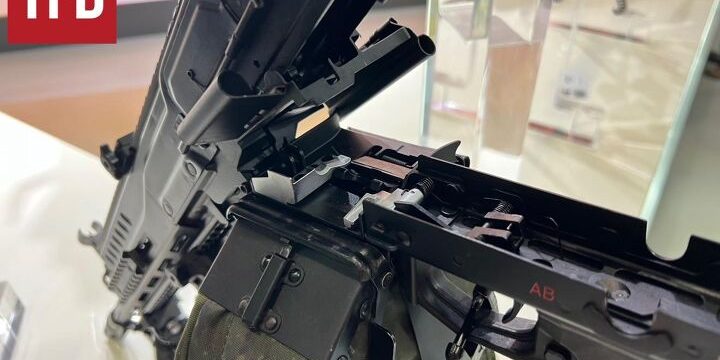
One unique feature is the addition of a removable safety assembly. Because the RPL-20 uses a full bottom-opening feed tray, a mechanism is required to safely hold the bolt to the rear while the tray is opened, which houses the fire control group and the sear that usually holds the bolt to the rear. This added safety feature allows the operator to place the weapon on safe while simultaneously locking the bolt back, ensuring safe handling during loading or clearing when opening the feed tray. Loading is primarily done using starter tabs to prevent the feed tray from being opened. While somewhat unconventional, this safety solution results from integrating a bottom-feed and a belt-fed system.
Classification and where the RPL-20 fits
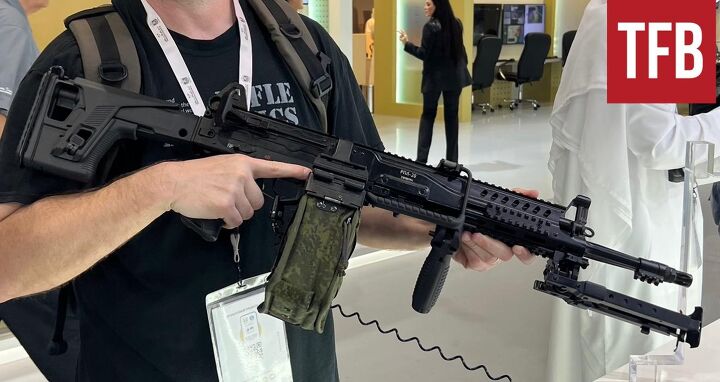
In terms of classification, the RPL-20 sits more closely with the emerging concept of an “assault machine gun” rather than with a traditional light machine gun. It gives the feel of an assault rifle with the capability to provide greater suppressive fire than an assault rifle or automatic rifle. This distinction largely stems from its lack of a quick-change barrel and its light weight. Traditional light machine guns often feature interchangeable barrels to sustain prolonged firing without overheating, though in execution, soldiers sometimes don’t take their spare barrels, especially during training. The RPL-20 can be observed in the RPD 2.0, as it also didn’t have a quick-change barrel. If a light machine gun has a spare barrel, I would highly recommend taking it. Besides overheating, it enables machine-gun operation in the event of a squib or case separation with a quick barrel change. The RPL-20, by contrast, relies on a configurable barrel system, which limits its endurance in continuous fire scenarios. The RPL-20’s configurable barrel system is designed to allow only a long or short barrel, depending on operational needs, and is currently issued with both.
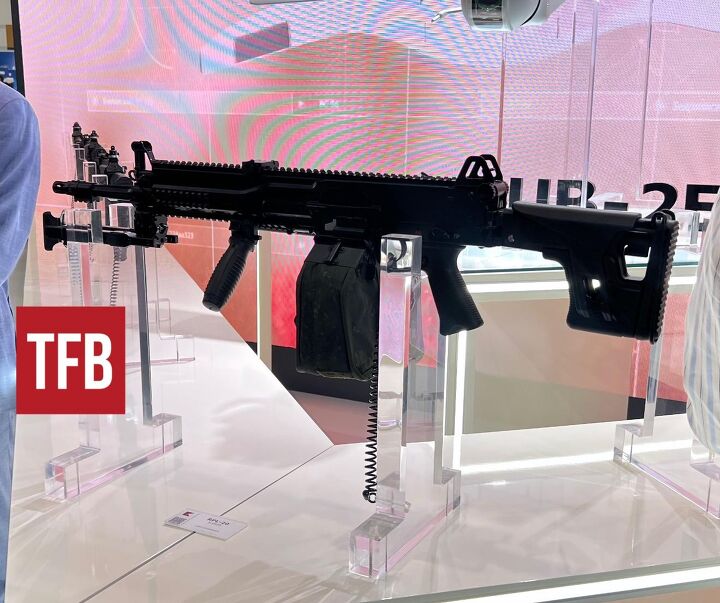
However, this design choice is not without benefits. Eliminating the quick-change barrel reduces overall weight and mechanical complexity, and primarily reduces dispersion. Its reduced weight and dispersion, particularly during shorter bursts, which falls with the intended role of an assault machine gun, providing mobile, accurate suppressive fire rather than sustained, high-volume fire over extended periods. Though the manufacturer states that the barrel can withstand 400 rounds of cyclic fire before cooling, and a reported barrel life of 20,000 rounds may point to high-grade steel commonly used in aircraft cannon barrels, similar to that used for the PKP barrels.
Conclusion
The RPL-20 is the further evolution of Russian machine-gun design, it follows some modern trends and takes some cues from Soviet legacy designs. Its reliance on a proven PKM-inspired operating system, combined with a modernized layout, displays a deliberate effort to balance innovation with reliability. The weapon’s controllable recoil, as observed in recent footage, is a significant plus for any machine gun design.
While questions remain about long-term endurance, particularly given the absence of a quick-change barrel, the RPL-20’s design is suited to shorter engagements rather than sustained suppressive fire. However, the Russo-Ukrainian war suggests they need a quick-change barrel. As additional information emerges, the RPL-20 will likely be judged not only on its mechanical pedigree but also on how effectively it fulfills this evolving role on the modern battlefield. Perhaps Kalashnikov’s earlier unidentified prototype machine gun, with its conventional layout, would have been more suitable for a conscript army, but time will tell.