

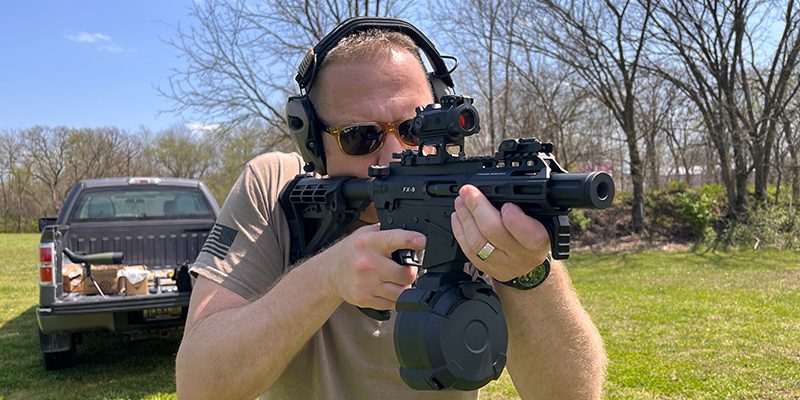
The forced reset trigger was the new kid on the block several years ago. The trigger transformation allowed you to shoot faster because a spring reset the trigger for you instead of requiring you to let off the trigger and pull it again. Similar mechanisms prior to FRT triggers included binary and bump-stock triggers, which help the shooter fire the gun rapidly but in slightly different ways. This type of trigger came under scrutiny by the ATF, but in 2024, its proposed ban was struck down. Unfortunately, that was not the end of the legal issues plaguing the FRT, and more litigation began (particularly against the company Rare Breed Triggers).
It was not until 2025 that a (hopefully) final legal status update cleared the way for us again.
With legal challenges out of mind, one has to ask: Is a forced reset trigger right for me, and how do FRT triggers work?
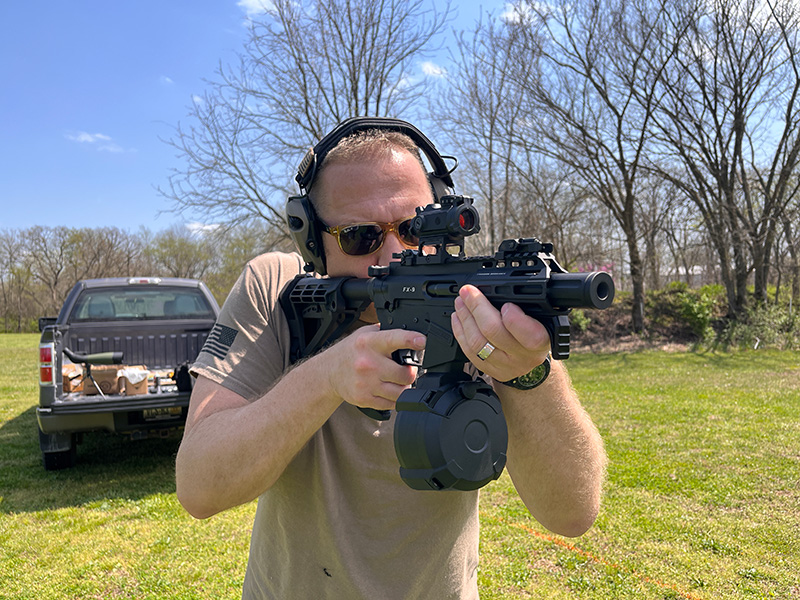
Note: “I know FRT triggers” is redundant. It’s basically saying Forced Reset Trigger triggers…but that’s what people call ’em, so we’ll be using that term.
⚠️ 12-19-25 There are media outlets drawing parallels between FRTs and the “Glock switch” in clickbait-style articles or social media posts, all of them (that we’ve seen at least) decidedly anti-gun. They are not the same.
FRT triggers immediately caused a lot of debate with some gun experts claiming they are not reliable and should not be used. Others argued they have used them extensively with no issue at all. So, what is a forced reset trigger, and why is it such a hot topic right now? On March 22, 2002, the ATF issued a letter to FFL gun dealers stating that forced reset triggers would now be considered machine guns.
This is despite the fact that they function differently from the legal definition of a machine gun. Of course, this did not sit well with many American citizens because the ATF does not have the authority to make or change laws. The law defines what a machine gun is, and (not for the first time), the ATF has attempted to change (and in some cases seemingly subvert overtly) that definition.
Compare prices and check availability on Forced Reset Triggers online here.
What is a Forced Reset Trigger?
A forced reset trigger increases the rate of fire by enabling shooters to pull the trigger faster. This is because there is no delay between shots like there is with traditional triggers. There is an array of forced reset triggers from gun manufacturers, but their legality has been in question for several years. Companies like Rare Breed and Wide-Open Triggers produced them until the courts ordered them to stop.
These orders began a legal battle with the government that has dragged on, off, and back on again for a long time. We will talk more about that in a minute. FRTs became popular triggers because they offer an impressive fire rate. While they do not function like an automatic weapon, they can fire much faster than a standard semi-automatic gun can.
Unfortunately, the government has taken an interest in these triggers and is attempting to make it illegal to sell and own them. The Bureau of Alcohol, Tobacco, Firearms and Explosives (ATF) labeled some triggers as machine guns and issued an open letter warning federally licensed firearm dealers against selling these types of triggers.
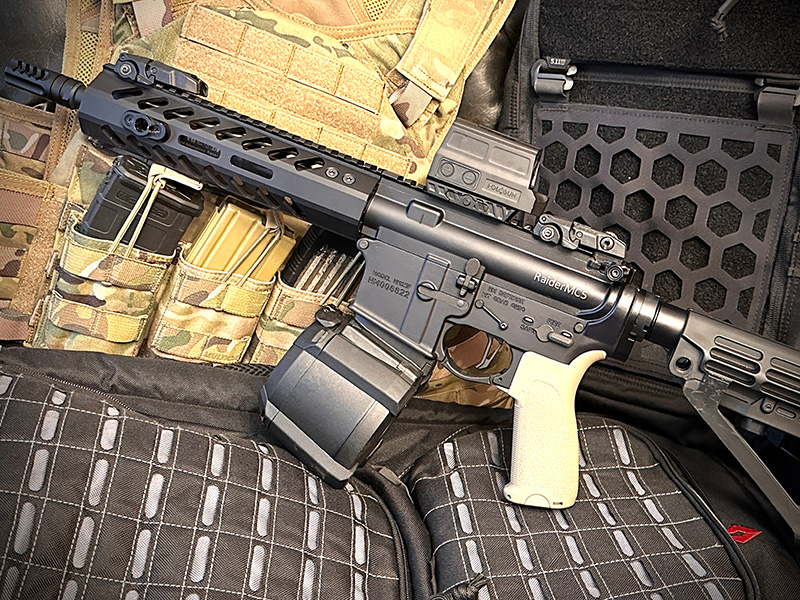
This type of trigger is a specialized version of a binary trigger and works similarly to regular triggers. It consists of a trigger plate installed over the factory disconnector with an opening for the trigger pin to engage the sear and reset bolt. There is an extra spring that pushes the sear back to its starting position after each shot is fired.
A binary trigger does not force the trigger back to its starting point but fires a round as you release the trigger. Some binary triggers are still available from companies like Franklin Arms, but they do not work exactly the same way. Many binary triggers are still legal to purchase and have not fallen under the ATF’s hit list… yet.
Why was the ATF After Forced Reset Triggers?
Rare Breed Triggers released their Forced Reset Trigger in July 2021. It features an extra spring that pushes the trigger forward after being pulled, doubling your rate of fire by enabling twice as fast pulls as traditional triggers. While the springs assist the shooter in moving the trigger faster, it is not operating in automatic mode.
But the ATF did not approve of Rare Breed’s device and issued them a cease-and-desist order to stop selling triggers. Rare Breed Trigger challenged this decision in court and has continued its battle against the ATF ever since. The ATF issued an open letter stating that forced reset triggers may qualify some firearms as machine guns and could thereby alter their legal status significantly.
In January of this year, US District Judge Nina Morrison issued a temporary restraining order against Rare Breed and other defendants to stop selling the triggers. The case is still pending in court and could end up before the US Supreme Court at some point. The biggest argument against the ATF ban is the same as the bump-stock and arm brace argument. That is to say, the ATF does not have the authority to make new laws and decide things are illegal without Congress taking action to do so.
Are There Any Benefits of a Rare Breed Triggers or other FRT?
Trigger reset is a trigger upgrade designed to increase firearm speed and accuracy to some extent, for multiple shots. This upgrade enables shooters to maintain a grip while pulling the trigger and provides minimal movement between shots. Many firearms experts praise and recommend forced reset triggers due to their excellent fire rates, but others argue they are not reliable and should be avoided.
This love/hate opinion is something commonplace in the gun world, so it’s not really that helpful. I rarely find a gun, gun part, bullet, optic, or light that does not have some experts praising it and some bashing it. That leaves the decision of whether to own one up to you, well, and the outcome of court cases. By law, they should be legal, but that doesn’t always work the way it should.
In the end, people shouldn’t have to justify why they want something. It’s a free country, and the right to keep and bear arms did not come with the stipulation that an appointed agency can decide what we need and do not need. But that rant is for another day and another time.
One of the biggest downsides to an FRT is the training required to learn how much pressure to apply to the trigger when firing the gun. If you pull the trigger hard, it will fire only once. If you pull just enough to release the hammer, it will only fire once. But just a little more pressure, the gun will fire, and the reset spring will push the trigger forward, causing it to reset and go off again. In a stressful situation, this would be hard to control and thus defeat the purpose of the trigger.
[I]f your trigger even looks or functions similarly (to “machine gun devices” not explicitly covered in the settlement agreement), you could find yourself facing federal charges depending on how it’s interpreted by whoever is enforcing it that day. That’s the real danger here. The mechanical line between legal and felony is razor thin and the ATF has a long history of of changing interpretations without changing the actual statute. So yes, Rare Breed won the case, but what they really wan was an exception, not a precedent. [Emphasis added.] Their ruling protects their trigger, their customers, and the plaintiffs in that Texas case. Everyone else is still standing in the fog… ~ Colion Noir
Will the FRT prevail?
Only time will tell if the outcome of court cases will be in favor of the constitutional rights of the people or the power-hungry politicians who want to limit gun control. Companies like Rare Breed will only continue to improve their products if they win in court. If not, the concept of forced reset triggers may very well fade away. Until then, there is a messy, confusing world of trigger types and brands to navigate. Companies like Franklin Armory still have binary triggers available in some states, and others are starting to produce triggers that work slightly differently than forced reset triggers until the outcome is determined.
This feature was first released in September 2023. In July 2024, the prospective ATF ban on forced reset triggers was struck down by US District Judge Reed O’Connor in a decision favoring the National Association for Gun Rights. However, the struggle continues. Even as the ATF was put on its back foot, cities and states began making their own efforts to criminalize them. You can watch some news updates below. We’ll try to update this periodically, but always double-check to make sure there’s no new legal inanity from an agency or local polity that could put you in a jam!
Are FRT Triggers Legal? [Rare Breed Triggers]
Note from the editor: The short answer is yes, they’re supposed to be. The FRT is not a machine gun by law. Numerous entities are still actively agitating and litigating against them, so buy yours and enjoy it, but pay attention. There are all too many examples of entities continuing to pursue other firearm-related accessories. There’s no reason to think that it won’t continue.
It’s also very important to note that the Rare Breed Triggers settlement with the ATF only covers FRTs. So-called Machine gun conversion devices, such as switches, drop-in auto sears, lightning links, or trigger control group travel reducers, are not covered. This could mean, depending on who is enforcing the law, that possession/use of any FRT that is not an FRT-15 model specifically named in the settlement is not protected.
Liberty Doll, October 24, 2025
Armed Attorneys, October 17, 2025
Colion Noir, October 16, 2025
Armed Attorneys, May 2025
Recommended Reading
We work pretty hard on this stuff. Do us a solid if you’re getting anything out of our writing!

