Good afternoon, everyone, and welcome back to TFB’s Silencer Saturday, brought to you by Yankee Hill Machine, manufacturers of the new Victra 20-gauge shotgun suppressor. This week we have a pretty mid article. More accurately, a mid-bore article. In the American rifle silencer market, most of the action is in the 556/762 space, or up in the .45-caliber range. But there is a range of .36-caliber silencers that can pair with midbore rifle rounds.
Silencer Saturday @ TFB:
- Silencer Saturday #425: Precision Armament TiTrex First Look
- Silencer Saturday #424: Out-of-this-world Strategic Sciences Silencers
- Silencer Saturday #423: Silencers And Overpressure Risk, Part II
- Silencer Saturday #422: Can Silencers Protect From Overpressure Risk?
- Silencer Saturday #421: Should You Change Your NFA Ownership Structure
Background
Most people categorize mid-bore cartridges as larger than .30 caliber but smaller than .40 or .45, depending on who you ask. But to look at the shelf of the average American gun store, you would think that anything larger than .30 caliber is an oddball. Most North American hunting and target shooting is adequately handled by these .223 to .308 cartridges.
But there are some places where the animals are a little larger, and the calibers scale up to match. Two common cartridges in this realm are the .35 Whelen and 9.3x62mm. The 9.3×62 Mauser cartridge was introduced in the early 1900s for German settlers in Africa. It offered a round capable of hunting anything in Africa without having brutal recoil or overly expensive ammo.
The .35 Whelen is a .30-06 necked up to take a .358” bullet. Brass forming is really as simple as running a .30-06 brass into a .35 Whelen die. It is roughly equivalent to the 9.3×62 in terms of performance, but uses components that are easy to find in the United States. This created a wildcat that trades long range performance for short range punch, but it can handle anything in North America.
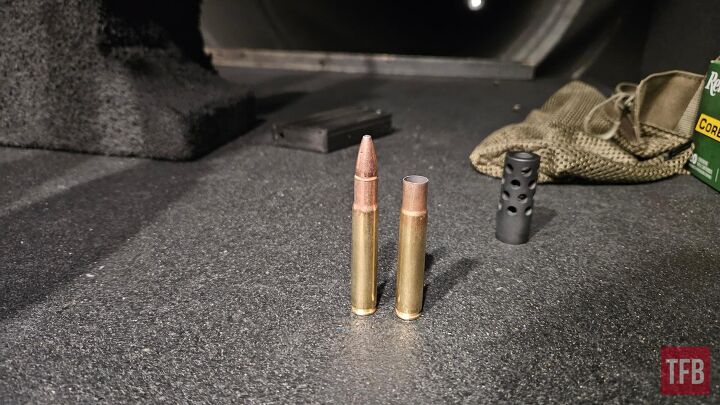
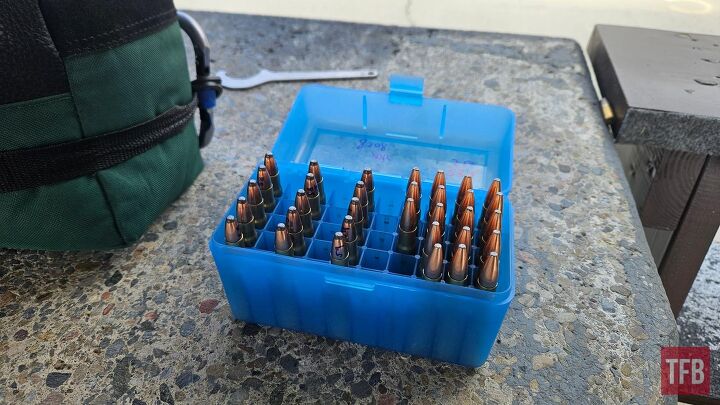
More modern applications for mid-bore cartridges often are used for thick brush hunting or in caliber-limited states. The relatively new .350 Legend cartridge is a good example of this. It fires a .355” bullet (though the SAAMI specification lists .357” bullets) from a straight wall case that fits in an AR-15. It is probably the most common mid-bore cartridge in the US and can be found at places like Walmart, which will definitely not have 9.3×62 ammo in stock.
Putting a silencer on a .35 Whelen or 9.3×62 is not common over here, but it appears to be a standard practice in the Nordic countries. Simpson Limited, importer of many interesting guns, always seems to have threaded 9.3mm Husqvarna rifles in stock. This is a missed opportunity for American shooters. We have plenty of compatible silencers that are more frequently marketed as 9mm, but would work. So let’s try it out.
On The Range
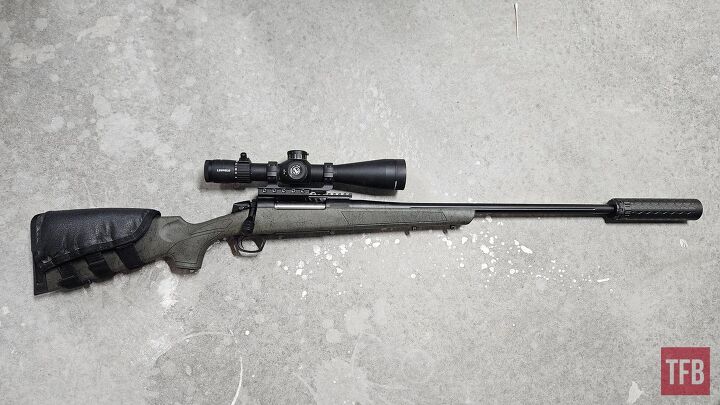
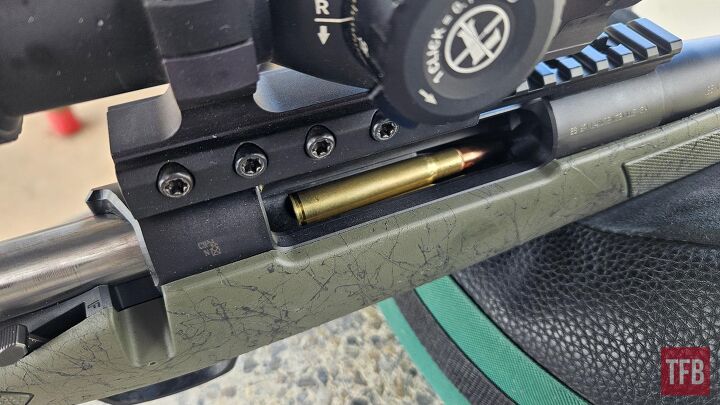
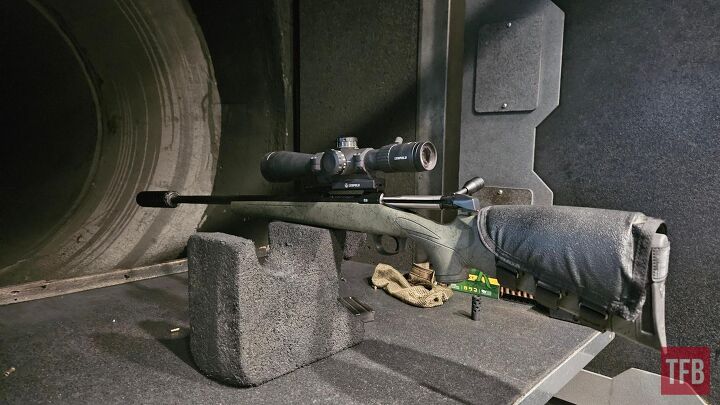
Let’s talk about the shooting experience. I just received a CVA Cascade XT in .35 Whelen for review. That gun was first shown at SHOT Show 2025, and I have been anxiously waiting for it to make its way from Spain over here. That full review is forthcoming, but one of the first orders of business was shooting it suppressed.
CVA includes a radial brake and a thread protector with this gun. Shooting with the thread protector in place, the gun is a little punchy but not abusive. It is nothing like shooting my .458 Win Mag! The brake makes a noticeable difference in the felt recoil, but that has the trade-off of making a loud gun even louder.
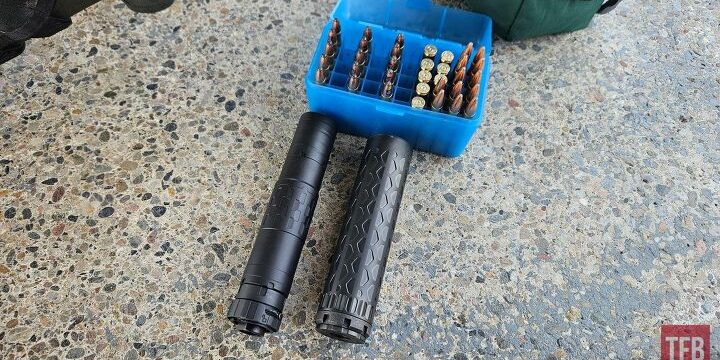
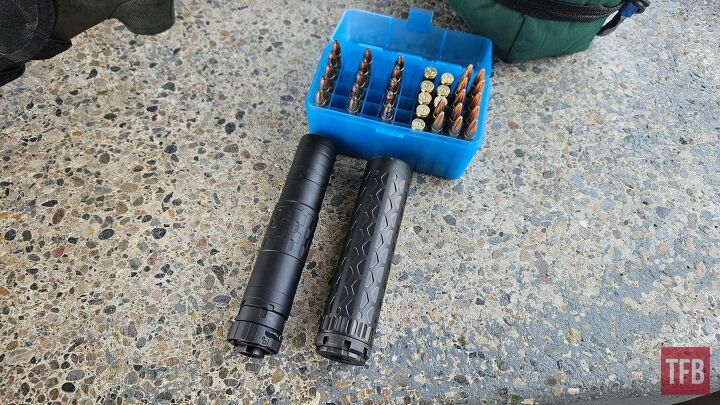
I tried two .36-caliber silencers on the CVA, the BOE Suppression MOD1 and the SilencerCo Omega 36M. Both made a massive reduction in the felt recoil and noise, obviously. Which silencer is quieter is hard to say, and would need scientific testing. I am hesitant to call any silencer hearing safe, but a .35 Whelen with a silencer would be much better to be around in a hunting situation than an unsuppressed one, let alone one with a brake.
The recoil reduction is substantial. Some of that reduction comes from adding more weight to the system. A 7-pound gun will kick less than an 8-pound gun, all else being equal. But most of the reduction effect comes from the silencer acting like a large, enclosed muzzle brake. The character of the recoil impulse changes completely. As cliché as it is, the recoil is a long, slow push with the silencer instead of a sharper hit without it. The duration of the recoil is noticeably longer.
One interesting observation that I made was how quickly the silencers heated up. Mirage becomes an issue much faster than with smaller cartridges. I was doing some accuracy testing with various loads, and the heat mirage was a real issue. Despite that, the recoil reduction and reduced risk of hearing damage and headache from shooting a brake in a covered shooting position is a trade-off I would take.
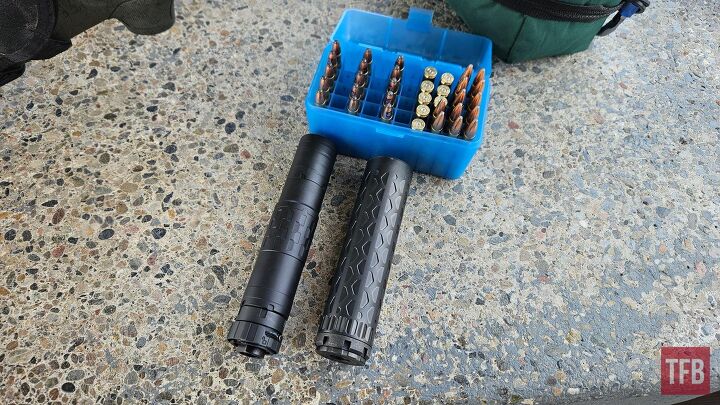
.36-caliber silencers are not just for 9mm options. Mid-bore rifles offer a lot of punch and are a fun change from the typical .30 caliber fare. If I were in charge of the world, mid-bore silencers would offer .38 caliber bores. That little bit of extra space would offer compatibility with the .375-inch cartridges like the .375 Ruger and .375 H&H, but that is a topic for another day. Thanks for joining us, and have a wonderful week.
SILENCER SHOP – HANSOHN BROTHERS – DEADEYE GUNS
MAC TACTICAL
ALL YHM PRODUCTS AT BROWNELLS
DEALERS: If you want your link to buy YHM suppressors included in future Silencer Saturday posts, email: silencers@thefirearmblog.com