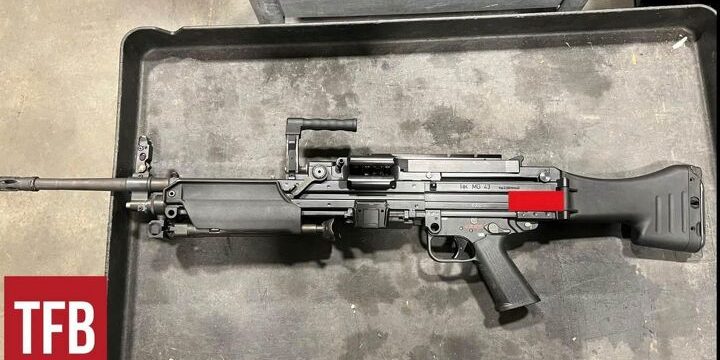
In the late 1990s, the famous German company Heckler & Koch set out to build a new 5.56×45 NATO belt-fed light machine gun for the German Army that could challenge the FN Minimi/M249, which was widely used by many NATO nations. Somehow, they used the Minimi/M249, which was designed by Ernest Vervier at FN Herstal, as the basis for the HK design and improved it. The project first appeared under the designation MG43, which is a conventional, gas-operated design that incorporates all current trends in small-arms development. HK’s design incorporated improvements to withstand heavy use and adverse conditions, and one interesting feature was the weight; the initial MG43 weighed 14.10 lbs. (6.4 kg).
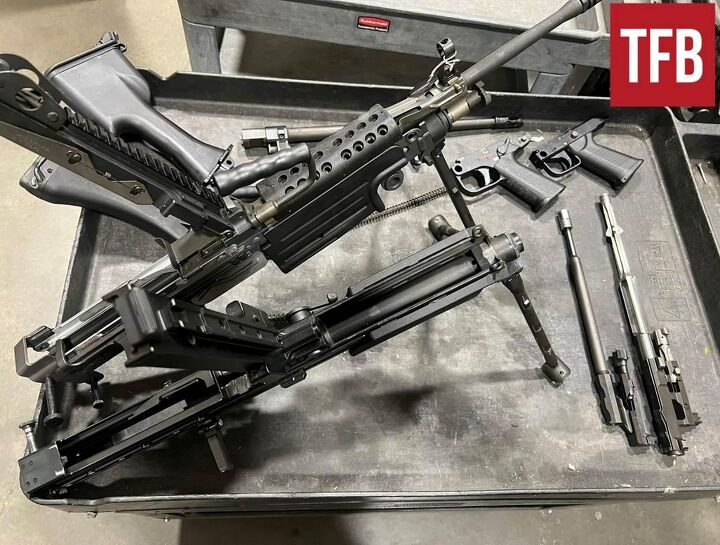
By the early 2000s, the MG43 was more than a paper proposal; it had become visible enough to attract serious technical attention. The HK MG43 is a modular 5.56 light machine gun built around a long-stroke gas-piston operation, using a multi-lug rotating bolt, left-side belt feed, and open-bolt firing. Those are not exotic ideas individually, but the value of the MG43 concept lies in how HK combined them into a compact infantry weapon that a single soldier could easily carry. The design emphasized quick barrel changes, an integrated bipod, M1913 Picatinny rails, and an ambidextrous selector. The MG43 endured and passed its desert-adverse environment torture testing that took place in 2001 at the Yuma Proving Grounds in the US.
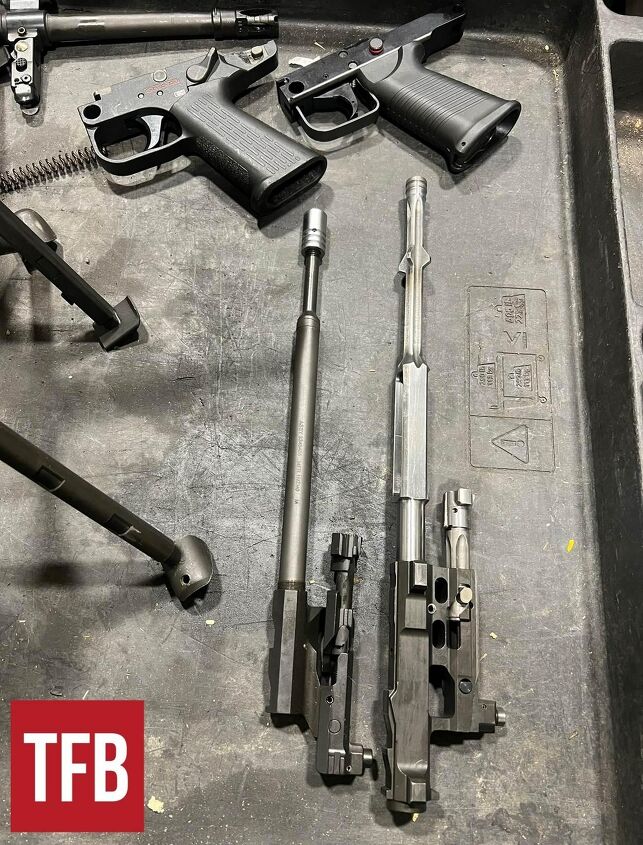
When the German Armed Forces adopted the weapon in 2005, the MG43 became the MG4. The Bundeswehr adopted the MG4 as a 5.56×45 light machine gun to replace the MG3 at the infantry squad level. The Bundeswehr procured MG4 for the “Infanterist der Zukunft” (idZ) program. This program emerged from the German Bundeswehr’s need to enhance infantry capabilities amid increasing operational demands in the early 2000s to modernize. In German service, the MG4 provided infantry with a lighter, more mobile support weapon than the 7.62 MG3, while still delivering sustained suppressive fire at the squad level.
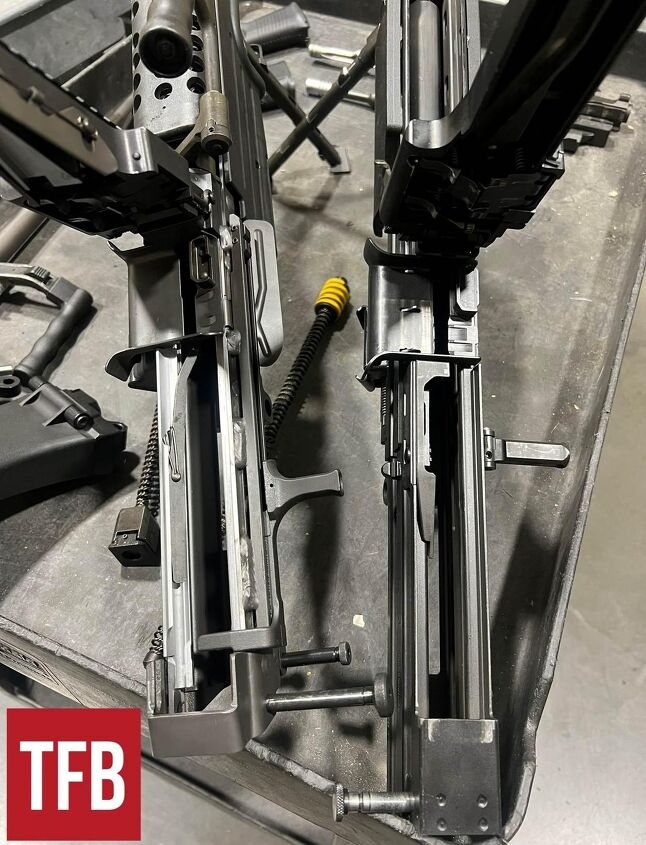
The MG4’s real significance was not just that it was lighter than older machine guns, but that it represented a modernized light machine gun that could easily attach enablers. The MG4 weighs 18.95 lbs. (8.6 kg) in its current service form, with a 17.71-inch (450mm) barrel, an effective range of 600 meters, and a rate of fire of about 850 rounds per minute. This resulted in a 34.4% heavier weight than the initial MG43, though still manageable. Some of the improvements over the Minimi include a stronger rear takedown pin and a redesigned bolt carrier assembly to eliminate common failure points in the Minimi’s design. Also, instead of a side brass ejection port, the MG43 and MG4 have a relocated ejection port at the bottom of the weapon. But one of the simplest solutions is to add a cartridge retainer to the feed tray to hold the belt, making reloads easier.
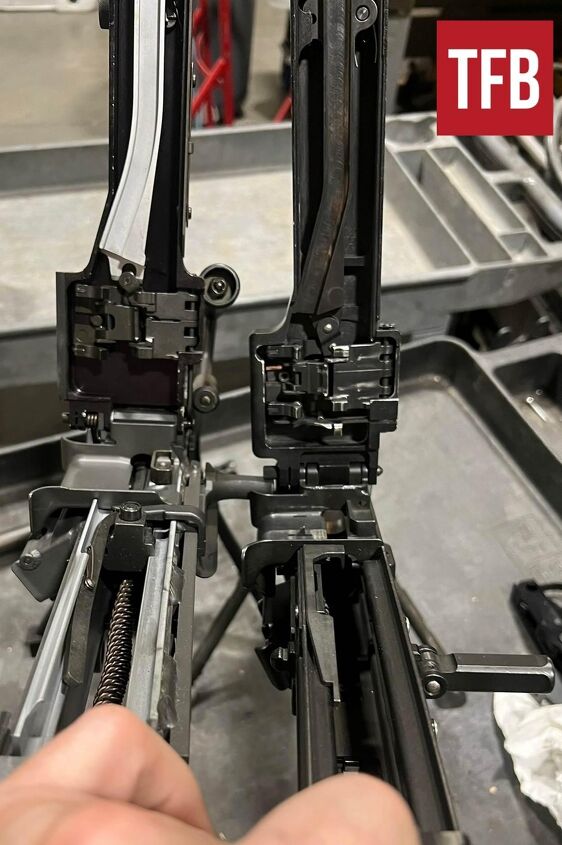
The next step in the family was the MG5, also known as HK121 during development. This was HK’s 7.62×51 general-purpose machine gun, later adopted by Germany as the successor to the MG3. The Bundeswehr began introducing the MG5 in 2015, intended to replace the MG3 in German service. The MG5 is a scaled-up MG4. It uses a long-stroked, gas-piston-operated, open-bolt, belt-fed weapon with a multi-lug rotating bolt, adjustable rate of fire, and a highly modular design. Its rate of fire can be set to 640, 720, or 800 rounds per minute, depending on the mission and the weapon’s condition, by easily adjusting the gas setting. This gave the flexibility of a 7.62 GPMG that must serve in roles ranging from dismounted infantry support to vehicle-mounted use. The last version is the HK 421, which is a 7.62×51 NATO chambered reduced-weight machine gun and significantly shorter than the standard MG5.
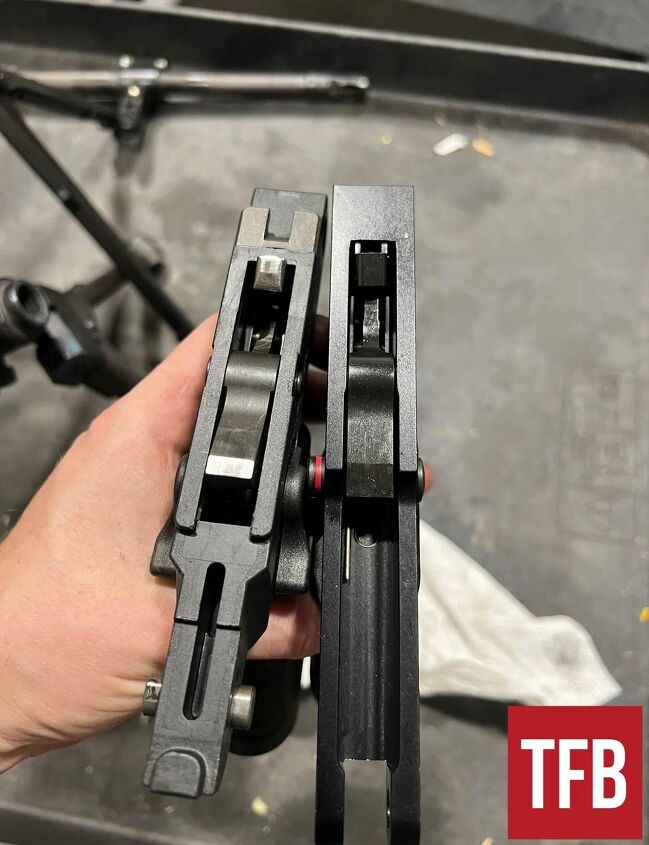
The MG4-to-MG5 is that HK did not simply copy and scale one gun into another. Instead, it developed a recognizable series of weapons that improved the 1970s FN design, representing a significant product improvement and modernization. HK’s MG5, in concept, is similar to the 7.62 MK48 machine gun, as it is a scaled-up Minimi. Thought the alternate feed of the 5.56 Minimi was not interesting and never added to the 5.56 MG4.
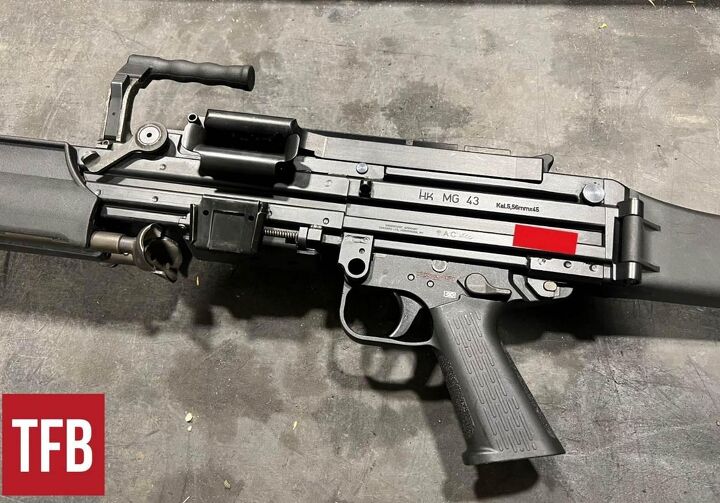
Seen together, the MG43, MG4, and MG5 form a clear development path. The MG43 was a prototype concept for a modern 5.56 belt-fed light machine gun, emphasizing reliability, portability, and a product improvement over the FN Minimi. The MG4 was the service realization, refined for Bundeswehr use and adapted to German doctrine, in which lighter infantry support weapons were increasingly equipped with improved capabilities to support infantry operations. The MG5 extended the same design philosophy to the 7.62 gun, giving Germany a new general-purpose machine gun with greater range over 5.56, greater modularity, and a more ergonomic operating concept than the MG3. Taken as a whole, the German military’s new generation of machine guns reveals a deliberate emphasis on portability, modularity and durability, enabling increased capabilities from the squad automatic weapon to a fully capable general-purpose machine gun.