There is nothing more inherently Fudd-coded than a lever-action rifle. Lever guns bring to mind images of post-war deer camps, or classic ammunition advertisements of broadbrim-hatted shootists facing down grizzlies, or bagging a ram across a rocky canyon. Of course, the classic lever guns in those adverts are always open-sighted. No scopes for the frontier!
In reality, telescopic sights are the standard these days, and that’s why a rifle like the Browning BLR has surpassed the old Winchester classics in popularity. But what if you want the best of both worlds—the ability to use a scope, but revert to iron sights quickly? There’s an old-fashioned Fudd trick for that, and there’s a newer trick that’s arguably far superior.
Lever-action hunting rifles @ TFB:
- POTD: Hunting with a Winchester 1886 in .33 WCF
- Fudd Friday: Escape From SHOT – Las Vegas Antique Arms Show 2026
- Well Heeled: RIA Premier Firearms Auction #88 – Winchester 1895 And More
- [NRA 2019] LEVER UP – Marlin Model 336 Dark And Model 1895 Dark
Classic Fudd tactics: The worst of both worlds
The classic trick for a hunter who wants a scope, but also wants backup iron sights in a pinch, is a set of sky-high see-through rings. Crane your neck high to see through the scope (and forget about a cheek weld; you’ll be getting a chin weld, same as you’d get on an old M16 with a handle-mounted optic). Or, if your scope is fogged up or otherwise unusable, drop your face down to use the iron sights through the see-through scope rings.
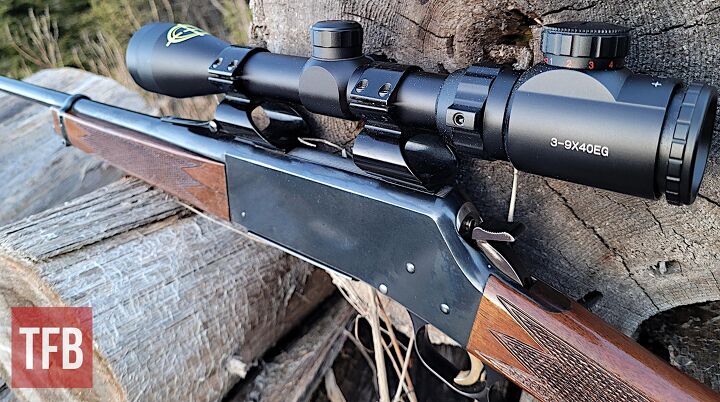
This is an ugly setup, and I would argue it provides the worst of both worlds: a bad optic setup and a janky iron sight setup, too. And yet, I would guess that hundreds of thousands of Fudd rifles have been set up exactly like this since the 1960s saw scopes become widespread in usage. I especially see this setup on rifles like the Remington pump-actions and Savage Model 99 lever-actions, particularly for hunters in the American northeast. When guys were hunting late-season, it was a very real possibility that snow and cold would make it hard to use your scope, so hunters wanted a backup setup.
Someone on my street brought me a Browning BLR that they’d purchased with a setup like this, chambered in .243 Winchester. They wanted the sighting setup changed, since the tall rings setup made the scope difficult to use, but they also wanted to retain usage of the iron sights. And they definitely did not want the flip-to-one-side scope mounts, another classic Fudd setup, where you undo a catch and flip your scope to the side of the receiver, if you want to use the irons.
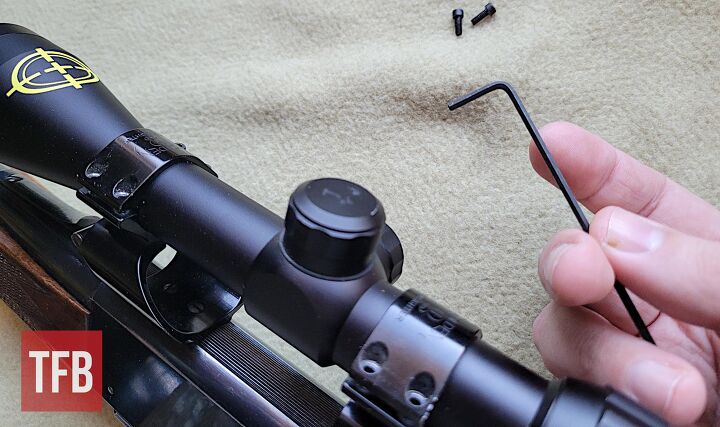
Not to worry, I said. Their budget was limited, but they were willing to spend enough to at least get started on a better setup.
Better mounts for a better setup
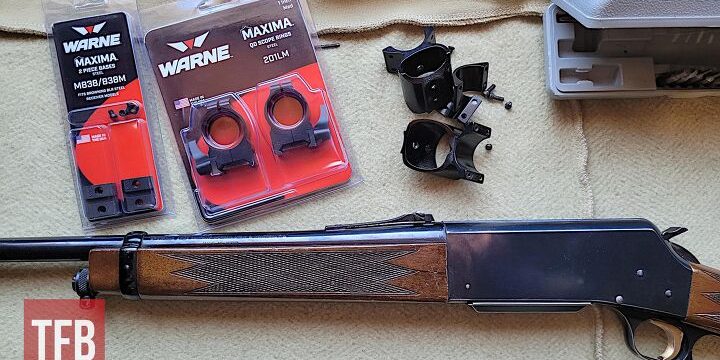
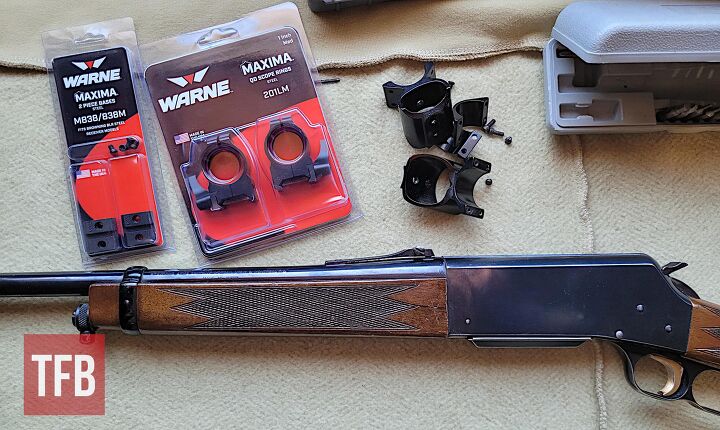
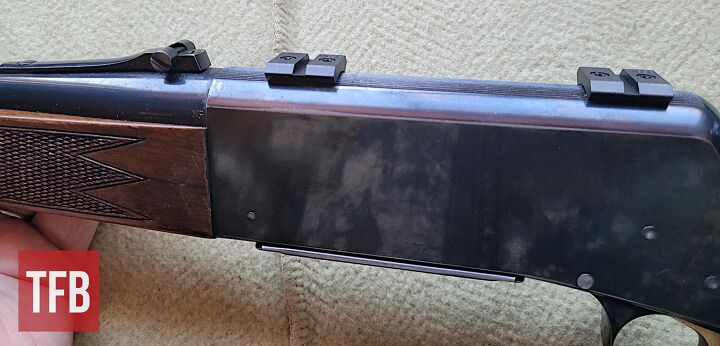
The first step was to ditch the janky one-piece see-through mounts and replace them with Warne low bases. The new all-steel bases sat low enough on the receiver that they didn’t block the iron sights—and on the BLR, the iron sights have a pretty low profile. No matter, they worked fine with the new Warne M838 mounts.
The second step was to install a new scope with Warne’s 201LM medium-height quick-detach rings. Seeing as the BLR had come with a painfully awful Temu special scope (straight from a third-rate factory in China “with illuminated reticle,” barf), a new optic was in order. Alas, on a limited budget, I was only able to order a lower-priced Hawke Vantage 4×32 for this project.
I hope my neighbor will spend more money on a superior scope down the road, one that better takes advantage of the .243’s capability, but I feel the fixed four-power is still far superior to the scope that was on this BLR previously. At least with the flat-shooting .243, the 4x with duplex reticle is more than enough power for any ranges here in the northeast, where almost all deer are shot well under 150 yards. And the fixed scope is light, and has no adjustable power settings to futz around with, potentially missing a shot due to fidgeting. It has a generous eyebox, and that’s good for a Fudd who won’t shoot their rifle a lot.
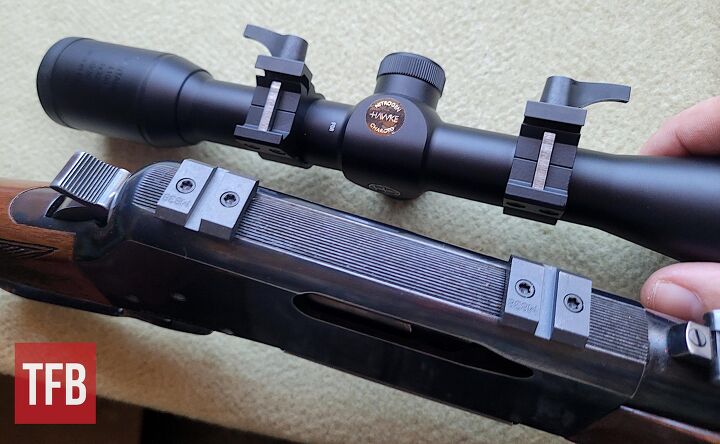
Back to the mounting setup! The key to this arrangement is the QD rings, which hold the scope rock-solid in their medium-height installation. Yet, if you want to revert to iron sights, you simply unscrew the throw levers on the side, and you can pop the scope off quickly to stow it in a gear bag or wherever.
Warne claims these rings will go right back to zero when you reinstall them. I have no idea if that’s true; only field use over time will really show the weakness of a system like this. But Warne has been selling this system for a long time, and people seem satisfied. I certainly couldn’t get the scope mount to budge when I reefed on it. And when the QD rings are detached, the rifle does indeed become a very handy setup, with the iron sights arguably superior for shooting at a moving deer in tight woods.
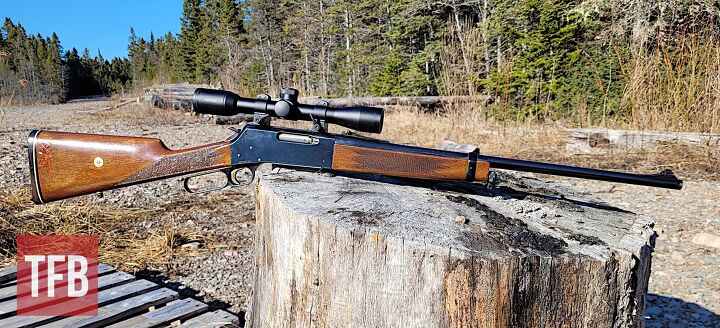
You could, in theory, leave the scope off while still hunting your way through the forest, or maybe leave it off during foul weather, only to reinstall it when you get to a clearing or cut with potential for longer shots. Or maybe you’d ideally never take it off—you just want the option in case your scope is damaged during a hunt.
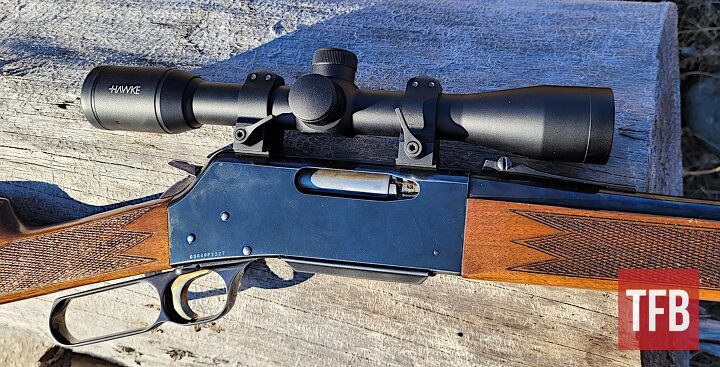
I don’t know, but I was happy with how the setup turned out, at least. I’m keen to hear what this BLR brings home for its new owner this season …