Welcome back to Front Line Friday. This week is an editorial, and the topic is less-lethal tools: Taser, OC spray, baton, and beanbag, and the gap between how they perform on the training mat and how they perform on a wet sidewalk at 2 a.m. Front Line Friday is brought to you by Dead Air Silencers, whose support keeps this column going every week.

Every one of these tools is sold on a probability the trainer never says out loud. The academy demo works because the volunteer is dry, calm, standing still, and wearing a t-shirt. The subject on the call is none of those things. That is not a knock on the tools. It is a knock on how we talk about them.
This article is about deployment conditions, not product reviews. It is not a use-of-force policy primer, and it is not an argument that any of these tools should be removed from the belt. It is an honest look at where the marketing failure rate and the street failure rate diverge, and what that means for the officer holding the device.
Front Line Friday @ TFB:
The Taser Miss Nobody Budgets For
The pitch on the conducted energy weapon is neuromuscular incapacitation. Both probes land, spread far enough apart to catch a meaningful mass of muscle, and the subject drops. On the mat, with a cooperative volunteer at 7 feet, that happens close to every time. On the street, agency data has for years put field effectiveness for a full incapacitation somewhere in the 55 to 70 percent range depending on how you count, and the honest number in a fight is lower still.
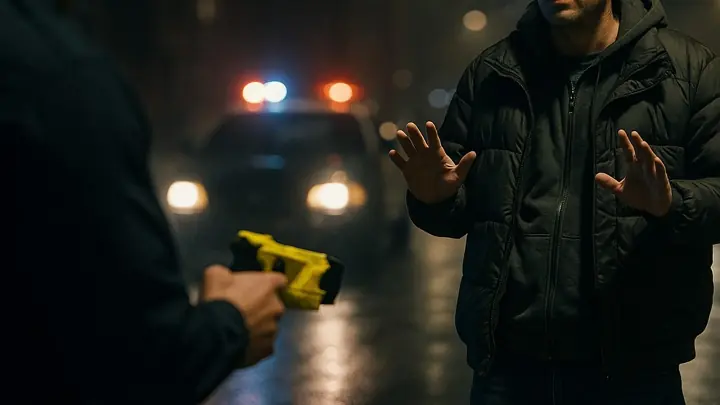
The failure modes are boring and predictable. Probe spread is a function of distance and cartridge, and most real deployments happen closer than the training range, which narrows the spread and reduces the muscle caught between the probes. Heavy or loose winter clothing eats a probe before it reaches skin. One probe misses entirely because the subject is turning, ducking, or already moving. When you only get one good connection, you do not get incapacitation. You get pain compliance, and a person committed to fighting does not comply with pain.
The system’s problem is that we train the hit and not the miss. Officers rack up dozens of clean cartridge deployments in training and almost none where a probe misses, and they have to transition immediately. The 5 seconds of the cycle become a mental commitment, a pause where the officer waits for a result that is not coming. I would want every CEW block to include a scripted miss, where the subject keeps advancing, and the officer has to move, create distance, or go hands-on without a beat of hesitation. The tool is a bet, not a guarantee, and the training should reflect the odds.
OC Spray and the Contamination You Didn’t Plan On
OC works by inflammation. It swells the mucous membranes, closes the eyes, and hurts. The trouble is that it works on a timeline, not a switch, and the timeline runs against you. A determined or intoxicated subject can absorb a full face of spray and keep fighting for the 15 to 30 seconds it takes to fully take effect, which is exactly the window where you needed him to stop.
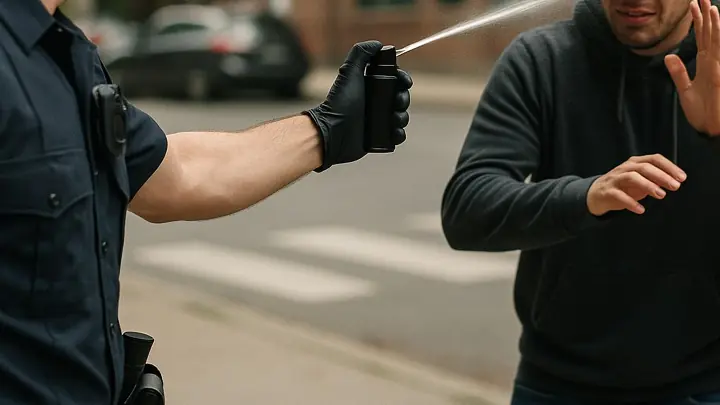
Then there is the physics nobody controls. Spray in an enclosed space, a car interior, a hallway, a holding cell, and you contaminate yourself and everyone else in the room. Spray outdoors into any wind at all and you get a face full of your own product. I have watched a solid deployment turn into two contaminated officers and a subject who caught maybe a third of the dose because the wind was quartering across the encounter and nobody accounted for it.
The academy exposure teaches the wrong lesson twice over. It teaches that OC is miserable, which is true, and it teaches that OC stops people, which is only sometimes true, because the person being sprayed in training is a recruit who has agreed to stand still and let it happen. The deployment lesson officers actually need is about wind, enclosure, and what to do in the half minute before it works. That is when the fight is still live, and the officer is now partially blind too.
The Baton’s Real Problem Is Reach, Not Force
The expandable baton is the tool everyone carries, and almost nobody trains realistically. The certification is a set of target-zone strikes on a foam pad, delivered from a clean stance at a stationary target. The deployment is a moving, resisting person inside conversational distance, which is the exact range where a baton is least useful.
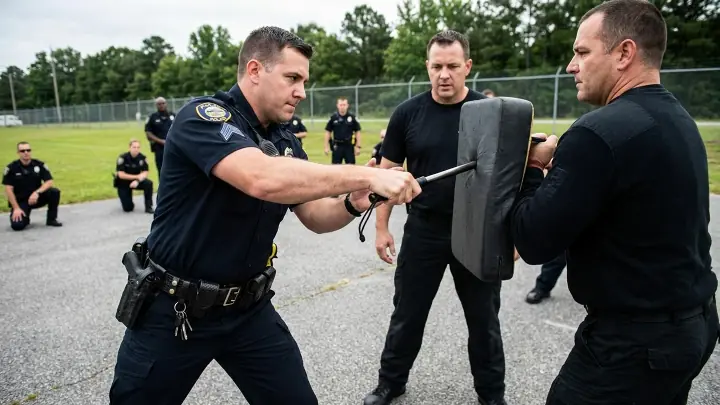
A 21-inch baton needs room to generate force. Inside about 4 feet, you cannot swing it; you can only push or poke with it, and now you are holding a rigid bar in a close-quarters grapple where it becomes a weapon the subject can grab and use on you. The times an officer genuinely has baton distance, the subject usually also has time to run, throw something, or produce a weapon of his own. The window where the baton is the right answer is narrower than the training implies.
I am not arguing to drop the baton. I am arguing that the certification schedule, once a year on a pad, builds a false confidence in a tool that lives in an awkward middle of the force continuum. The honest framing is that the baton buys distance and impact when you have the room, and that recognizing when you do not have the room is the actual skill. That recognition is not on the qualification sheet.
Beanbag Rounds and the Distance Illusion
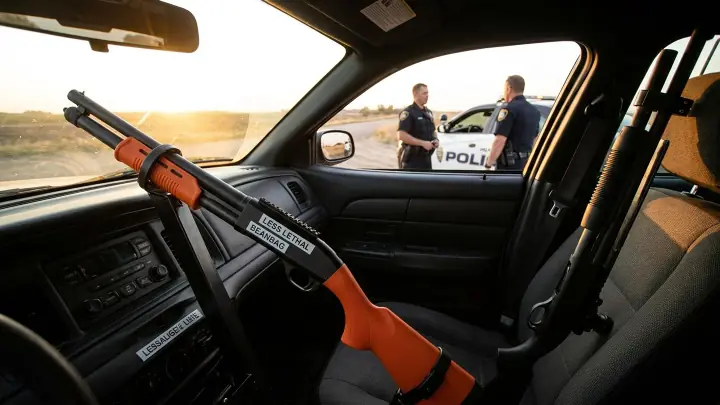
The 12-gauge beanbag round, the bean bag or sock round fired from a dedicated less-lethal shotgun, is the tool with the widest gap between how it looks and how it behaves. It looks like a rifle solution to a standoff. It behaves like a blunt projectile that is accurate and effective only in a specific distance band, roughly 15 to 60 feet on most munitions, and that band is not intuitive under stress.
Too close and the round can penetrate or cause serious injury, which defeats the purpose and creates a liability event. Too far and it tumbles, loses energy, and misses the target zone entirely, which means the subject you were trying to control now knows the tool did not work and is more committed. Officers who train on a paper target at a known 25 feet do not develop the range estimation that field deployment demands, and range estimation under stress is genuinely hard.
There is also the staging problem, which is pure systems failure. A dedicated less-lethal shotgun, marked and stocked in orange for exactly this reason, sits in the trunk or a rack, and the call is over before anyone deploys it. The tool works when a second officer stages it as lethal cover during a slow-developing incident. It fails when a single officer tries to be both the less-lethal and the lethal option, which no policy anywhere permits and no fast-moving call allows anyway.
Fire/EMS Parallel
Fire and EMS live the same gap with restraint and sedation. The training scenario is a compliant simulated patient in a well-lit ambulance bay. The call is an agitated, possibly intoxicated patient in a bathroom at the end of a hallway, and the physical restraint that worked in the drill does not translate to the real geometry of the space.
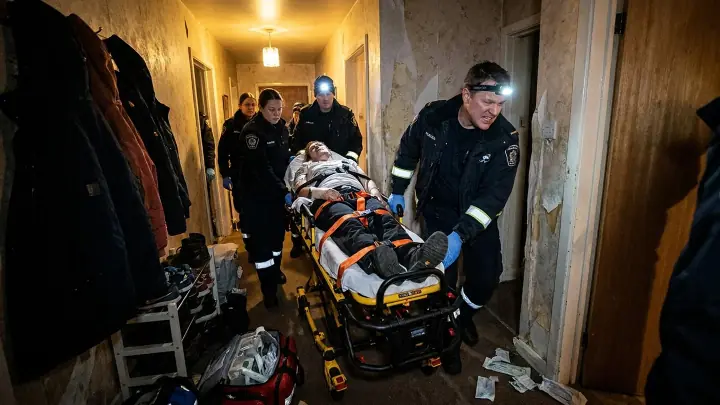
Chemical sedation has its own timeline, the same as OC. The medication is administered, and then everyone waits while the patient continues to fight the crew, the equipment, and gravity; that wait is where crew injuries and patient positioning problems happen. The lesson is identical across both professions: the tool that stops the situation does not stop it instantly, and the interval between deployment and effect is the dangerous part nobody rehearses.
Bottom Line / What to Do Monday
- This week, dry-practice the transition, not the tool. Rehearse what your hands do in the 5 seconds after a CEW miss or an OC deployment that has not worked yet. The gap between deployment and effect is the part you have to own.
- Individual officers: before you deploy OC, read the wind and the enclosure in the half-second you have. If you are indoors, in a car, or the wind is at your front, expect to contaminate yourself and plan the follow-up accordingly.
- FTOs and supervisors: build a scripted failure into every less-lethal block. A CEW cartridge that only lands one probe, a subject who keeps advancing through OC, a beanbag scenario at a bad distance. Certification on clean success teaches false confidence.
- FTOs and supervisors: reinforce that the beanbag shotgun requires a second officer for lethal cover. Do not let single-officer less-lethal deployment become an unspoken expectation.
- Agencies and procurement: track your own field effectiveness rates for each tool, not the vendor’s numbers. If your CEW is dropping people in half of deployments, your policy and training need to reflect that reality, not the demo.
- Fire/EMS note: treat the interval after sedation as an active-management window, not a waiting period. Position the patient, protect the crew, and reassess, because the medication has not worked yet even after it is given.
Sign-Off
That’s Front Line Friday for this week: every less-lethal tool is a probability sold as a certainty, and the interval between deployment and effect is where training and reality part ways. Next week we get back to gear, with a look at low-light identification and the failure points in patrol illumination that nobody catches until the wrong call. The quarterly suppressor review is still pending host-weapon availability, and we will run it the week it arrives.