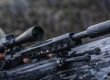
Most shooters think of thermal as a nighttime tool, something you break out after dark for hog hunting or low-light training. This session proves otherwise. Here’s an 11” HK MR223 in flat dark earth running a V-Tac barricade drill in broad daylight, topped with the new Pulsar Trail 3 LRF XR50 thermal riflescope, engaging steel at 100 meters with one shot per target and no make-ups. I was there. I went first. Did not win.
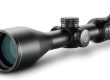
The Trail 3 LRF XR50 is one of Pulsar’s current flagship rifle-mounted thermals, built around a 640×480 uncooled sensor with 12µm pixel pitch and sub-18mK NETD sensitivity.
The 50mm F/1.0 germanium objective and 3–24x magnification range give you a lot of versatility for everything from close barricade work to steel at distance, and the integrated laser rangefinder (useful well beyond the 100-meter distance) pairs with Stream Vision Ballistics for precision shot placement. In fact, once configured, it will tell you where to aim, day or night.
With everything being made in China nowadays, especially thermals, I love to use an all-European setup.
An HD AMOLED display and round Picture-in-Picture mode let you zoom the reticle zone while keeping the wider field of view, which matters when you’re working around a barricade with multiple ports.
The MR223 is HK’s semi-auto civilian configuration of the HK416 pattern (in Europe), and in FDE, it’s a sharp-looking setup. First time on the barricade with a thermal, one shot per plate in a timed event, that’s a clean way to find out where you actually stand. Next time, I’ll do better. But at least I didn’t drop a single shot; others were just faster.
Thermal or night vision – which would you choose for a do-it-all low-light setup?