Starting around 2017, Kalashnikov Concern embarked on a new and somewhat unconventional project. Since the original development of the AK platform, reliability had always been prioritized over accuracy. However, this philosophy began to shift with an improved accuracy program focused on the AK-103, arguably the most successful rifle of the AK-100 series. The initiative was driven by a foreign client, Pakistan, which sought an enhanced-accuracy variant of the AK-103, leading it to merge with the already ongoing Russian Ratnik program, resulting in the AK-103-3 and later the AK-203.
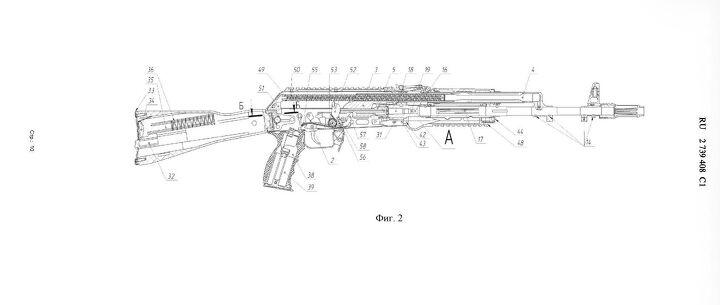
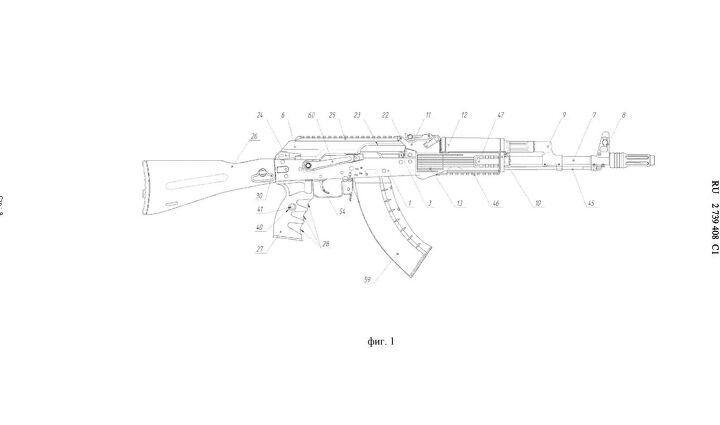
Kalashnikov Concern patented the new rifle in 2020 (Patent RU2020107022A), a modernization effort aimed at one specific goal: improving practical accuracy with a hint of modularity. In that sense, the project is less about reinventing the rifle and more about refining it.
For Russia’s Ratnik modernization program, the AK-103 was initially adapted to support accessory mounting systems, resulting in the designation AK-103-3, which fulfilled the 7.62×39 requirement. Around 2015-2016, development was temporarily shelved while the AK-15 was prioritized. Later in 2016, the program was revived under a new designation, focusing not only on improved mounting capabilities but also on enhanced accuracy and upgraded features derived from the AK-103, which evolved into the AK-103-3. In 2019, the Russian Army officially redesignated the AK-103-3 as the AK-203 (GRAU index 6P45-1).
The Gun
The Gun is an improved 7.62x39mm AK-103. What makes the design notable is not the overall arrangement, but the way several key dimensions and structural elements are changed to improve practical accuracy. These changes are a combination of internal ballistic refinement.
The Barrel
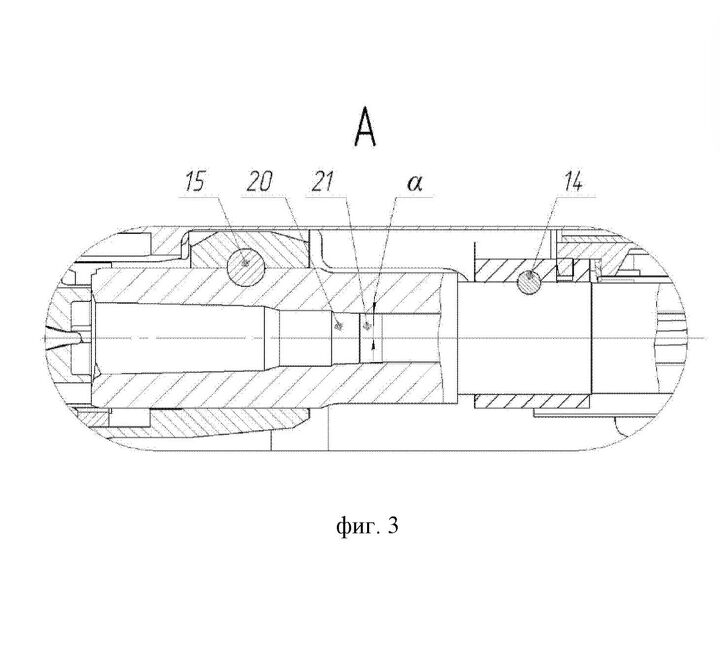
The first major improvement focuses on the barrels’ bore diameter, rifling twist, and the chamber leade taper. The chamber features two tapered sections, the freebore and the leade, with the second taper reduced to about 1º15 ‘± 11’. This is intended to help the projectile enter the rifling more smoothly, reducing the abruptness of the transition as the projectile engages the barrel. In simple terms, a smoother entry means less disturbance at the start of the shot. The barrel’s twist rate is changed to a range of roughly 255 to 275mm, intended to moderate bullet spin, preserving stable flight while reducing unwanted oscillation. This is equal to about 1:10 to 1:10.8’’ while the standard AK-103 twist rate is 1:9.45’’.
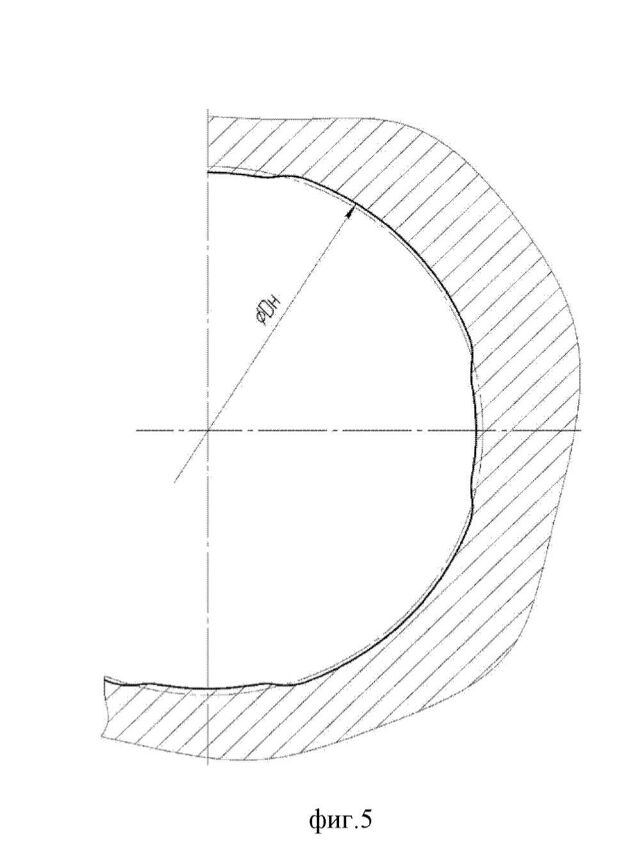
Another important change is a tighter fit between the bullet and the rifled bore, optimized to improve gas sealing. Better sealing helps more of the propellant gases push the bullet forward rather than escaping around it. The bore dimensions of a standard AK-103 are based on a 7.62mm nominal caliber, with a groove diameter of about 7.92mm (0.311-0.312 in). The accurized AK-103 has a slightly tighter bore, with groove diameters in the range of 7.80-7.84mm (0.307-0.309 in).
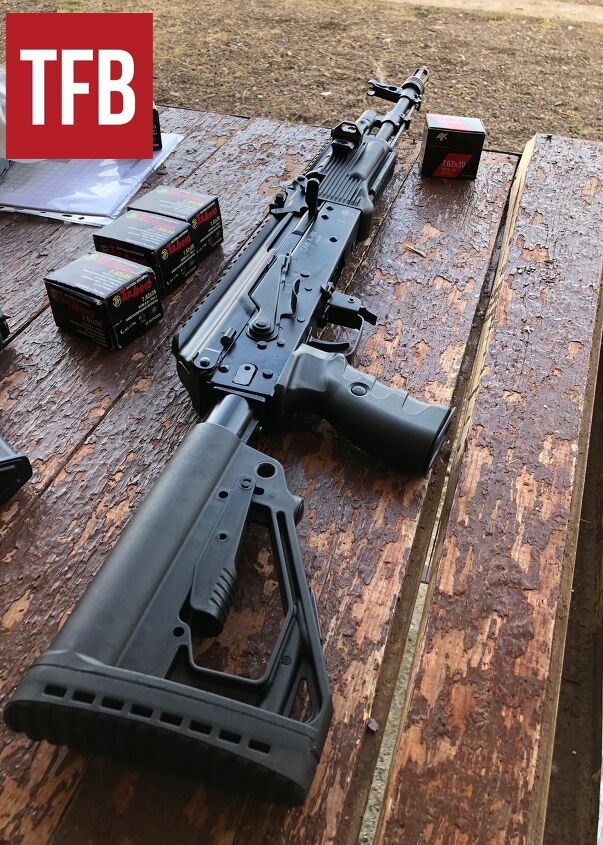
The front sight block, gas chamber, and rear sight block are attached to the barrel with pins in the typical AK fashion, rather than the pressed dimples they used for a bit. The stated aim is to reduce unwanted deformation or stress on the barrel bore. That matters because even small differences in barrel shape or alignment can influence how a bullet travels and where it lands. The design is not based on one single change, but on several small improvements working together.
Modularity
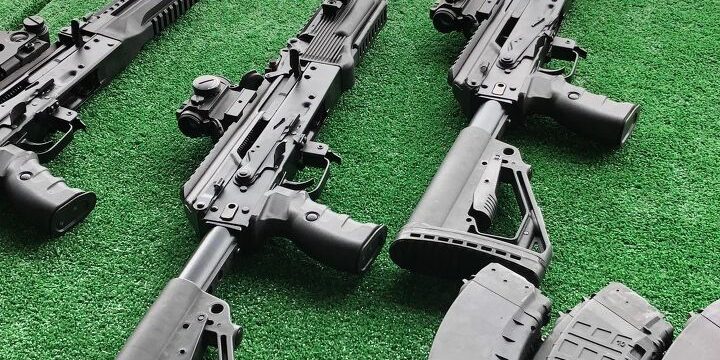
The second major part of the patent is modularity. The weapon features a more modern configuration for a customer who expects compatibility with optics and accessories, further enhancing the weapon’s potential. The receiver cover is fitted with an M1913 Picatinny rail, and the fore-end can also carry additional M1913 Picatinny sections on the bottom and sides. This allows the mounting of optical sights and other enablers. The receiver cover is hinged at the front and detachable at the rear with an SVD-type lever, and features a rigid mounting solution that reduces deformation during use. That is critical, as a stable sight base helps preserve zero and supports better optics mounting.
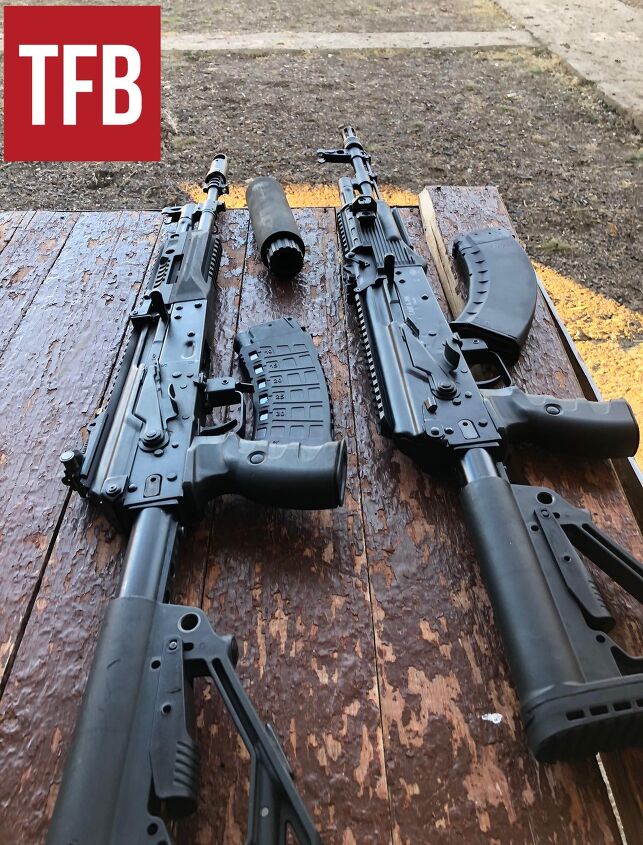
In practical terms, this means the AK-103 is being transformed from a traditional iron-sight rifle into a more adaptable fighting system with improved accuracy. The original AK was designed in an era with different expectations about optics and accessory mounting. This new modernization effort is therefore not just about precision in the barrel, but about making a better all-around fighting rifle.
The standard AK-103 reportedly has roughly 3-5 MOA accuracy, while the improved version reportedly has about 2-3 MOA. This is an improvement of about 33-40%. In the patents example, group size at 100 meters improves from no more than 15cm to 12cm in a four-shot group.
Modern users often want the same basic reliability they have always valued, but with better accuracy, optical compatibility, and enabling mounting options. The accurized AK-103 concept answers that demand by rethinking the AK. The result is a rifle that stays true to the Kalashnikov while moving closer to the expectations of a modern combat rifle.
In the end, the project is not a radical departure, but an OEM product improvement. It retains the proven AK reliability and familiarity while upgrading its accuracy and flexibility. This is what customers want in a 7.62x39mm rifle with better accuracy and compatibility with modern enablers. That combination is the whole point of the program for an improved AK-103 that is not only reliable but also measurably more accurate and adaptable.
Conclusion
The fate of the original improved-accuracy AK-103s is reportedly that the rifles never made it to Pakistan for an unknown reason and eventually ended up in Ethiopia, where they will never be fully used to their potential. As for the AK-203, it has seen some domestic use, with its export success unknown. Personally, after testing the military and civilian AK-203, I find it a far better rifle than the AK-12/15, particularly in terms of accuracy. Maybe in the future we will see these modifications percolate into other Kalashnikov Concern weapon designs, like the AM-17 or the SVCh, in whatever future flavor they decide to go with.
If this post has you ready to hit the range, head over to gunranges.com – a free directory to help you find shooting ranges near you, wherever you are in the United States.