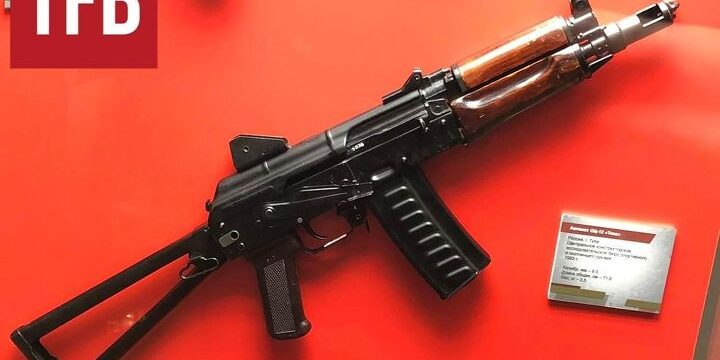
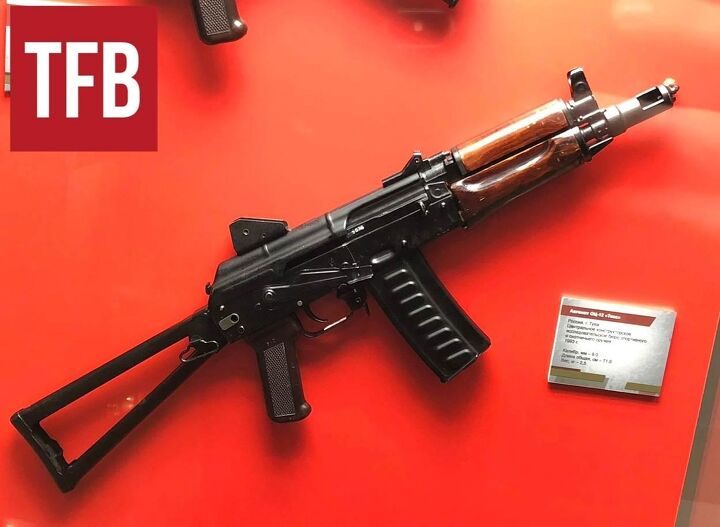
One of the lesser-known 9x39mm weapons is the OTs-12 “Tiss,” an unusual small arm developed in the late Soviet and early post-Soviet period. Created at the Tula Central Design Bureau of Sporting and Hunting Weapons (TsKIB SOO), the rifle was intended as a compact
special-purpose weapon, but it followed a different path from many of its contemporaries. Rather than designing an entirely new weapon, the engineers based the “Tiss” on the AKS-74U. Its defining feature is that it was chambered for the subsonic 9×39 ammunition, designed for silent use, effective at short range, and with improved performance against lightly protected targets.
By the late 1980s, Soviet weapons designers were working on different 9×39 weapons programs. Many standard infantry rifles and compact carbines were not ideal for urban operations, counterterrorism, or other specialized tasks where controllability, compactness,
and terminal effect mattered more than long-range performance. Among the most successful compact weapons in Soviet service was the AKS-74U, though it was not without its drawbacks.
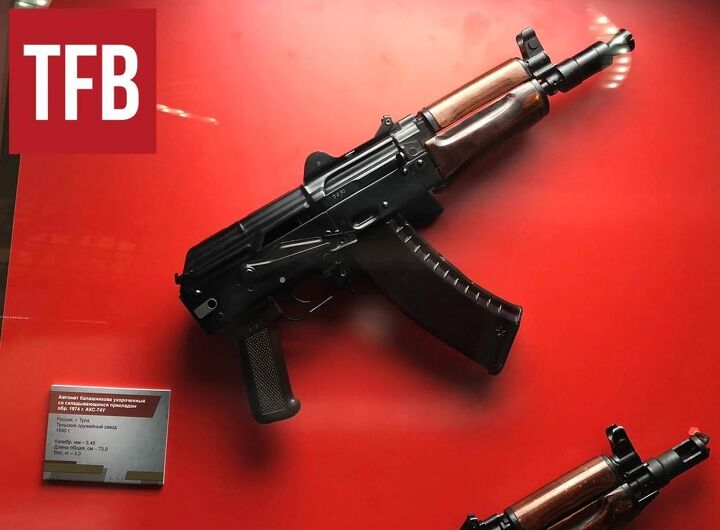
Several competing weapon programs appeared around this time. TsNIITochMash developed the SR-3 “Vikhr,” while the Tula KBP offered the 9A-91 assault rifle. Both systems were built around the 9×39 cartridge, which became attractive because of its heavy projectile and subsonic velocity, better suited for suppression. The cartridge typically has a muzzle velocity of around 950 feet per second, which reduces noise when used with a suppressor and, reportedly, in the case of the SP-6 armor-piercing cartridge, improves performance against soft armor and light cover.
TsKIB SOO was already familiar with the 9×39 cartridge. Before the collapse of the Soviet Union, it had worked on the OTs-14 “Groza” weapon system, which was also chambered for the 9×39 cartridge. The “Groza”, however, was a more radical design. The “Tiss” took a more conservative approach by staying much closer to the AKS-74U.
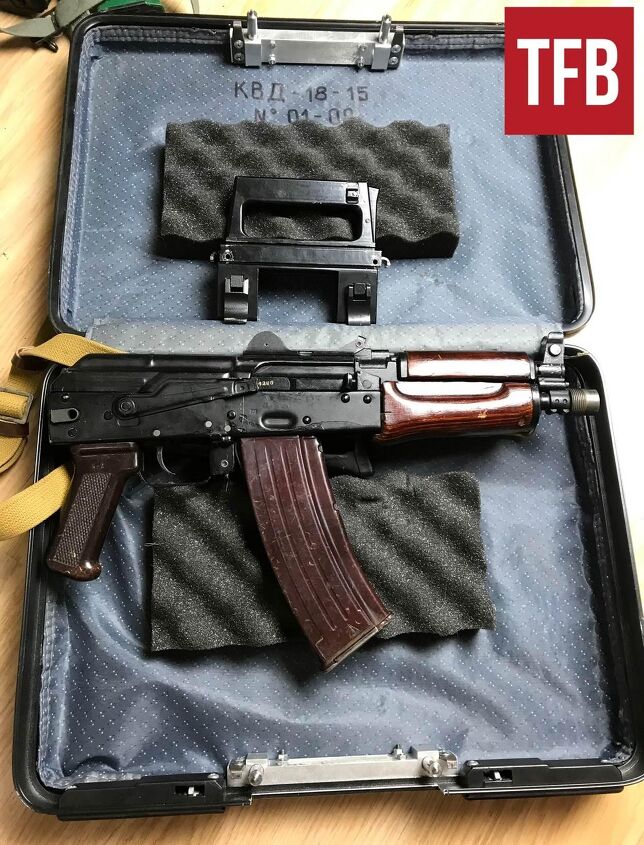
Reportedly, trials of the OTs-12 began around 1992 and 1993. The goal was standardization on the AKS-74U as the base, so that it could borrow heavily from the AKS-74U production, it would be easier and cheaper to manufacture, maintain, and train with. Externally, the “Tiss” looked much like a shortened Kalashnikov carbine, but internally it was adapted for its new ammunition.
The Gun
The OTs-12 uses a modified long-stroke gas piston system with an added gas block near the chamber, which redirects gas to the standard gas block, using the higher pressure near the chamber to reliably operate subsonic ammunition with or without the suppressor. This feature was also seen on the OTs-14. Its bolt was modified or redesigned to accommodate the larger 9mm cartridge, and a new barrel chambered for the new cartridge was used. A newly designed muzzle device also served as an expansion chamber to help the OTs-12 to control its high rate of fire in full automatic. The weapon was fed from 20-round box magazines originally developed for the OTs-14. The rear sight was moved farther back on the dust cover. These are some of the more obvious changes from the original AKS-74U.
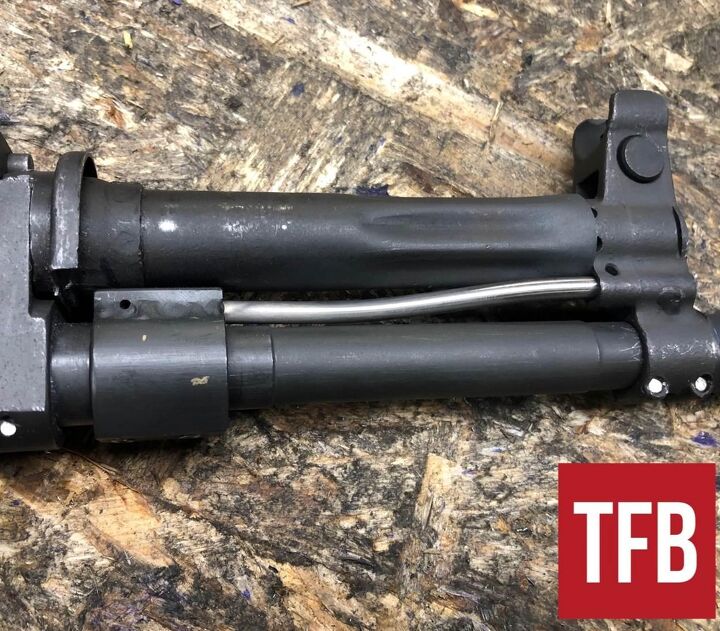
Most of the other features of the AKS-74U meant that soldiers and internal security personnel already familiar with Kalashnikov-pattern rifles would have faced little difficulty adapting to it.
This gave the “Tiss” a practical advantage, as it was not a completely new weapon, but a specialized modification of the standard AKS-74U. That made it appealing on paper, especially for units that wanted something compact and familiar, but more effective than the AKS-74U in certain tactical roles. The OTs-12 was essentially a rechambered AKS-74U. It also had a higher rate of fire, reportedly around 800 rounds per minute, making it lively and somewhat impractically high, realistically only used in semiautomatic.
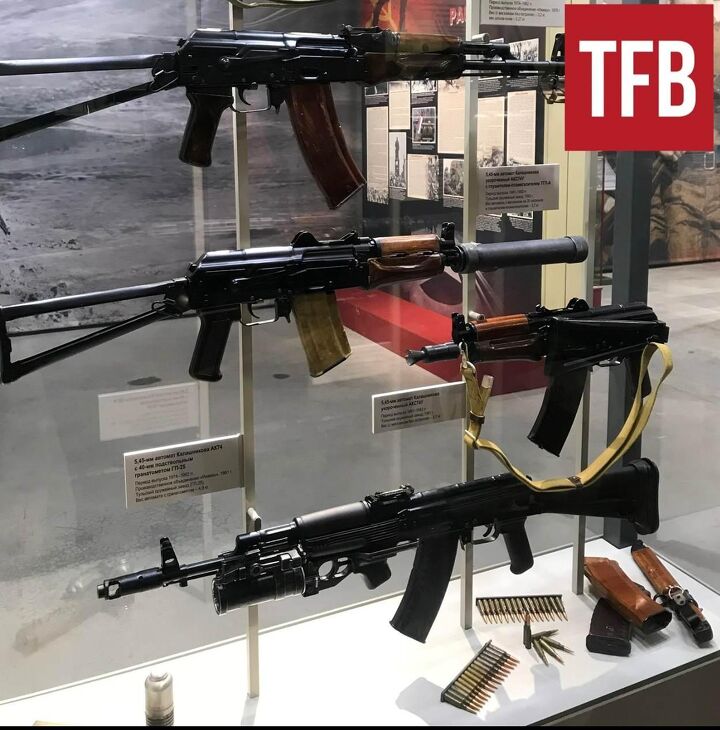
The ammunition used included SP-5 and SP-6 cartridges. These were designed to strike hard at short range and to remain effective against light body armor and barriers. Their use in other Russian weapons, including the VSS Vintorez, AS Val, VSK-94, AK-9, and similar systems, reflects the same design logic: quiet or controlled fire with strong terminal performance in specialized roles. The “Tiss” could offer better practical effect than a standard compact rifle while sharing commonality with the AK series of weapons.
Despite these strengths, the OTs-12 “Tiss” did not achieve broad success. The main reason was competition. By the time it reached testing, other 9×39 weapons, such as the 9A-91 and the SR-3 “Vikhr,” were already competing in the same market. These designs offered their own advantages, and in the post-Soviet defense environment, there was little room for multiple overlapping compact assault rifle programs.
The “Tiss” may have been cheaper to produce than some of its rivals, but that alone was not enough. Military and law enforcement procurement often depends on more than cost. Reliability in field conditions, ease of support, and institutional preference all matter. In this case, the “Tiss” appears to have been a technically sensible but commercially marginal solution, and unfortunately, it was never widely adopted.
Production was very limited, with sources generally reporting that only several hundred were built. Manufacturing took place around 1993, the same year the AKS-74U ended production, which would have made adoption difficult, if ever adopted. Because documentation is sparse, it is difficult to determine the exact figure or to say with certainty whether it served with special units of the Ministry of Internal Affairs or the Ministry of Defense. What is clear is that it never became a standard-issue weapon.
Conclusion
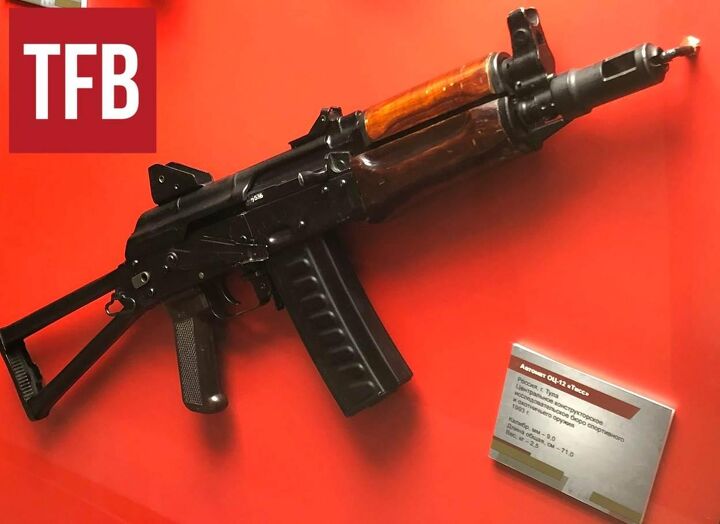
The OTs-12 “Tiss” represented an effort to combine the AKS-74U with the performance of the 9×39 cartridge. It followed a broader trend in late Soviet and early Russian weapons development as they searched for a compact, special-purpose weapon systems for special forces and internal security roles. Although it was never produced in large numbers or widely adopted, the OTs-12 “Tiss” is uncommon but intriguing, it is a distinctive example of post-Soviet and modern Russian firearm design. One example is preserved at the Tula Arms Museum in Tula, Russia.