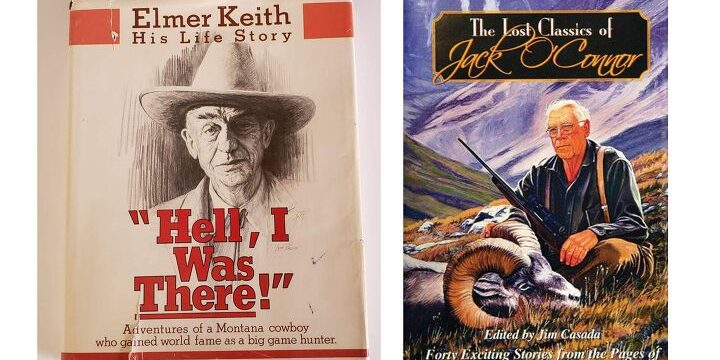
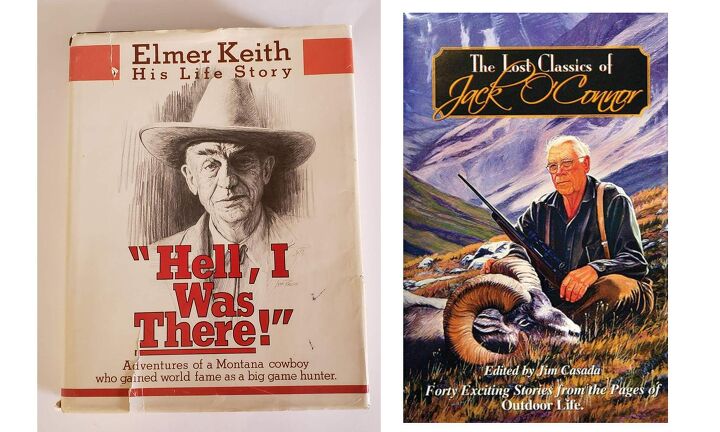
These days, the gun world is obsessed with all things tactical and self-defense oriented, but it wasn’t always that way. In the days before and after World War II, gun mags were oriented more towards the Fudd market, and people cared about hunting and outdoors living in general. And in that era arose two Super Fudds, whose opinions divided the shooting world—and still do, to a certain extent, although one of them prevailed in the long run. I’m talking about Jack O’Connor and Elmer Keith, and the Great Killing Power Controversy.
Vintage Fudd Lore @ TFB:
- Fudd Friday: Why You Should Buy A .30-30
- The Rimfire Report: An Ode To The Marlin Model 29 Pump Action
- Wheelgun Wednesday: Why You Should Buy Classic Revolvers
- New MAUSER 98 Limited-Edition Rifles – Celebrate 125 years of MAUSER
Who were these Super Fudds?
Jack O’Connor and Elmer Keith wrote about very different ideas, and that’s partly because they came from very different backgrounds—but not as different as people might think.
O’Connor was often stereotyped as a snooty professor who went hunting for big game with fancy-pants modern rifles as a paying customer, while Keith was stereotyped as a two-fisted backcountry guy who was hung up on traditional shooting ideas and couldn’t change with the times. As with a lot of stereotypes, there was a bit of truth behind these portrayals, but neither is entirely accurate.
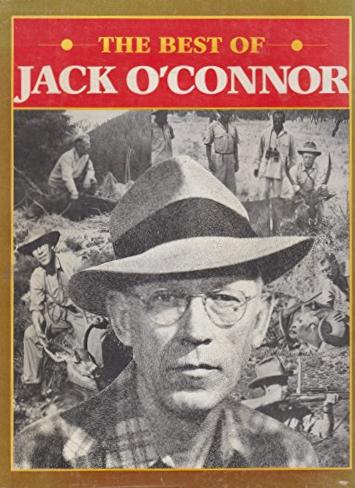
First off, O’Connor was indeed an English professor, but he didn’t teach at some highbrow eastern Ivy League college. He was at Sul Ross State Normal College (which turned into Sul Ross State University) in Alpine, Texas, for many years; he also taught at the University of Arizona and the State Teachers College in Flagstaff, Arizona. In other words, he was very much a man of the West; he was born in Nogales, Arizona, in 1902, when there were still bandits roaming the range, and he spent a lot of his childhood hunting. It was very much the Wild West still in those days, and indeed, if you visited Nogales in the 21st century, you’ll see it’s still a wild, empty land.
Elmer Keith was only three years older than O’Connor, born in 1899 in Hardin, Missouri, but he led a very different life growing up, banging around ranch country in eastern Oregon, Montana and Idaho, where he settled down and lived his adult life, spending many years as a rancher as well as a hunting and fishing guide. O’Connor’s childhood might not have been all sunshine and roses, but it was almost certainly not as hard as Keith’s; when you read his writings, they’re filled with tales of hardship in a time when the American West was still mostly untamed. He was burned badly at age 12 and nearly died. A lot of his early hunting was solely aimed at putting meat on the table, and Keith learned that you might not get a second chance at a big animal that would feed you for a long time. This certainly influenced his writing later on.
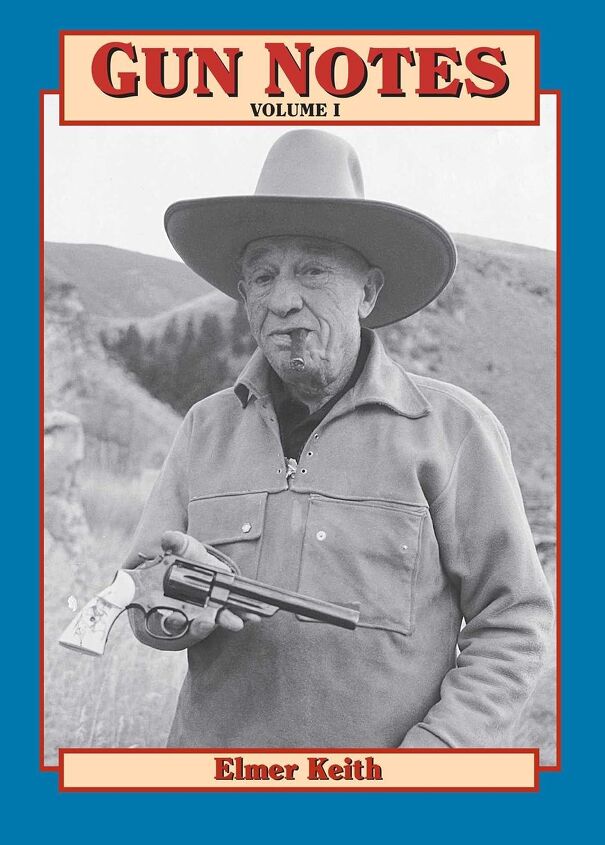
One area where Keith differed greatly from O’Connor was that Keith translated his early days as a cowboy on the frontier into a lifelong love of six-guns, and contributed greatly to the development of the .357 Magnum, the .41 Magnum and the .44 Magnum cartridges. Keith wrote many words about his theories on the needs of lawmen for big-bore handguns, about shootout tactics and about shootouts he’d observed or heard about in his youth on the frontier. O’Connor wrote a lot less about handguns and was certainly no apostle of long-range handgun shooting like Keith was.
The Great Killing Power Controversy
Both of these men wrote for a variety of hunting and shooting magazines starting in the 1920s (in Elmer Keith’s case) and 1930s (in Jack O’Connor’s case). Their writing careers ended in the 1970s, with several books to each writer’s name as well. And while they both hunted many of the same animals in similar country, they each preached a different message of how to do it—at least, some of the time.
In the early 20th century, there were two basic schools of thought on hunting cartridges. Some shooters thought that heavy bullets pushed at lower speeds would penetrate better; others thought that lighter bullets at high velocity were preferable.
O’Connor espoused the second idea and had a reputation for pushing the .270 Winchester as a great hunting cartridge. He pushed the idea of careful shot placement and said for years that a fast, well-placed bullet was what killed wild game—not raw power itself. He liked flat-shooting cartridges because they reduced the margin of error when hunting sheep, elk and other big game in wide-open country.

Keith did not disagree that more speed meant better killing power, but he put more emphasis on tough bullets with strong construction and high sectional density. No 130-grain .270 loads for Keith. He thought that killing power started at .33-caliber bullets weighing 250 grains or more (think .33 Winchester, or .35 Whelen; he thought the .30-06 would get the job done as long as you used heavy-for-caliber bullets). Later, when more modern cartridges like the .338 Winchester Magnum came along, he was a big fan of using heavy bullets at high speeds in guns like these, and no wonder; that particular round was based on ideas he had explored in his own wildcat cartridge designs.
Both writers talked about their differing ideas in their books and articles, but later in his career, Keith said some pretty nasty stuff about an imagined cabal of eastern gun writers and editors who were out to get him and suppress his ideas. As for O’Connor, he could be sharp in his writing as well, but was definitely less cantankerous than Keith.
I think that if you understand what experiences each man based his writing off of, you can understand why they had different ideas about killing big game. O’Connor was less of a subsistence hunter and if he didn’t come home with a trophy ram from an Alaskan trip, well, it wasn’t the end of the world. As well, he often hunted with his wife Eleanor, a very well-respected shooter and hunter in her own right, but it might have steered him more towards lower-recoiling cartridges, especially when he watched her stacking up trophies with 7x57mm Mauser, .257 Roberts and other lighter rounds. When necessary, she would use a beefier rifle for true dangerous game like lions, and so did O’Connor; he wasn’t stupid.
Keith, meanwhile, had spent many years test-firing rifles in government arsenals for World War II, not to mention cowboying the range, and recoil was not an issue for him. He had spent his younger years hunting wooded country on the range, where he describes taking “raking” shots at game—in other words, a non-ideal angle, and it was his view that a heavier bullet would penetrate better in such circumstances. These days, that view might not fly, but in the first half of the 20th century, hunters were less fussy, especially when not taking the shot guaranteed you wouldn’t harvest the animal for your table.
As well, remember that bullet construction for lighter projectiles has progressed considerably since those days. Keith grew up in the era where much hype was thrown at fast-shooting cartridges like the .22 Hi-Power and .250-3000, but the actual bullet construction let those cartridges down. These days, he would have a much harder time poo-pooing the .270 and calling it a coyote gun.
Who won?
In the fifty years since they’ve stopped writing, most hunters have come around to Jack O’Connor’s idea of prioritizing a well-placed shot in the vitals over taking bad-angle shots to fill the freezer. But I think that Keith’s ideas of using beefy bullets still have considerable influence on big game hunters. I remember talking to a ranger right after I had passed my hunter’s safety class many years ago, and he advised me that he would buy a .270 “for everything … except maybe moose.” Of course, a .270 works fine on moose (my neighbors have shot a truckload of moose with this caliber), but I still hear the opinions that bigger bullets are necessary for big game all the time.
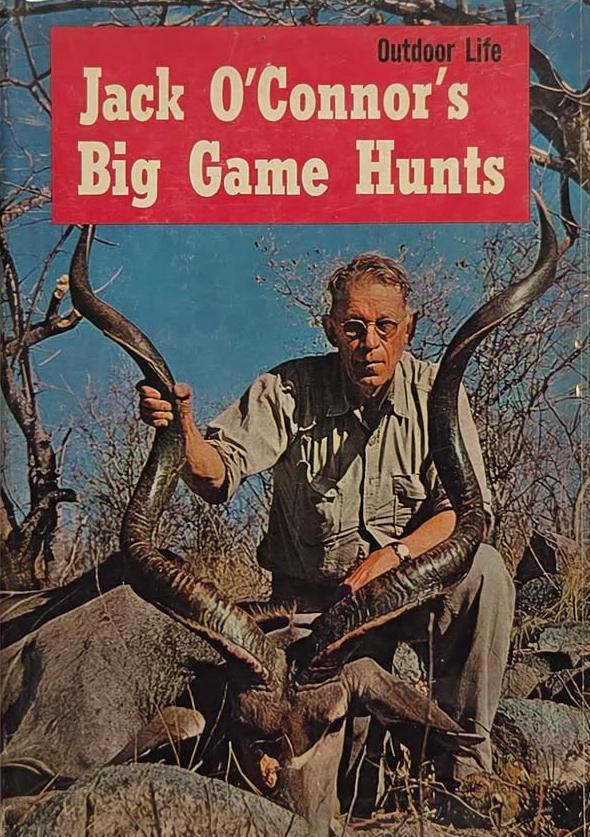
But since most shooters aren’t comfortable blasting away with a .338 Winchester Magnum, it seems the compromise these days usually comes with something like a .30-06 or .300 Winchester Magnum, with heavier bullets, but not a true big-bore, and with velocities boosted beyond the slower rounds of the early 20th century. Maybe you could say that Keith and O’Connor both won; Keith’s ideas about solid bullet construction have definitely prevailed, even if modern rifle loads are generally lighter. And O’Connor’s theory about lower recoil offering better accuracy has certainly proved true, with modern factory cartridges often trying to combine both ideas to target all ends of the market.