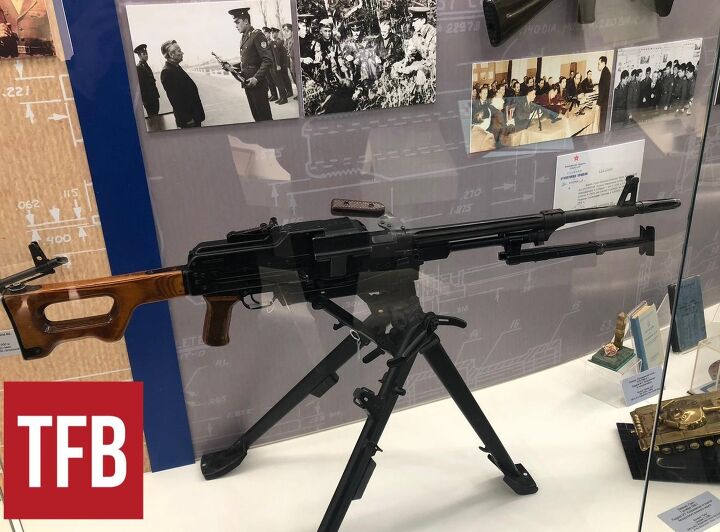
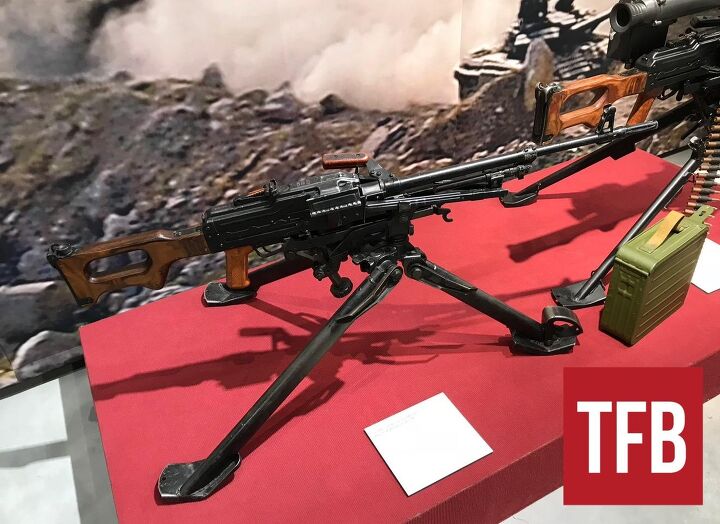
Poland’s love for the PK series of machine guns cannot be overstated. It continues to serve today, even after the collapse of the Warsaw Pact nations and the USSR, with Western modernizations that may preserve the core reliability that made the original famous. It began when the PK entered Soviet service in 1961, and in the mid-1960s, Warsaw Pact armies began replacing older medium machine guns with new general-purpose machine guns. Poland initially received a license in 1966 for the PKS-mounted version, produced at the Hipolit Cegielski Mechanical Works in Poznań, and the rest of the PK family followed soon after. Poland received the license for the modified PKM/PKMS pattern in 1973. By this time, Poland had already developed an interest in the PK series of machine guns; the PKM furthered that interest.
The Guns
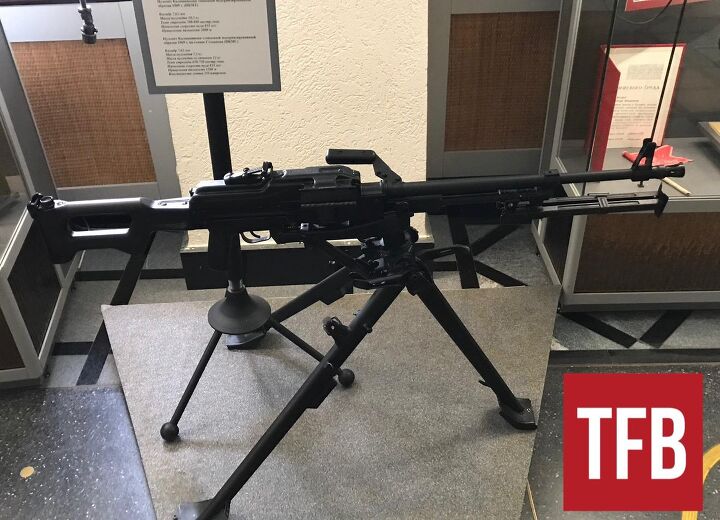
The PKS gave Poland a mounted medium machine gun, while other PK variants filled vehicle and infantry roles. HCP’s Poznań plant became the industrial home of the Polish PK series, and PK production ran alongside the broader modernization of Polish arms manufacturing in the late Cold War period. The result was not just a copy of a Soviet weapon, but a locally produced system that fit Polish training, maintenance, and vehicle integration. By the mid-1970s, the PKM/PKMS had become the more modern form, and Poland kept producing that improved pattern until the post-communist era forced a deeper rethink.
The real break came after the Cold War, as Poland moved toward NATO, the old Soviet 7.62x54mm cartridge became a liability for interoperability, and the machine gun had to be reimagined around 7.62x51mm NATO and M13 disintegrating links. The biggest hurdle was the M13 link, not the caliber. HCP first tried a relatively modest conversion called the PKM-N or PKM-NATO. That prototype was type-certified in 1996, tested from 1997 to 1999, and ultimately rejected by the army. Even though it was a logical first step, the military wanted something more than a simple rechambering. It wanted a true bridge between the Kalashnikov machine-gun tradition and NATO-standard ammunition and links.
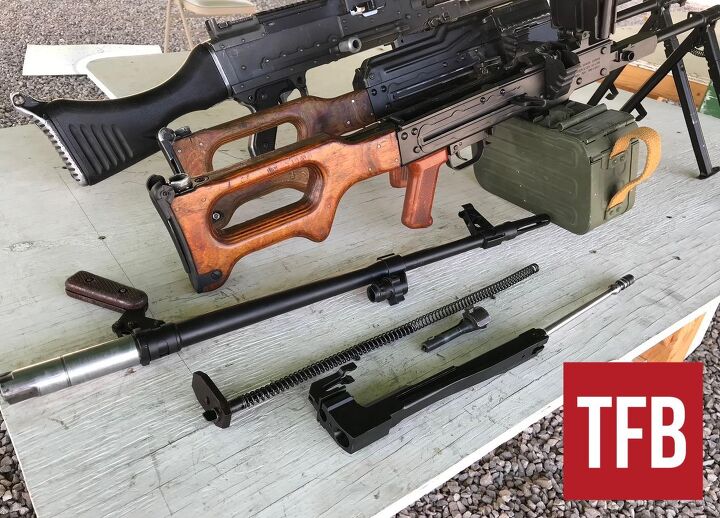
That is where the UKM-2000 comes in. After the PKM-N was rejected, the Military University of Technology in Warsaw began work in late 1998 on a more ambitious redesign, already designated UKM-2000. The name itself captured the new ambition: “uniwersalny karabin maszynowy,” or universal machine gun, meant to replace the Soviet-era PK series of machine guns and modernize it for the new NATO environment after joining NATO in 1999. The weapon was co-developed with HCP, and the ammunition and M13 links were also adapted for Polish production. The key technical change was the feed system: the UKM-2000 ditched the two-stage feed system to handle rimless NATO ammunition with M13 links, which required a substantial redesign of the feed system rather than a simple barrel swap. Primarily, the UKM is a stretched PKM to accommodate the push-through feed arrangement to feed the M13 disengaging link. Other additions included a small brass deflector to push the ejection pattern farther from the shooter than with a standard PKM. The barrel change latch was relocated from under the feed tray cover to in front of the cover, which would speed up barrel changes in the MMG role. However, the headspace adjustment feature was retained in the barrel locking latch.
Poland formally introduced the UKM-2000 into service around 2005, and larger purchases began in 2007. The result was a weapon series that preserved the PKM’s handling and reliability while adapting to NATO links and ammunition. The standard infantry version, the UKM-2000P, became the main squad-level support weapon, while the UKM-2000C tank variant replaced the coaxial role traditionally filled by the PKT. In other words, Poland had not abandoned the PK legacy; it had Westernized it. This westernization came at a cost, as the UKM-2000P weighed 18.5 lb, a 12% increase over the original PKM.
Combat experience then pushed the design further as Polish troops used UKM-2000 variants in Iraq and Afghanistan, and later modernization work focused on ergonomics, accessory mounting, and practical field use. A 2015-upgraded UKM-2000P featured M1913 Picatinny rails on the feed tray cover and handguards, plus a left-folding stock and improved ergonomics. Those were not cosmetic changes; they were the kind of changes that matter when a gun is expected to work alongside optics, enablers, and modern vehicle mounts. The old Soviet silhouette remained recognizable, but Poland’s NATO integration increasingly shaped the weapon design.
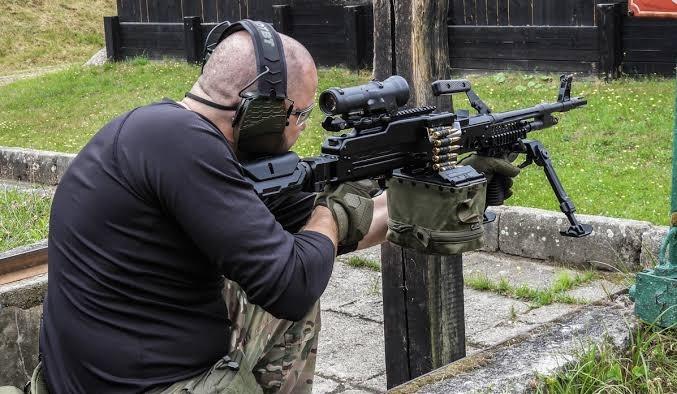
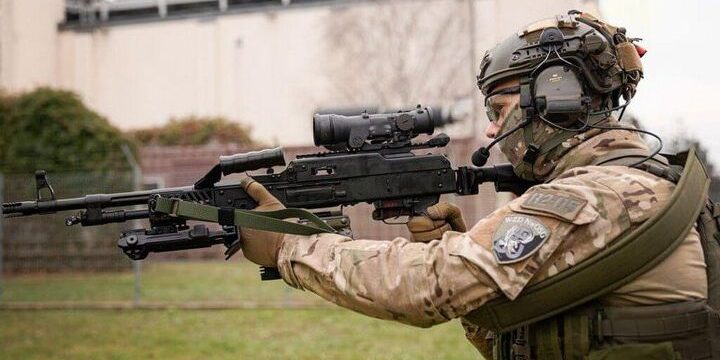
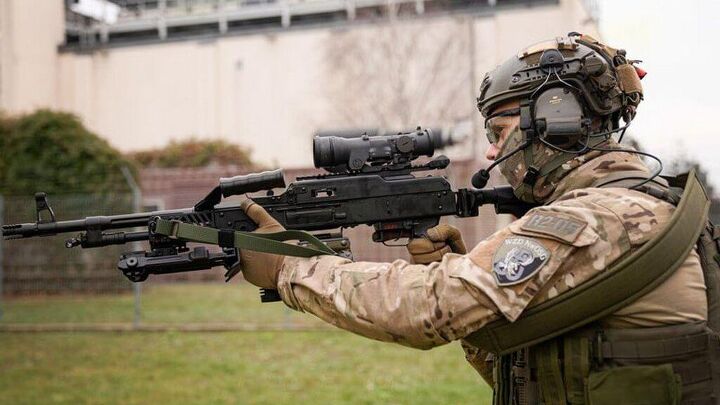
The latest step in that evolution is the UKM-2020S, manufactured at the Zakłady Mechaniczne Tarnów plant, with a further development of the UKM-2000P, still chambered in 7.62x51mm NATO and still fed from an M13 disintegrating links, but reduced in size and weight. The official ZMT data list a 17.32 in barrel, a left-folding plastic buttstock, an adjustable bipod, a M1913 rail integrated into the feed tray cover, and a minimalist sighting arrangement. ZMT also lists the weapon at 19.62 lb, with a cyclic rate of 600-900 rounds per minute and a weapon length of 32.44 in with the stock unfolded. The new UKM is reportedly lighter, more modular, and easier to integrate into the current Polish service doctrine. But all of this still comes at a weight gain over the original PKM, nearly a 19% weigh weight increase based on the advertised weights. The plus of the system is retaining the headspace adjustment from the original PKM, which unit armorers or higher-level maintainers can use to adjust for a warm bolt or mismatched bolt and barrels.
The Border Guard was the first known recipient of the UKM-2020S, receiving 25 machine guns in early 2023. That fielding shows the UKM weapon system has expanded beyond the army into other uniformed services. Today, the UKM-2000P remained the primary squad-level support weapon in Polish service, while the UKM-2020S was the latest in the same lineage. Seen as a whole, the Polish journey from PK to UKM-2020S is not just a simple caliber change. It is a story about a country taking a near-perfect Soviet design, keeping what worked, and steadily rebuilding everything else around Western standards, Western enablers, and Western integration.