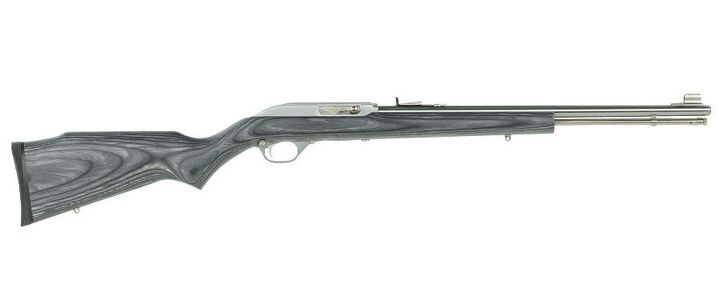
For as long as I’ve been reading gun magazines, the Ruger 10/22 has been the king of the rimfire scene. Lots of other manufacturers sell a lot of other guns, but any rimfire semi-auto under the $500 mark is invariably compared with the 10/22. The aftermarket supports the 10/22 to an extent that no other rimfire rifle has ever seen. And yet, it wasn’t a foregone conclusion that things would work out like this; the Marlin Model 60 competed alongside the Ruger 10/22 for decades, and still compares well today—as long as you can find one.
Marlins old and new @ TFB:
- The Rimfire Report: An Ode To The Marlin Model 29 Pump Action
- Sturm, Ruger & Co., Inc. Reintroduces the Marlin 1894 Lever-Action Rifle
- Review: Quick Enhancements for Marlin Leverguns
- New 150th Anniversary Marlin Commemorative Rifles and Ammo
From an M1 Carbine copycat
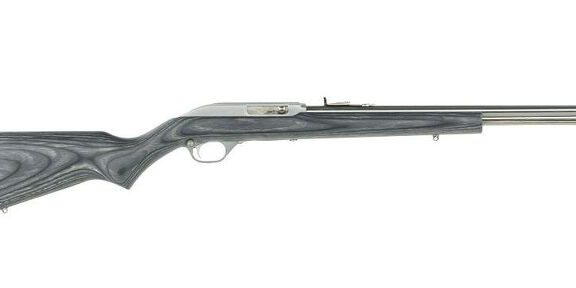
The Model 60 was developed by Marlin’s engineer Ewald Nichol. He had previously developed a rimfire rifle that was an exterior lookalike to the M1 Carbine; this was called the Model 99, and was released in 1959. The Model 60 came along in 1960, with a full-length tube magazine under the 22-inch barrel that held 18 rounds of .22 LR (barrel length and magazine capacity came in different numbers later on). The Model 60 was an adaptation of the Model 99 platform, and while the Model 99 ended production in the 1960s, the Model 60 or other variations of the platform were built until around 2020, with 11 million rifles sold.
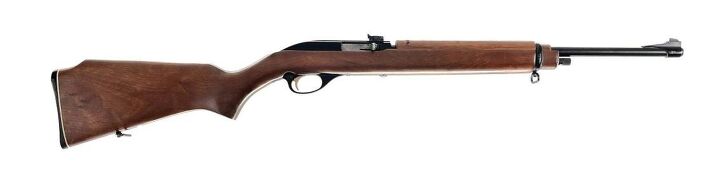
That’s a lot of guns, with production far exceeding centerfire hunting rifles like Marlin’s own 336 lever-action, or the Winchester Model 94. The Model 60 was not going to be immortalized on the cover of a deer-hunting book, but it—and rifles just like it—were the start of many kids’ hunting careers.
Marlin wasn’t coy about it; the Model 60 was a hunting rifle, with a squirrel factory-carved right into the grip of many of the rifles sold. While millions of Model 60s probably shot an exponentially larger number of rounds at cans and targets in plinking mode, they were intended as a hunting rifle, and they did it well. You could snipe small game with this gun right off the shelf, with Marlin’s microgroove rifling providing excellent accuracy with .22LR ammo.
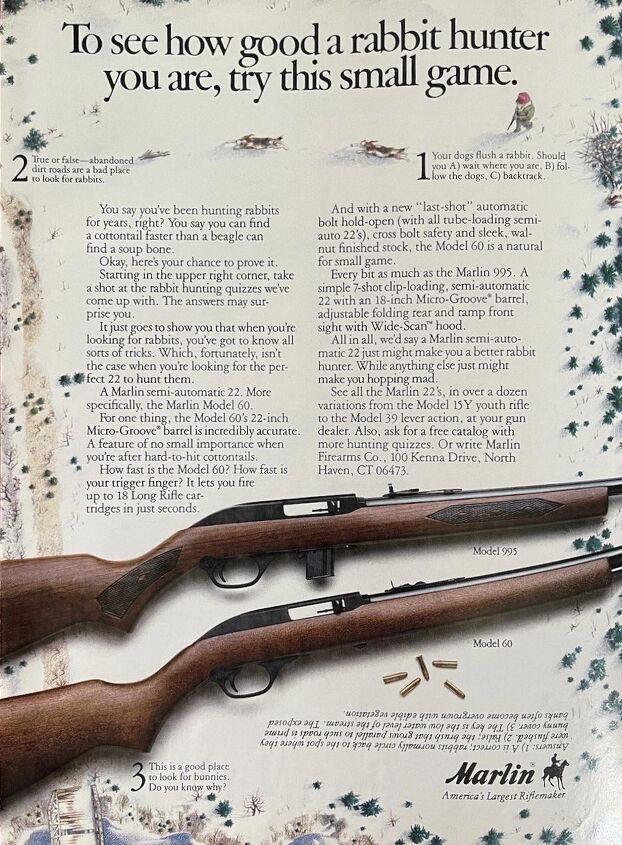
The Marlin generally had a better reputation for accuracy than the Ruger 10/22, historically speaking, and if you just wanted a gun to hunt with and not a gun to tinker with, the Marlin was the ticket. Read Sam’s write-ups on the rifle here and here to get an idea of what made them popular, and how they were used, and how to keep them operating well today, years after they were made. Luke also had some thoughts on the Marlin Model 60, calling it one of the three most underrated rimfires you could buy.
Why it worked
For starters, the Model 60 was a good-looking rifle, with well-balanced visual lines and handling that matched. While detachable mags rule the market today, the Model 60’s tube magazine couldn’t be lost or forgotten, and it still held a lot of rounds. The sights were pretty good. The gun didn’t have a reputation for jamming, and you could get it cheap. How cheap, you ask? In the 1970s, pricing at a department store like K-Mart started around forty bucks a rifle. Now, that might have been a store-branded gun, or maybe carrying the lower-priced Glenfield name (Marlin’s value brand), but the rifle shot just as straight, no matter what name was on the receiver.
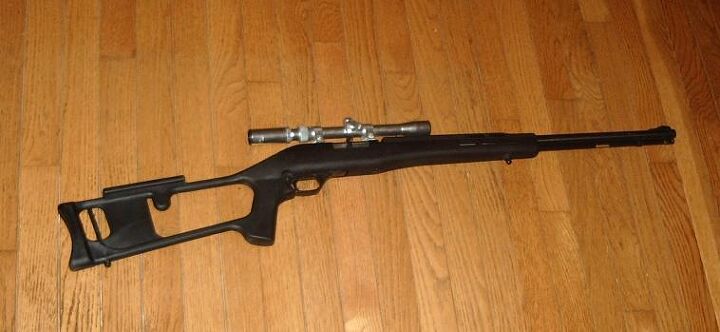
Prices rose to a hundred bucks a gun, give or take, in the 1990s; by the late 2010s, you were looking at $150-$200 US, which was still very reasonable for what you were getting.
There were several variants on the Model 60 action, including the Model 70 and Model 795, which were basically the same thing but feeding from a detachable mag. Probably the most desirable variant is the Model 70PSS, a stainless-steel takedown rifle that preceded all the other similar models on the market today. It competed directly against the AR-7 design for many years, and the Marlin survival rifle was always acknowledged as a superior rifle.
End of the Model 60
But the Model 60 rifle and variants were caught up in the Remington bankruptcy fiasco, as Remington bought Marlin in 2010 and shut down their factory in Connecticut, shifting production to their New York facility. Those Remington-produced Model 60 rifles did not have a great reputation in the early years, but they improved somewhat before Remington managed to have a couple of bankruptcies and sold the Marlin company off to Ruger as a result.
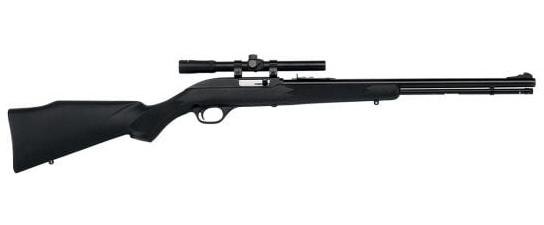
And Ruger, well, there is no indication they’re going to revive the greatest competitor to their 10/22 rifle. That’s not saying it won’t happen, but since they bought Marlin, they’ve consistently said there is no plan to bring back the Model 60.
That means you’ve got to buy one second-hand if you want one now, and I’d advise you to start looking if you’re interested. I don’t think these rifles will follow the exact same pattern as lever-action .30-30s, which were ubiquitous and cheap until all of a sudden they weren’t. Marlin Model 60s will never have quite the same drip as a Winchester Model 94. But I do think they will see prices rise in the years to come.