Gloves, boots, and the stuff you wear against your skin — where fit and durability matter most and get thought about least.
Front Line Friday is a weekly column on duty-grade realities for first responders.
Welcome back to Front Line Friday. This week is a gear week, and the topic is the equipment closest to your body: gloves, boots, and the small-item category that most agencies handle through individual purchase and individual preference rather than program design. Front Line Friday is brought to you by Dead Air Silencers, whose support keeps this column going every week.

The thesis is straightforward: small gear has a disproportionately large impact on injury rates, lost workdays, and long-term occupational health. The reason it gets less program attention than rifles, radios, and vests is that the failures are slow, cumulative, and rarely traceable to a single procurement decision. By the time the cost shows up in workers’ comp data, the gear that caused it is three issuances back.
Front Line Friday @ TFB
- Front Line Friday #1: The Reality Between Policy and Pavement
- Front Line Friday #2: Why Patrol Rifles Should Be Suppressed
- Front Line Friday #3: Stop Buying Gimmicks—Buy Time
- Front Line Friday #4: Patrol Rifle Setups to Reduce Training Burden
- Front Line Friday #5: Why Teams Fail at Simple Coordination
- Front Line Friday #6: Duty Belts, Vests, and Real Load Management
- Front Line Friday #7: Writing SOPs That Actually Stick
The “Just Buy Your Own” Problem
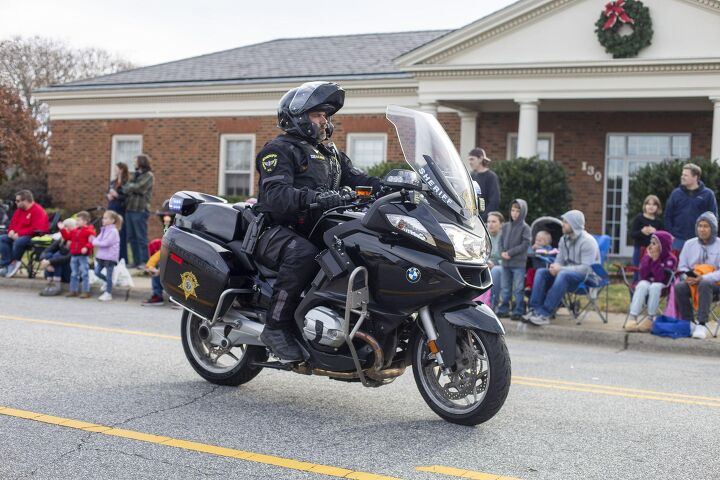
Small gear occupies an awkward administrative space in most agencies. It’s too personal to standardize completely, too variable across body types and assignments to issue as a single solution, and too low-cost per item to justify formal procurement overhead. The default response is to hand officers an allowance, point them at an approved vendor list, and let individual preference sort it out.
That works reasonably well for experienced officers who know what they need. It works less well for newer officers who don’t yet know what failure looks like, for agencies trying to maintain consistency across the team, and for anyone trying to evaluate whether the money being spent actually prevents injuries and lost workdays.
The “just buy your own” model also makes it harder to identify patterns. If six officers in one department develop plantar fasciitis in the same two-year period, it’s worth asking whether they were all buying the same boot from the same vendor because it was at the top of the approved list and seemed like a reasonable choice. That kind of pattern is invisible when purchases are individual and untracked.
This isn’t an argument for eliminating personal choice in small gear. It’s an argument for adding a framework around it: a short approved list based on duty criteria, a fitment or sizing guidance process for new officers, and basic tracking of injury patterns that might correlate to equipment decisions.
Boots: The Foundation That Gets Ignored Until It Breaks
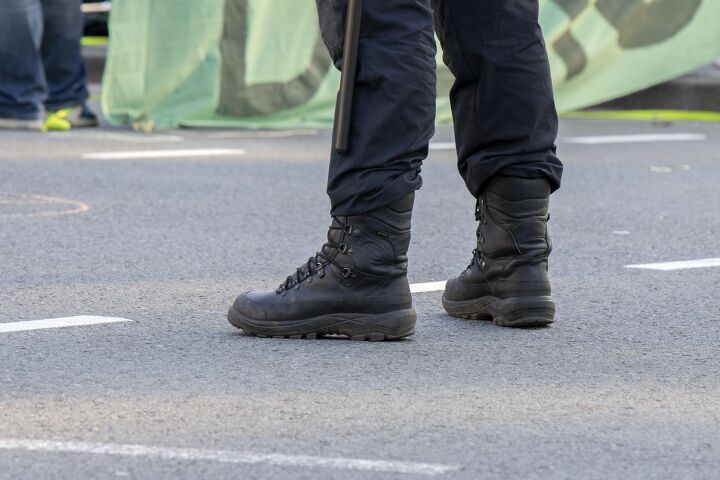
Boots are the most consequential small gear decision most officers make, and the one with the least formal guidance behind it. The cumulative physical cost of 8 to 12 hours per shift on hard surfaces, in and out of vehicles, across every weather condition the jurisdiction produces, lands almost entirely on the feet, ankles, knees, and lower back. A boot that doesn’t fit correctly, doesn’t support the officer’s foot type, or breaks down faster than the replacement cycle, contributes directly to the injury patterns that show up in workers’ comp claims.
What Duty Boots Actually Need to Do
The baseline requirements for a patrol boot differ from those of a consumer hiking or work boot. Patrol boots need to handle:
- Extended periods of standing and walking on hard, flat surfaces — pavement, concrete, station floors — where cushioning and arch support matter differently than on trails
- Repeated vehicle entry and exit, which means flexion and lateral stress on the ankle and the sole
- Rapid transitions from sitting to running without a warmup period, which puts stress on the Achilles tendon and the boot’s structural support
- Wet conditions, mud, blood, and other contamination that affect both the boot material and the officer’s ability to clean and maintain the footwear
- A full shift without removal, which means fit at the beginning of the shift needs to account for foot swelling by hour six
A boot that performs well on a Saturday afternoon hike may not perform well across a 10-hour midnight shift in January. Those are different problems requiring different engineering, and officers who buy based on outdoor recreation reviews rather than duty-specific feedback often learn that distinction the uncomfortable way.
Fit Is Not Optional
The most common boot-related injury driver is poor fit, and poor fit is not always obvious at purchase. Feet swell during a shift. Officers with high arches, flat feet, or wide forefeet need boots that accommodate those variations, and a boot that fits at 0800 may be creating pressure points by 1800. Officers who buy the same size they wear in casual footwear without trying on the duty boot at the end of a shift, or without understanding how the boot will break in, are making a fit decision with incomplete information.
Agencies can reduce this without a major investment in programs. Including a brief, fitting guidance document with any boot stipend or allowance, noting that officers should try on boots later in the day and walk in them for at least 15 minutes before purchase, costs nothing. Ensuring that the approved list reflects options across width categories costs a little more, but produces meaningfully better outcomes for the officers who need it.
Breaking Down Before the Replacement Cycle
Most agency replacement cycles for boots are set by calendar rather than by condition. The boot gets replaced annually, or biannually, or whenever the officer requests it within a budget period. The problem is that a duty boot worn across 250 or more shifts per year can break down structurally well before the replacement date on paper.
When the midsole compresses to the point where it no longer provides meaningful cushioning, the boot still looks like a boot from the outside. Officers who haven’t learned to recognize the signs of midsole failure — reduced cushioning, changes in how the boot flexes, soreness at joints that weren’t previously a problem — continue wearing it past the point where it contributes to injury risk.
Supervisors who include boot condition in basic equipment checks, the same way they’d check holster retention or battery function on a light, can catch this. It doesn’t require expertise. The officer removes the boot, presses on the midsole, and checks for visible compression or distortion. If the boot has lost its structure, it gets replaced on condition rather than waiting for the calendar.
What to Watch and What to Change
What I’d watch: Plantar fasciitis, Achilles complaints, and knee pain in officers under five years of service. Those patterns often correlate to boot decisions made early in the career, before officers knew what to look for. Track them informally if you don’t have a formal system.
What I’d change: Most agencies’ approved boot lists were built on price and availability rather than foot-type accommodation and documented duty performance. A one-time review of the list against duty criteria — support, durability, weather resistance, width availability, replacement cost — is worth doing even if it only happens every few years.
Gloves: The Compliance Gap Nobody Solves
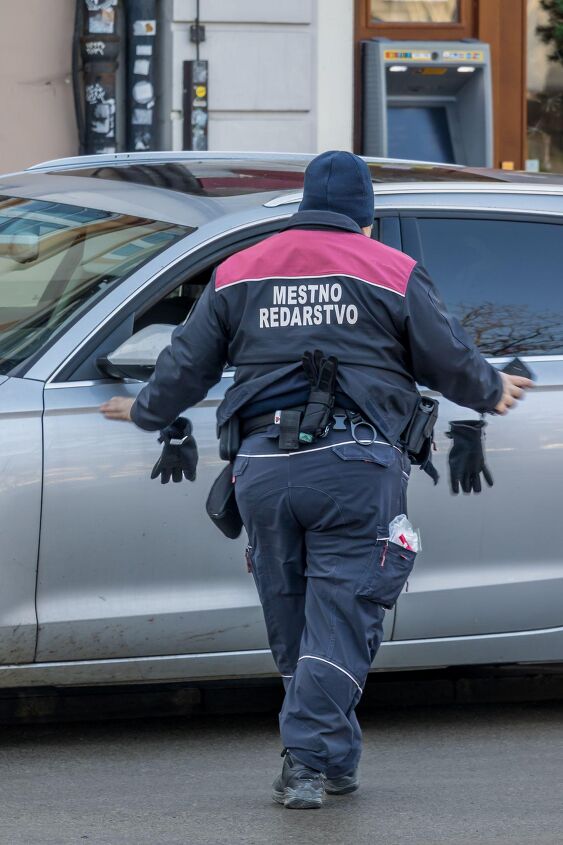
Gloves occupy a peculiar position in duty gear. Most agencies have some expectation that officers will wear gloves for certain tasks — suspect contact, evidence handling, medical response, vehicle extrication assistance, and any situation where blood or other biological material is a realistic possibility. In practice, glove compliance is inconsistent across agencies and individuals, and the reason is almost always the same: the gloves issued or approved don’t work well enough to be worn consistently.
The Compliance Problem Is Mostly a Selection Problem
Gloves that are difficult to put on quickly, reduce dexterity enough to interfere with common tasks, don’t fit well across the range of hand sizes on the team, or are uncomfortable over extended wear get taken off and left in a pocket or a glovebox. That’s not a discipline problem. That’s a predictable human response to gear that creates more friction than it resolves.
The glove selection criteria that most directly affect compliance are single-hand donning. In a patrol context, gloves often need to be put on quickly, with one hand occupied or without pausing activity. A glove that requires careful alignment of a liner and an outer shell, or that rolls in on itself during donning, or that takes two hands and 20 seconds to put on correctly, will not be on the officer’s hands when an unexpected contact situation develops.
The second most important is dexterity retention. Gloves that make it difficult to operate a radio, retrieve items from a pocket, manipulate a seatbelt, or perform any of the dozens of fine-motor tasks in a patrol shift get removed. Gloves thick enough to make those tasks noticeably harder will be worn less than gloves that preserve dexterity. The trade-off between protection and dexterity is real, and the selection decision should reflect how the gloves will actually be used.
Medical vs. Duty Gloves: Two Different Tools
Most officers carry nitrile examination gloves for medical response and exposure situations. Some carry a heavier-duty glove for suspect contact, vehicle work, and higher-abrasion tasks. These are different tools for different purposes, and conflating them creates gaps in both directions: the officer who uses exam gloves for everything accepts more abrasion and puncture exposure than necessary, and the officer who uses heavy-duty gloves for everything loses the dexterity needed for medical tasks.
The simplest workable system is two gloves carried in accessible locations: a pair of nitrile exam gloves immediately accessible for unexpected contact and medical response, and a duty glove for tasks requiring durability. The exam gloves need to be in a consistent, accessible location, not at the bottom of a bag.
For EMS personnel, this calculus differs because medical glove use is continuous and dexterity requirements are higher. But the principle holds: gloves that don’t get worn because they’re inconvenient do not provide protection.
Cold Weather and Seasonal Transitions
Cold-weather glove selection is where most patrol glove programs have the least guidance. Officers in cold-weather jurisdictions face a genuine problem: warm gloves that compromise dexterity, and dexterous gloves that don’t provide meaningful warmth. The solution most agencies arrive at organically is “officers figure it out,” which produces a wide variety of personal solutions of varying effectiveness.
A better starting point is to acknowledge that cold-weather duty gloves are a separate category from standard duty gloves and should be evaluated accordingly. The approved list should include at least one option that provides usable warmth while preserving enough dexterity for radio operation and common patrol tasks. That’s a solvable specification if someone defines it before officers are already deep into January, trying to make something work.
What to Watch and What to Change
What I’d watch: Glove availability at the moment of unexpected contact. If officers are retrieving gloves from a bag or glovebox rather than a belt pouch or vest pocket, they’re probably not gloved for unplanned situations.
What I’d change: For most agencies, the approved glove list should include a single-hand donning standard as part of the selection criteria. Test it before approving it.
Small Gear That Compounds Over Shifts
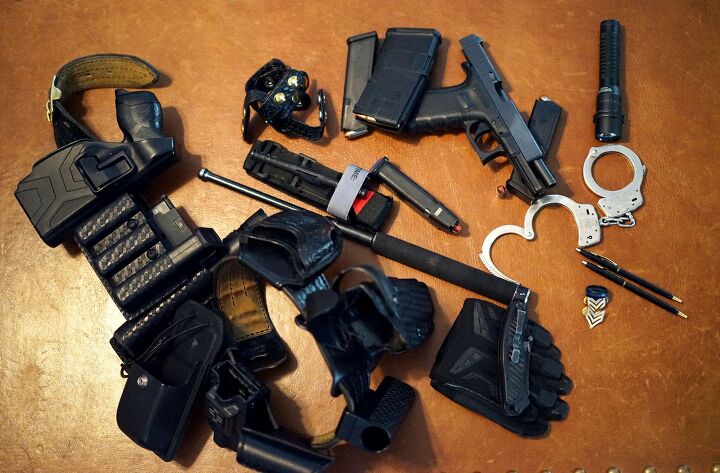
Beyond boots and gloves, there’s a category of small items that individually seem trivial but collectively shape how an officer functions by the end of a long shift. These items rarely receive formal program attention, but their failure modes are consistent enough to merit naming.
Socks
Socks are purchased individually, rarely appear on approved equipment lists, and are responsible for a meaningful share of blister and friction injuries. An officer wearing a cotton athletic sock in a duty boot for a 12-hour shift in a warm climate will experience moisture buildup that can create blistering conditions. A moisture-wicking wool or synthetic blend sock designed for extended standing wear makes that problem significantly smaller.
This is a dollar-level intervention that most agencies have never formally addressed. A single line on the approved list recommending specific sock construction criteria costs nothing to add and will prevent a measurable number of shift-disrupting blisters over any given year.
Eyewear
Duty eyewear gets treated as a personal item in most agencies, which means officers are selecting based on appearance and personal preference rather than on ballistic rating, UV protection, or lens performance in the lighting conditions they actually work in. Officers who work dawn-to-dusk transitions or spend significant time in vehicles with significant glare need lens options that address those conditions. Agencies that specify eyewear criteria in the approved list achieve better protection outcomes and fewer preventable eye injuries.
Knee and Back Support
Officers with known musculoskeletal concerns frequently wear supportive bracing or compression gear as a personal choice. Agencies that have no formal position on this or require officers to navigate a separate accommodation process to wear a basic knee sleeve are adding friction to a straightforward injury-mitigation step. A brief, clear policy statement that allows officers to wear personal supportive gear that doesn’t interfere with duty function removes that friction without creating meaningful administrative overhead.
Fire/EMS Parallel: The Same Gear Problem in Different Conditions
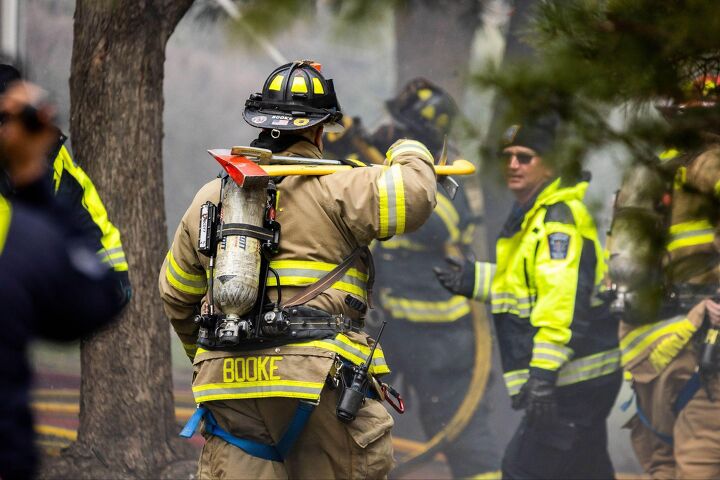
Firefighters face a version of each of the problems above, amplified by the weight of turnout gear and the physical demands of fire suppression. Boot selection for firefighters involves specific NFPA standards, but within those standards, there is still meaningful variation in fit, weight, and long-term wearability that affects injury rates. Foot and ankle injuries in the fire service are among the most consistently reported occupational injuries, and boot fit and condition are contributing factors.
EMS personnel face a particularly under-addressed version of the glove compliance problem. High-volume patient contact means gloves are donned and removed dozens of times per shift. Glove donning technique, hand hygiene between changes, and skin integrity all matter, affecting both the provider and the patient. EMS programs that include a brief glove management component in their infection control training achieve better compliance than those that assume officers have internalized correct glove management practices from initial certification.
The connecting thread across all three disciplines is that small gear decisions produce measurable, predictable, and largely preventable occupational health outcomes with modest program attention.
What to Watch and What to Change
What to watch across the program:
- Workers’ comp and light-duty claims for foot, ankle, knee, and hand injuries. These are the most common small-gear injury categories and the most likely to correlate with equipment decisions.
- New officer injury patterns in the first two years of service. This is when boot and glove decisions are made with the least experience and the most long-term consequences.
- Glove use patterns in scenes. If officers are not gloved at initial contact, the approved gloves are probably not accessible or not compliant enough to use.
What to change if you have bandwidth:
- Review the approved boot list against duty criteria, not price. Add width options if they’re not there.
- Add single-hand donning as a selection criterion for duty gloves.
- Include a moisture-wicking sock recommendation in the new officer equipment guidance.
- Create a brief boot-condition check that supervisors can perform during routine equipment checks.
- Remove administrative friction from officers wearing personal supportive gear that doesn’t affect duty function.
Bottom Line / What to Do Monday
- Pull your approved boot list and ask when it was last reviewed against duty performance criteria, rather than price and availability.
- Check whether your approved boots include width variations. If they don’t, officers with non-standard foot widths are buying off-list or wearing boots that don’t fit.
- Add a boot condition check to your next equipment inspection: midsole compression, visible structural wear, and sole separation. If it’s broken down, replace it on a condition basis.
- Review where officers carry exam gloves. If the answer is “in the bag” rather than “on the body,” reconsider placement.
- Test your approved duty gloves for single-hand donning with the non-dominant hand. If it takes more than five seconds, it won’t happen under stress.
- Add cold-weather glove guidance to your approved list if it isn’t already there.
- Include a one-line sock recommendation in the new officer gear guidance. Moisture-wicking construction, designed for extended standing. Takes 30 seconds to add.
- For EMS: include glove donning and doffing techniques in your next infection control refresher rather than assuming they were retained from initial training.
- For Fire: add boot condition to your next apparatus and gear inspection checklist.
- For anyone: if an officer has been managing a foot or knee problem for more than one shift cycle, ask what boot they’re wearing. The answer is often the beginning of the solution.
Sign-Off
That’s Front Line Friday for this week: the gear closest to your body has the highest failure cost, and it gets the least program attention.
Next week: range qualification realities — what performance standards actually measure versus what check-the-box training produces, and why that gap matters more than most agencies want to admit.