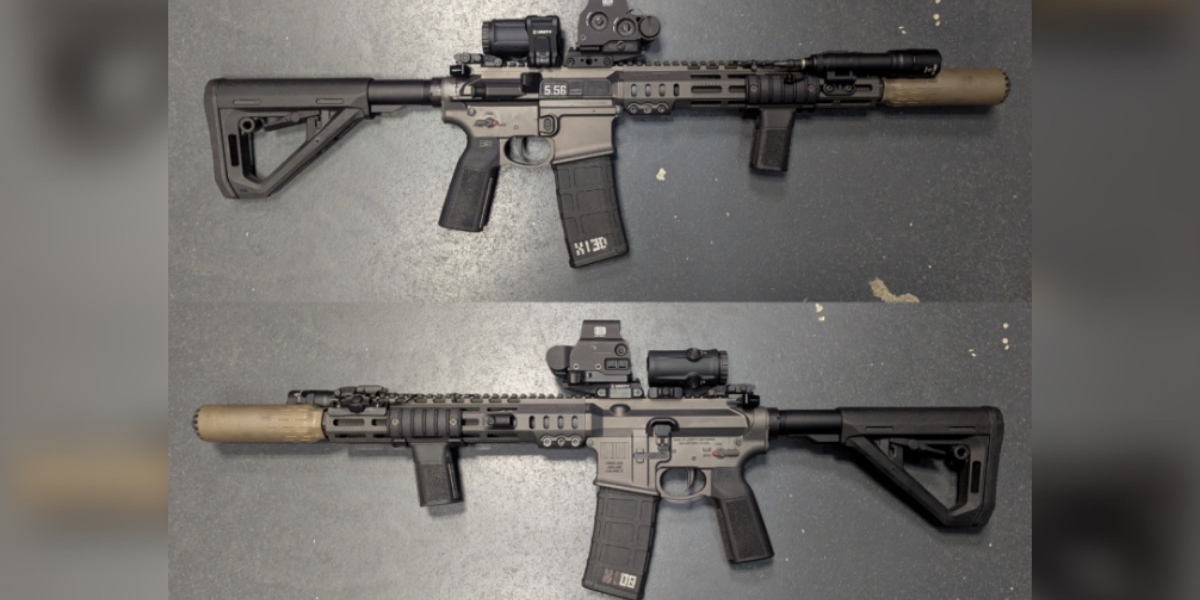
THE NEW STANDARD: SOLGW MK1 CAR

UPDATE, 5/29/2026: The work on this article took place between November 21, 2025 and January 12, 2026 when it was originally published. At the time of development, the details that were disclosed during the interview, fact checking, and editing process are described in the article below. However, since then, those details have changed and SOLGW has publicly disseminated the new information. These changes warranted this update, given the disparity between what was said back then, and what is being said now:
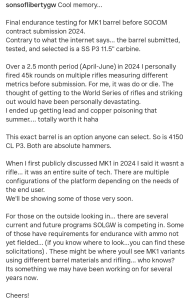
• The SOCOM contract rifles are not equipped with ARMAD barrels, as it was originally articulated; Proof Research— with whom SOLGW was collaborating— had not yet finalized the 5.56 twist rate for their new PXT rifling technology (a form of gain twist rifling as initially hypothesized below). As such, since ARMAD is expensive and difficult to machine, it was determined better to wait for the development of the PXT rifling (conducive to high pressure or hypervelocity ammo use) to be completed. Therefore, the guns that were submitted for the SOCOM contract down select only had the Stainless Steel and Chrome Lined P3 rifling barrels, the former of which was selected for the contract award. This decision and down select occurred two years ago, in 2024. These details are documented in the below screenshot:
• Earlier this month, on May 18th, a Pre-Award Contract Opportunity Solicitation was published by the Department of War for the Department of the Navy that announced a down select opportunity for a new contract weapon: HICAR (Hypervelocity Improved Capability Assault Rifle). While many of the threshold and objective criteria for said rifle described in this solicitation seem to describe the SOLGW MK1 to a T (thereby confirming the predictions made in this article back in January), the important details to pay attention to are those pertaining to Hypervelocity (or high pressure) ammunition, and barrels engineered to withstand the higher heat and pressure thereof.
• ALL TOGETHER: Given that Mike Mihalski mentioned on two occasions (the other day on Instagram in the above screenshot, and back during the interview process for this article) that there were other down selects beyond that of the SOCOM contract that the MK1 rifle or architecture had been submitted to, and in light of what was disclosed during the interview and fact finding phases of this article’s development relative to the MK1’s engineering for high pressure ammo applications… in retrospect, it would appear that there was some conflation of details that were disclosed, likely in the excitement of the success regarding the SOCOM contract. In other words, while the TASKER Report article was meant to focus solely on the MK1 in the form factor that won the SOCOM contract, additional details for OTHER down selects (such as those called for by the HICAR solicitation, like ARMAD barrels) were also disclosed, albeit with no delineation towards which attributes applied to which version of the MK1.
Given the rules and regulations of procurement and contract awards, SOLGW is only permitted to sell SOCOM what they submitted and won the contract with; they cannot go back and send rifles with ARMAD barrels. They MUST send rifles with stainless steel barrels. So there is no difference between what’s available to buy and what’s being used by NSW.
• THEREFORE, and in no uncertain terms: The SOLGW MK1 was commercially available well before the SOCOM contract was announced, and people were already buying them by the time that news broke (at least six months beforehand). The MK1 that is to be delivered for the SOCOM contract uses the same Stainless Steel barrel and the same bolt carrier group as the commercial MK1 that anyone can buy.
While a batch of BCGs with Aermet 100 bolts was made available via a retailer, it was a limited release; the Aermet 100 bolts were NEVER included in the SOCOM contract guns. The SOCOM contract guns NEVER shipped with any special bolts or ARMAD barrels; nobody has those yet, because Proof’s PXT rifling twist for 5.56 wasn’t finalized, and without that data the rifling couldn’t be machined into the ARMAD barrels.
The only thing the contract guns may have that the commercial guns do not is the titanium small parts as described below, however this is mainly done with respect toward anti-salt corrosion (another feature the HICAR solicitation specifies). However this isn’t to the commercial market’s detriment, as these titanium components raise the price of the rifle to higher than the commercial MK1 price range ($4500 as it was originally reported here, compared to the commercial rifles’ $2700-$3200, depending on whether they’re anodized or cerakoted).
Any conjecture alleging that SOLGW was lying to the commercial market by claiming to sell “the contract gun” albeit without disclosing the inclusion of lesser quality internals than those included in the contract guns (especially when SOLGW had always been up front that originally the commercial guns weren’t going to have the same barrel as the contract guns, before complications arose that precluded the submission of ARMAD barrels for the SOCOM contract), is to be disregarded outright as deceptive misinformation from disingenuous sources acting in malice. The credibility and character of anyone claiming to have spoken to anyone at SOLGW in spite of making such allegations is to be scrutinized; if someone had the ability to speak to the company directly and clarify matters, and had actually done so, they would have no such allegations of underhanded marketing or salesmanship to offer.
THE ARTICLE AS IT WAS WRITTEN ORIGINALLY PROCEEDS BELOW:
January 12, 2026: The last two months have been abuzz with the news that Sons Of Liberty Gun Works (SOLGW) secured a prestigious SOCOM contract with their latest product, the MK1 series of AR-15 rifles. This doesn’t only herald SOLGW leveling up among its peers and competitors in the industry, but simultaneously testifies to the arrival of what some are considering a new standard among fighting rifles. As such, the MK1 serves as a sign of where things are trending and what we can expect to see more of from the greater firearms industry going forward, especially those seeking to sell their wares to professional organizations.
While there are those in the peanut gallery who dismiss the MK1 as “just another AR-15,” there are actually a number of innovations that went into the MK1’s design that aren’t immediately apparent but are no less significant. These enhancements also prove correct a prediction made here at the TASKER Network following the announcement of the previous big military contract that had everyone talking: the NGSW program being awarded to SIG for every new implement they had submitted, namely in this case the 6.8×51 Common Cartridge ammunition.
Back in October, prior to the announcement of the contract award, Mike Mihalski had been seen on social media saying that the geometry of the AR-15 would change, going forward. This was confusing to some, as externally the MK1 doesn’t look like a grand departure from a typical AR-15, even SOLGW’s own previous products like the EXO3 and M4-89. To understand what Mike really means when he says that, a deeper look at the MK1 is required to really understand what sets it apart from “just another AR-15.”
Full disclosure, SOLGW sent the TASKER Network a MK1 to go hands on with and provide a more informed understanding of what was going on beyond merely telling you what SOLGW had to say about it by handling it directly. This also provided the opportunity to take more specific pictures to give you a detailed visual analysis of the MK1. Along the way there will be visual comparisons to more standard AR-15s that will allow you to more clearly see the differences.
From front to back, we’ll take a look at these paradigm shifting changes that were baked into the MK1 to set this new standard. In addition, we took the opportunity to speak with Mike himself in regards to the MK1 and what all went into it. For brevity, this will only focus on the new innovations SOLGW developed for the MK1 in order to crush the down select process that got them the contract.
• The Prediction
In April of 2022, TASKER published an article about the newly christened XM5 to cover what it was, what it was not, and the implications of what the NGSW program brought to the table were in the context of capability. The big “Why?” behind all of NGSW’s implements as it was stated by the then Department of Defense (now Department of War) was to address “near peer” or likewise equipped potential threats in the future by obtaining in the present overmatch and armor defeat capability based on lessons learned during the GWOT (Global War On Terror). This was hinged on the ammo produced by the industry in response to the specifications set forth by the DOD; it had to launch a projectile (bullet) of particular size and weight within a certain range of speed to fulfill and accomplish the aforementioned capability against enemy armor, and enemies at further engagement ranges.
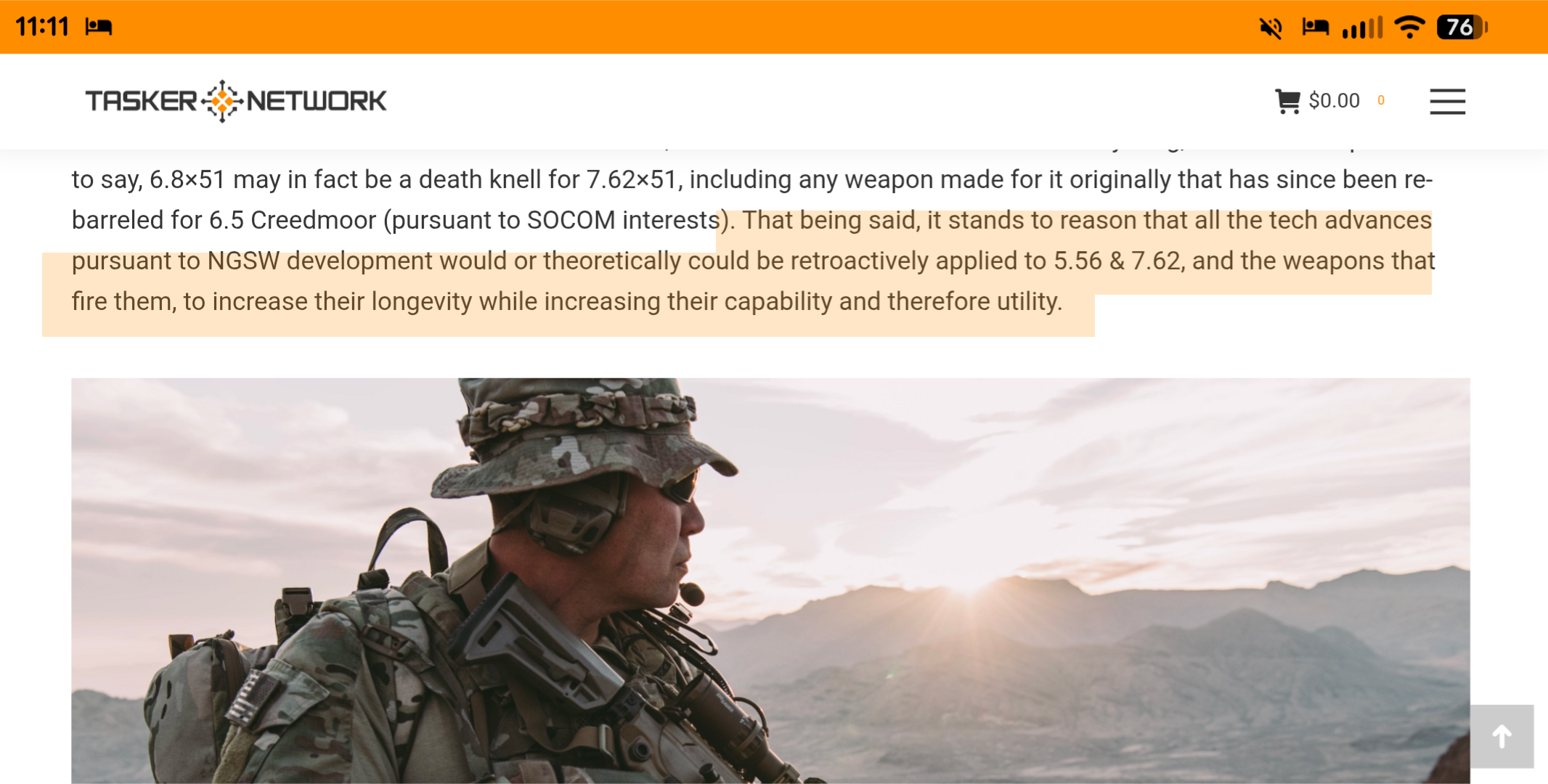
To accomplish this, new two piece shell casing technology with thinner walls resulting from stronger materials construction was developed to sustain pressure high enough to launch the projectile fast enough to do what the DOD wanted it to do (to the detriment of the system elsewhere, although that’s neither here nor there). At the time, the TASKER Network predicted that this ammo tech development would be retroactively applied to existing calibers already in the .mil armories and used in the field prior to the advent of NGSW, to impart to similar increases to their ballistic performance both over distance and on target, thereby increasing the longevity of utility to be found in those weapon systems.
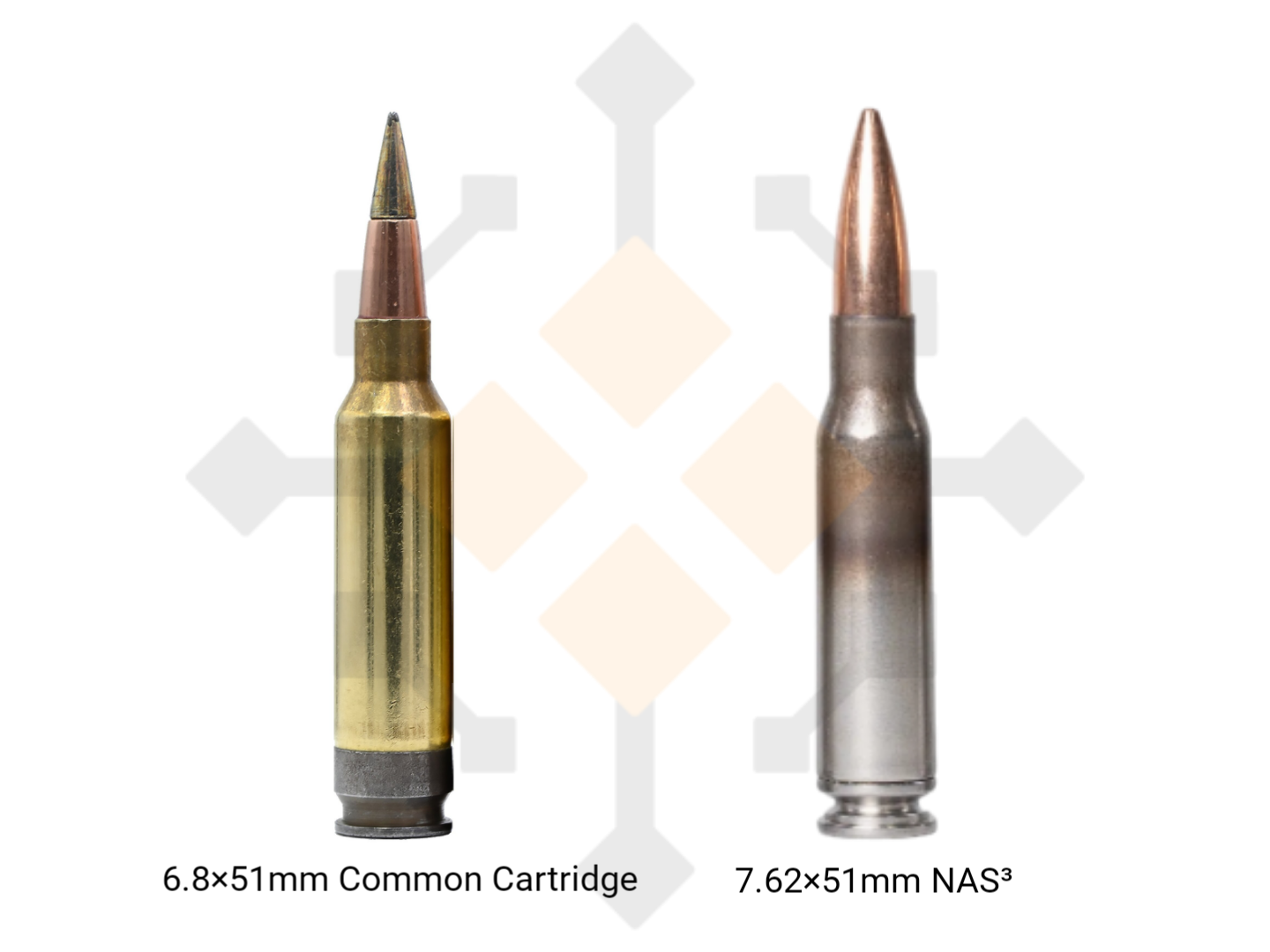
This first manifested in the form of ammo like Shellshock Technologies’ NAS³ line being developed and made available on the market; Within a year by 2023, we were able to purchase likewise manufactured ammo that utilized a two piece jacket (not unlike the 6.8×51’s bimetal shell casing) that could be loaded to higher pressures to achieve the aforementioned ballistic performance increases over standard brass cased ammo. This was the first step to harnessing the new tech developed for NGSW as it trickled down to the commercial level and began to permeate throughout the industry.
Now, SOLGW has taken the next step by embracing these new heights in capability in their full capacity with the development of the MK1, taking the AR-15 into the “next gen” era with stride as a permutation of the platform purpose built with the higher pressure ammo in mind. Having been developed to integrate into a system, the MK1 provides capabilities that weren’t previously on the market all in one package; had something in the last 20 years of small arms development that checked every box been available, the client would have simply purchased that; instead, they purchased the MK1, because that solved the problem.
In the forward thinking perspective, it stands to reason that all of the innovation that went into the MK1 in the interest of future proofing the rifle is going to set the new standard that all other manufacturers will have to meet if they wish to be taken into serious consideration by .gov purchasers in the future, and therefore raises the bar of what any comparable fighting rifle in any market will strive to match going forward.
• At the muzzle:
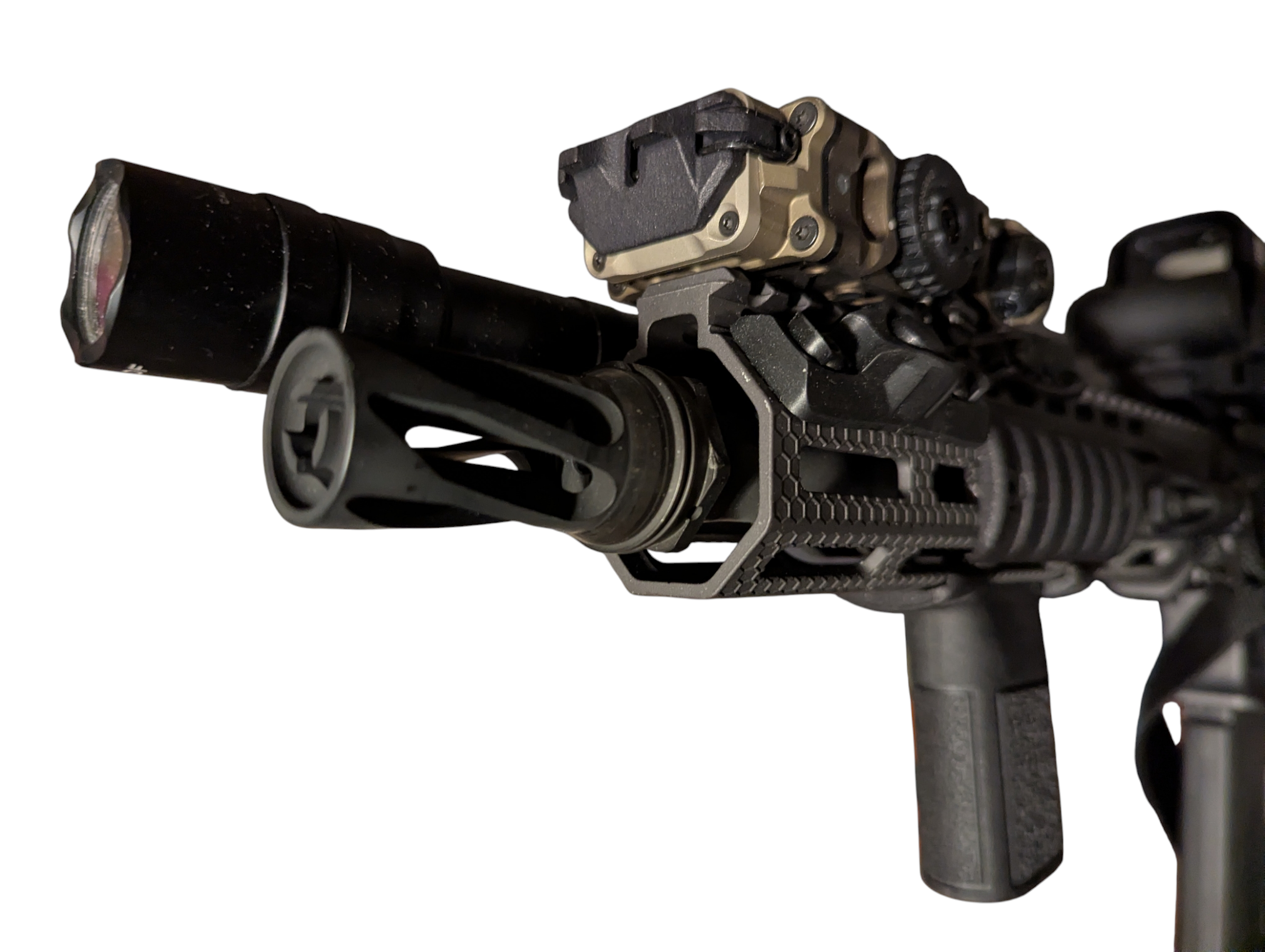
The MK1 comes equipped with a HUXWRX Flash Hider-QD 556 muzzle device, for compatibility with the “Black Magic” model suppressor chosen by the client the MK1 was developed for. While the MK1 will function with any suppressor, it was tailored to the flow through technology of the HUXWRX suppressor as part of a system as mentioned earlier. This muzzle device is a little different, though. Concealed under that HUXWRX muzzle device are 5/8×24 TPI threads, rather than the standard 1/2×28 threads commonly found on 5.56 barrels.
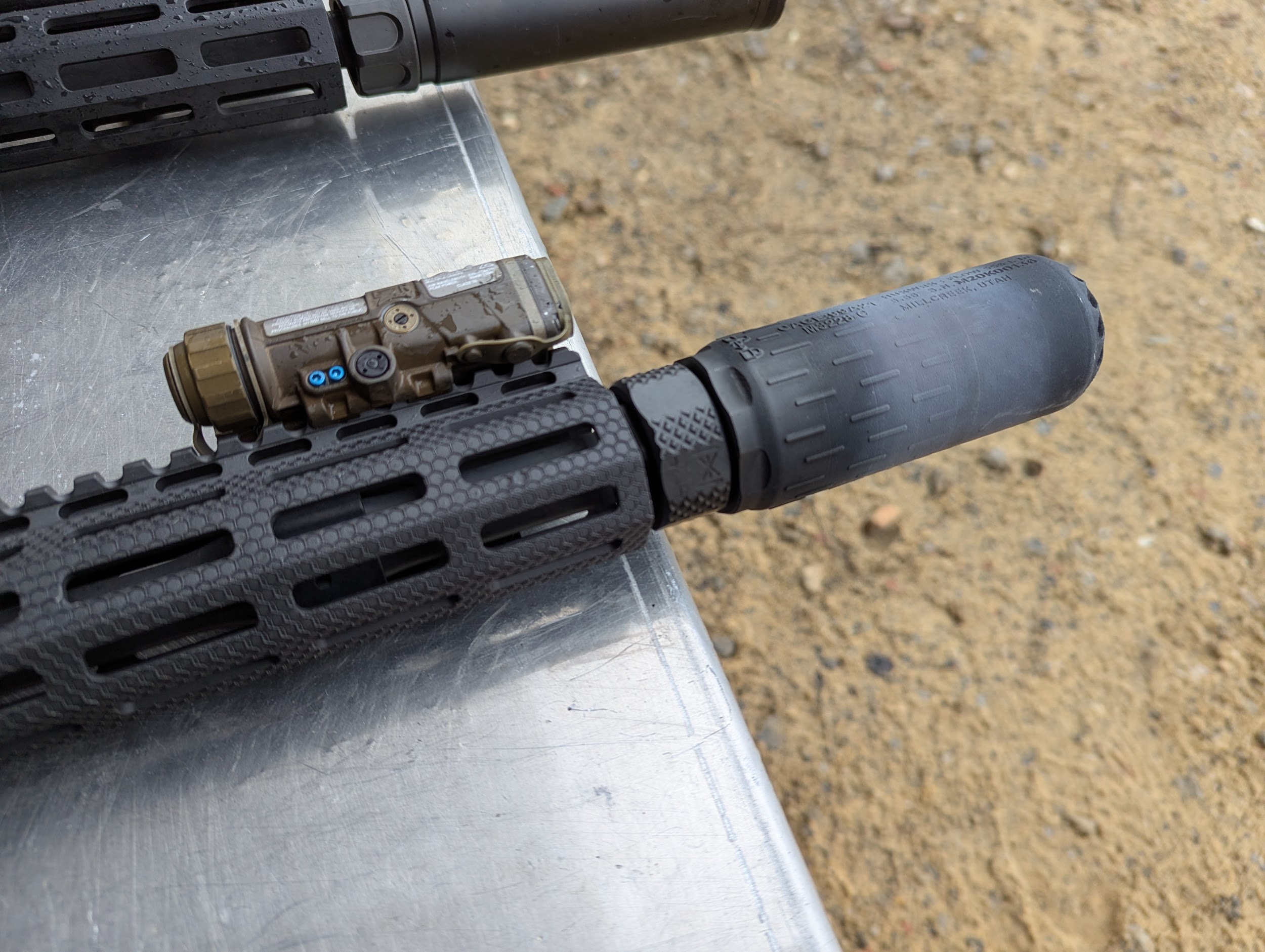
The 5/8×24 thread pitch (commonly found on .30 cal barrels like .308/7.62×51 and .300BLK) applied to 5.56 and 6mm MAX is something SOLGW has been experimenting with for the last year or so. The added material thickness at the muzzle serves as a buff over the course of the barrel’s life, improving accuracy and providing more consistent velocity while decreasing heat stringing. It’s also more forgiving towards over-tightened or improperly spec’d muzzle devices that constrict/crush/squeeze the bore, which is especially helpful with newer non-compressible copper projectiles that don’t flex as easily as lead core ammo.

If we’re going to talk about the thread pitch, we need to discuss the rest of the barrel. SOLGW has made a few enhancements here also, namely between the rifling and the materials chosen to manufacture the barrel from all together. The new P3 rifling uses three lands and grooves in a ratchet rifling-ish contour rather than the more traditional five or six, which provide for more snug surface contact with the projectile and further facilitates the aforementioned accuracy and velocity improvements.
The barrel material is the real star of the show here, and has already received some acknowledgement in the public eye: 32CrMoV12-10, also known as ARMAD, is a newer and extremely resilient metal that’s used for the contract MK1s, while the commercial versions like the one SOLGW sent use traditional chrome lined or stainless steel barrels, all with a medium contour. With traditional ammo, ARMAD barrels boost the service life to extraordinary heights of up to 70,000 rounds in machine gun testing— the chrome lining will fail before the ARMAD does— but that is not why SOLGW chose it.
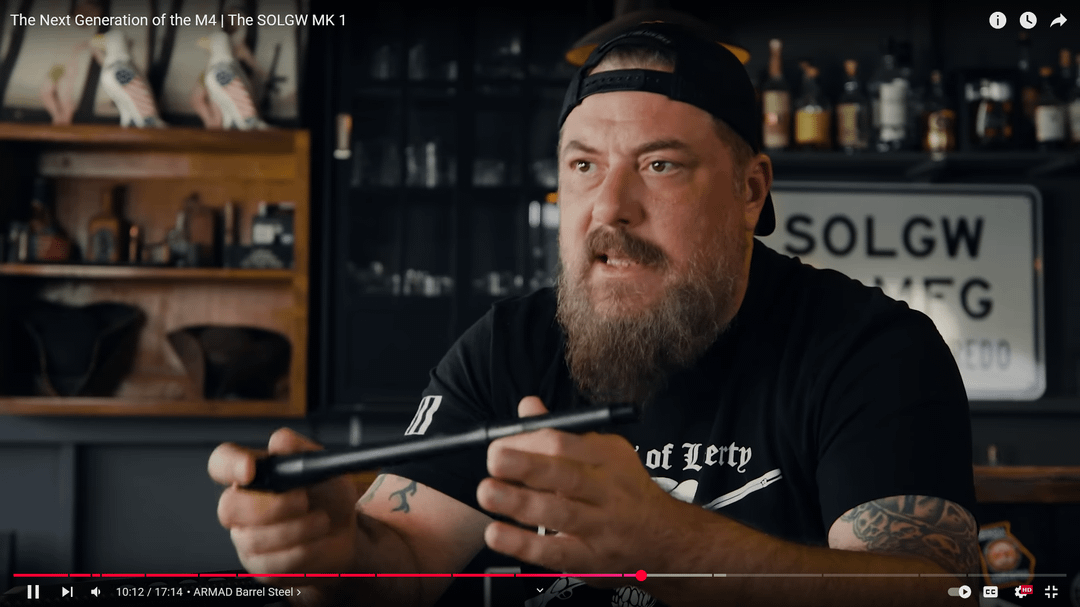
As experimental high pressure ammo is developed and tested, so too must new barrels be brought into play that can withstand that higher pressure and the heat that comes along with this new ammo with respect to the molecular effect those two things have on the barrel steel. Enter ARMAD. This material, combined with the new rifling and coating process that increases barrel life and significantly improves corrosion resistance, all goes back to engineering the rifle as part of a system for compatibility with the new frontier of ammo tech that started with the 6.8×51 from NGSW.
“Barrel tech dating back to World War II, with chrome lined hammer forged barrels, won’t survive what we’re about to ask ammo to do,” Mike says. “It would destroy a basic gun (of standard construction) within 1000 rounds.”
No answer was given on who the other nine contenders in the down select were, but the usual suspects in these waters are who we can assume: KAC, FN, LMT, Geissele, HK, SIG, Hodge, Noveske, Daniel Defense, Surefire, Colt— All known or recent awardees of DOD/DOW purchase orders in the last 20 years, between both SOCOM and the Regular Army Infantry.
So the long and short of it is simple: The ARMAD barrel’s primary purpose and the reason that material was selected is to retain the more typical 15,000 to 20,000 round barrel life that’s seen as a standard figure nowadays, when using the super charged ammo. The ability to withstand the heat from higher pressure and/or higher round counts is a significant piece to the puzzle, which is factored into the MK1 design in multiple ways.
• Along the rail:
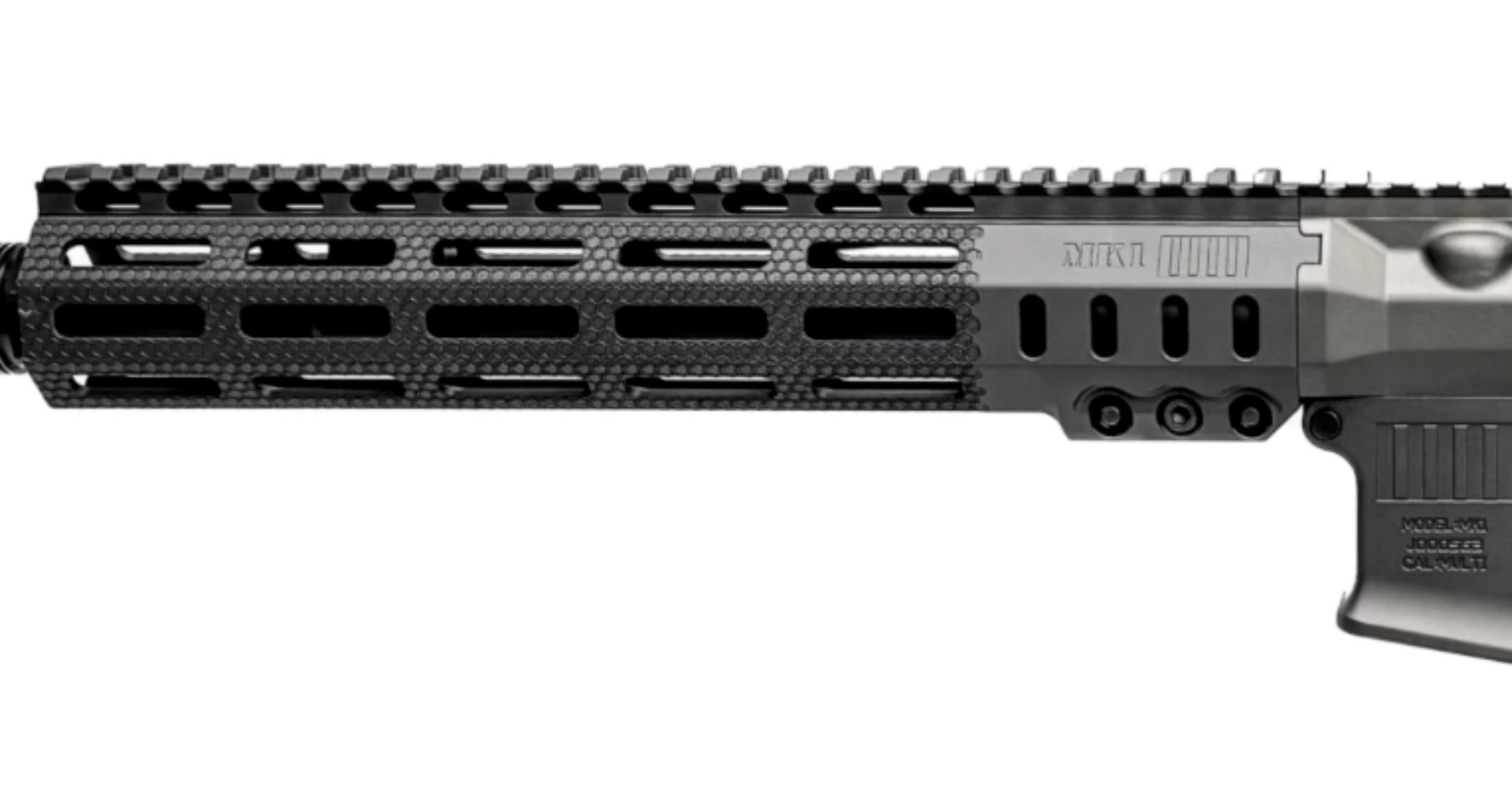
Going back to the external details of the MK1 brings our focus back to the rail, where a number of new features are immediately visible. The rail has a proprietary interface with the upper receiver to provide a stronger lockup that supports the barrel nut and barrel extension, and makes rotation of the handguard impossible while ensuring any catastrophic failures in the chamber reroute the escaping gasses down and out the magazine well rather than causing the rifle to explode in the shooter’s face. Given this proprietary construction, the rail will not be available as a solo purchase.
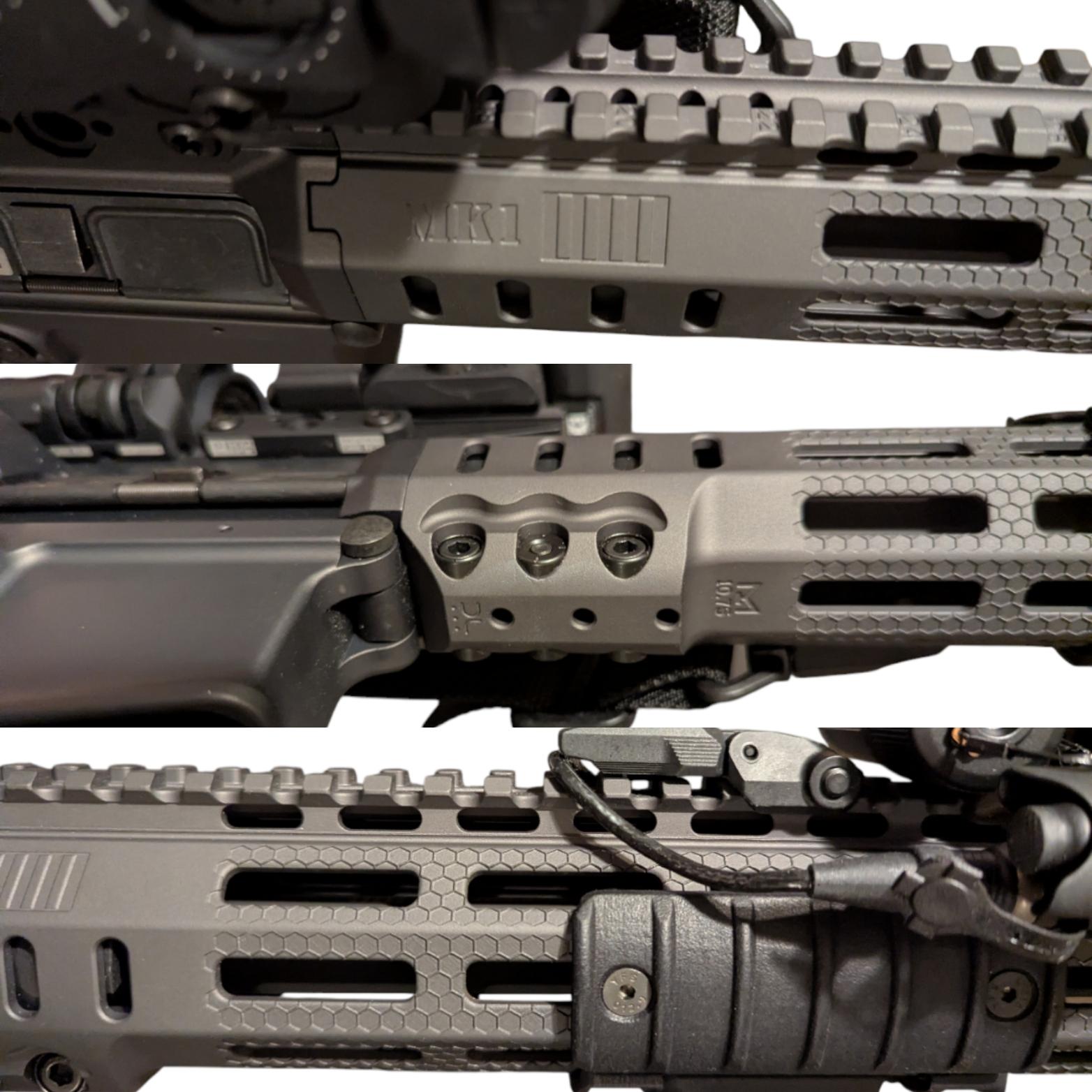
While sticking with the heat mitigation subject for a moment, our eyes are drawn to the cutouts and porting strategically placed along the top, sides, bottom, and along the length of the gas tube. While the venting on the sides of the rail plays into the revolutionary war aesthetic SOLGW has always used throughout their time in business in its resemblance to the Sons of Liberty flag, this is a fun coincidence; All of this (not seen on previous SOLGW rails) was done to help vent heat in conjunction with the M-LOK slots along the length of the handguard rail.
Mike says they’ve seen about a 30% improvement in heat mitigation from this, especially since they enable the rifle to cool down dramatically quicker; you can feel the heat venting under your support hand while shooting back to back magazines, which takes a second to get used to and realize it’s not the heated metal of the handguard rail you’re feeling, but rather the heat itself escaping.
Under the rearmost portion of that rail is the last piece of the components engineered for heat mitigation, that being the titanium 89 series barrel nut (to which the rail is secured using the Drive Lock interface). While titanium alone already disperses heat faster than steel, not immediately apparent to the naked eye is the coating applied to that barrel nut. SOLGW actually went to SpaceX for guidance on this, and ended up utilizing the same coating substance that’s used on SpaceX’s atmospheric reentry and landing vehicles. According to Mike, all together the barrel nut cools about 20% faster than comparable alternatives. Factor in the venting and the result is a quickly cooling rifle.
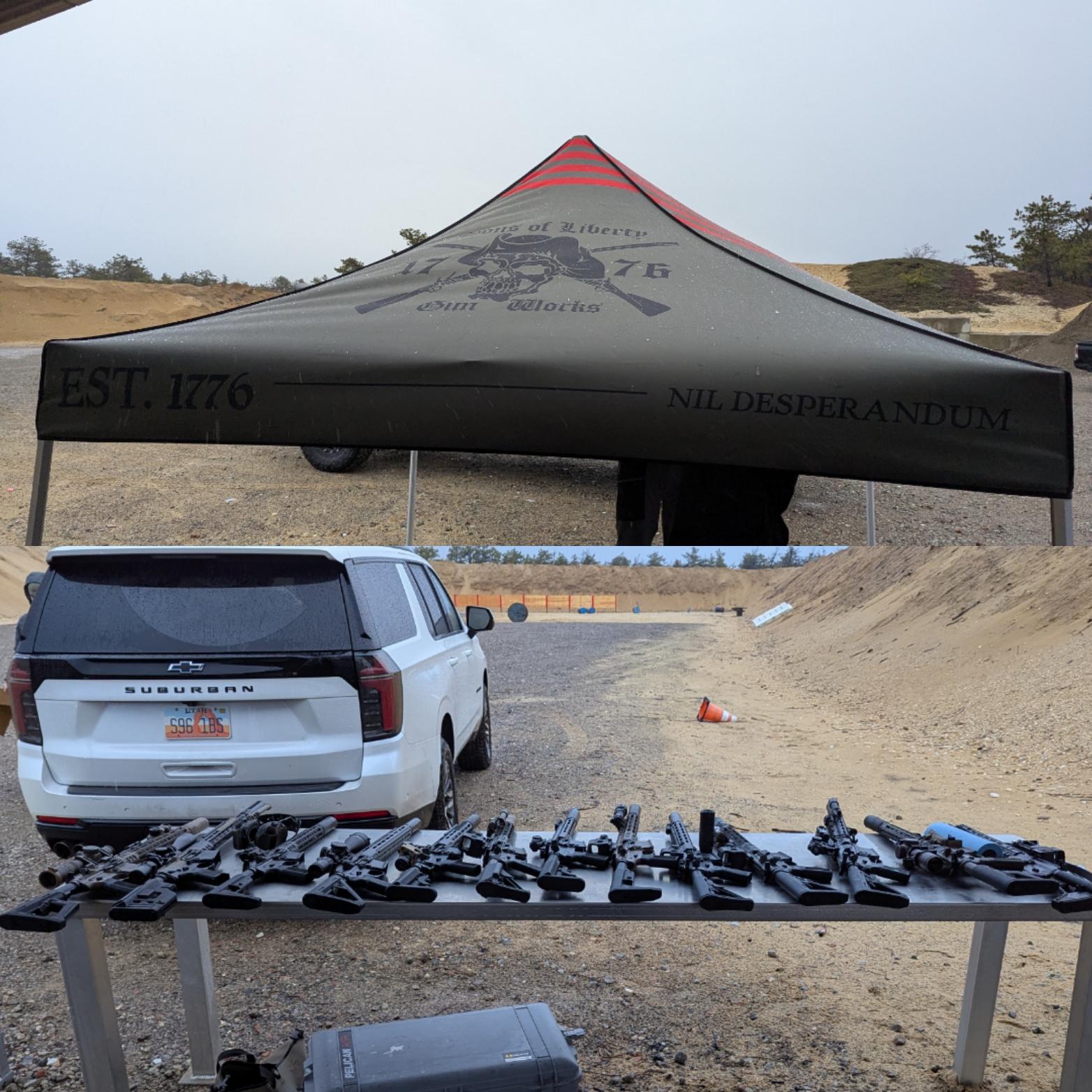
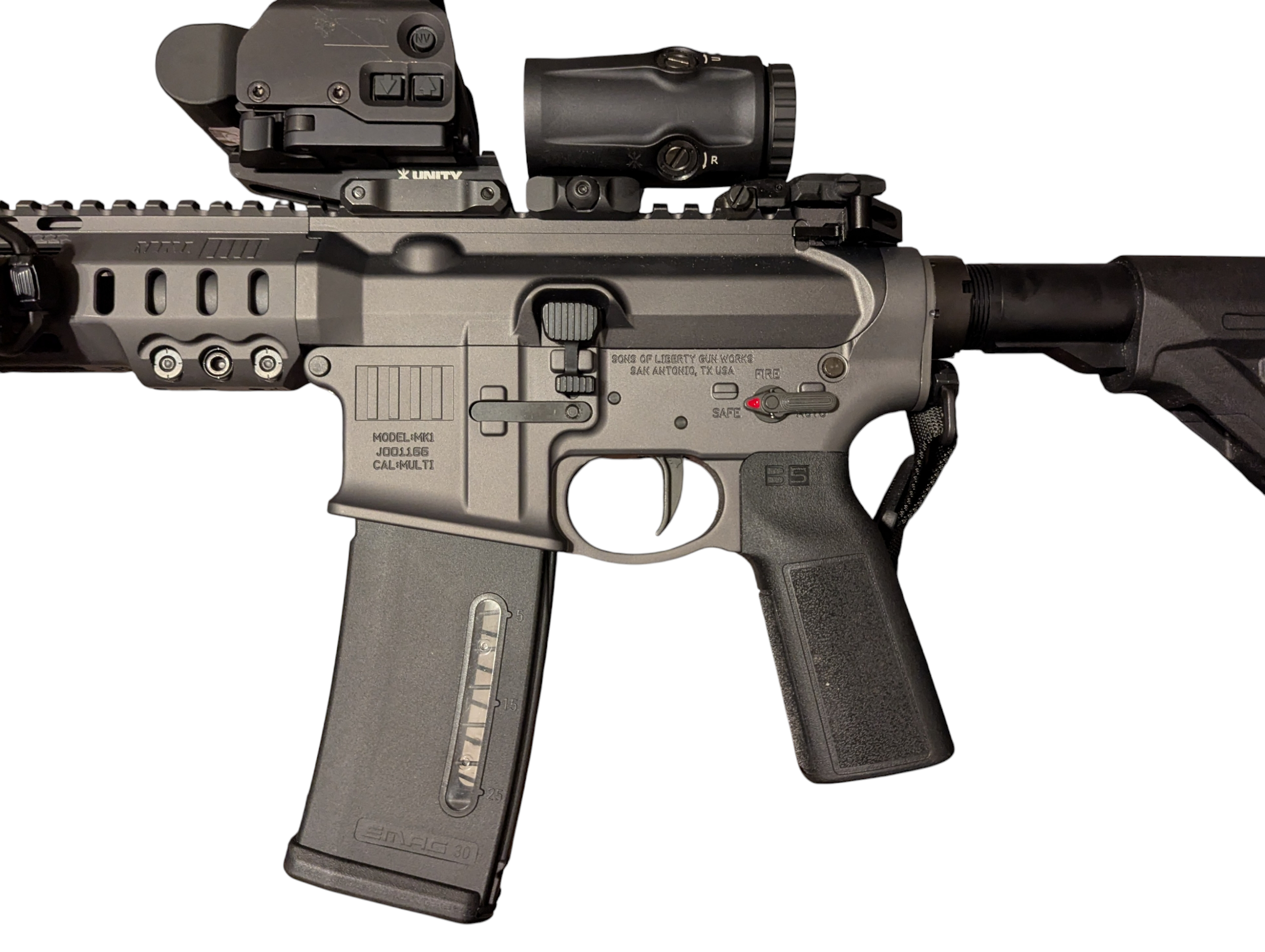
At a recent LE product demo shoot SOLGW had come to do locally, we put several magazines through a Black Magic equipped 11.5″ barrel MK1 on full auto in short order; what we found remarkable was how cool the weapon was to the touch, considering there were no polymer panels installed for additional shielding from the heat. And that was just using regular ammo, not the super charged experimental stuff.
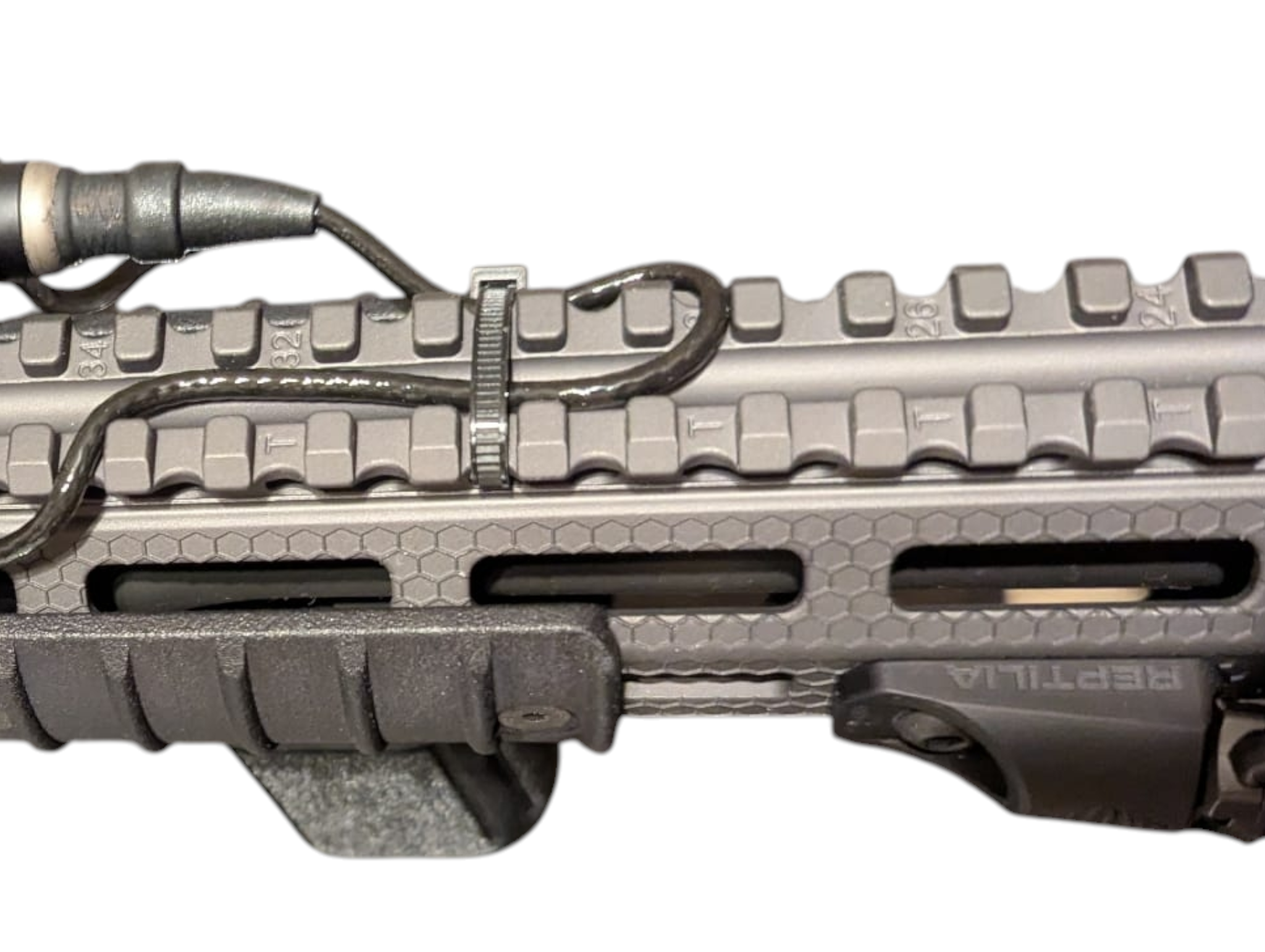
Going back to the top of the rail pulls the eye to the next immediately apparent innovation that testifies to the MK1 having been designed as part of a larger system: the cable routing channel. Running along the length of the top rail, this trench serves as a nesting place for myriad enabler cables and required raising the height of the rail to accomplish (given its depth). Whether it’s lights, lasers, or clip on NV/thermal, they’ve all got wiring that presents a snag hazard. Rather than weigh down the rifle by adding external cable routing M-LOK attachments, SOLGW chose to use the rail itself to protect the enabler cables within the existing footprint or shape of the rifle.
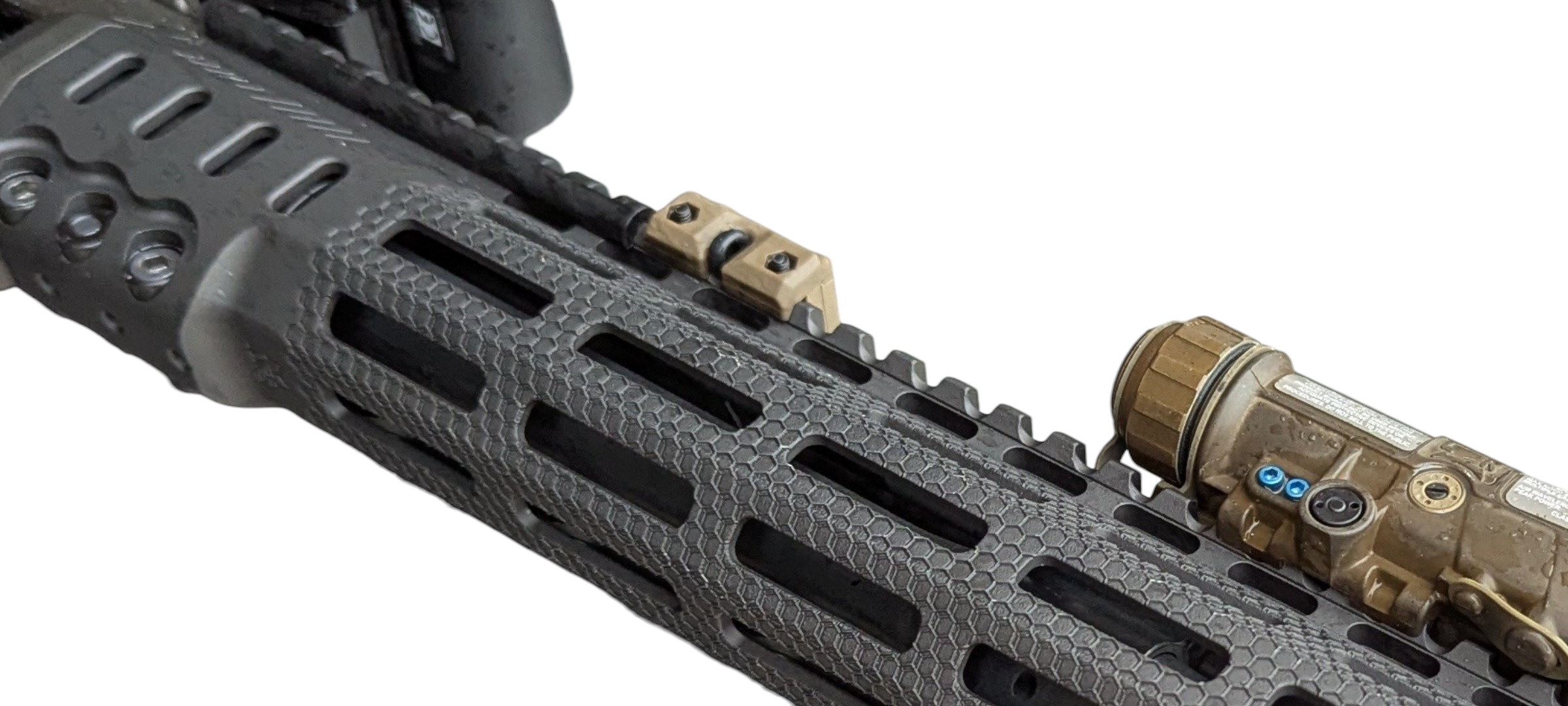
Towards this endeavor, each pic rail section is radiused or rounded (basically dehorned) to decrease the likelihood of cables being cut into by sharp edges and then further damaged by moisture seeping into the cracks of the cable sleeves. The venting along the length of the gas tube does double duty in serving as anchor points for zip ties to secure said cabling to the rifle. All told, they make it very easy to avoid the 90 degree bends in cables that become weak points during falls, impacts and snags and contribute to enabler failure. Speaking of which, the contract MK1s will be equipped with the new B.E. Meyers DAGIR-V1, otherwise known as the LA-30 SAL-UHP.
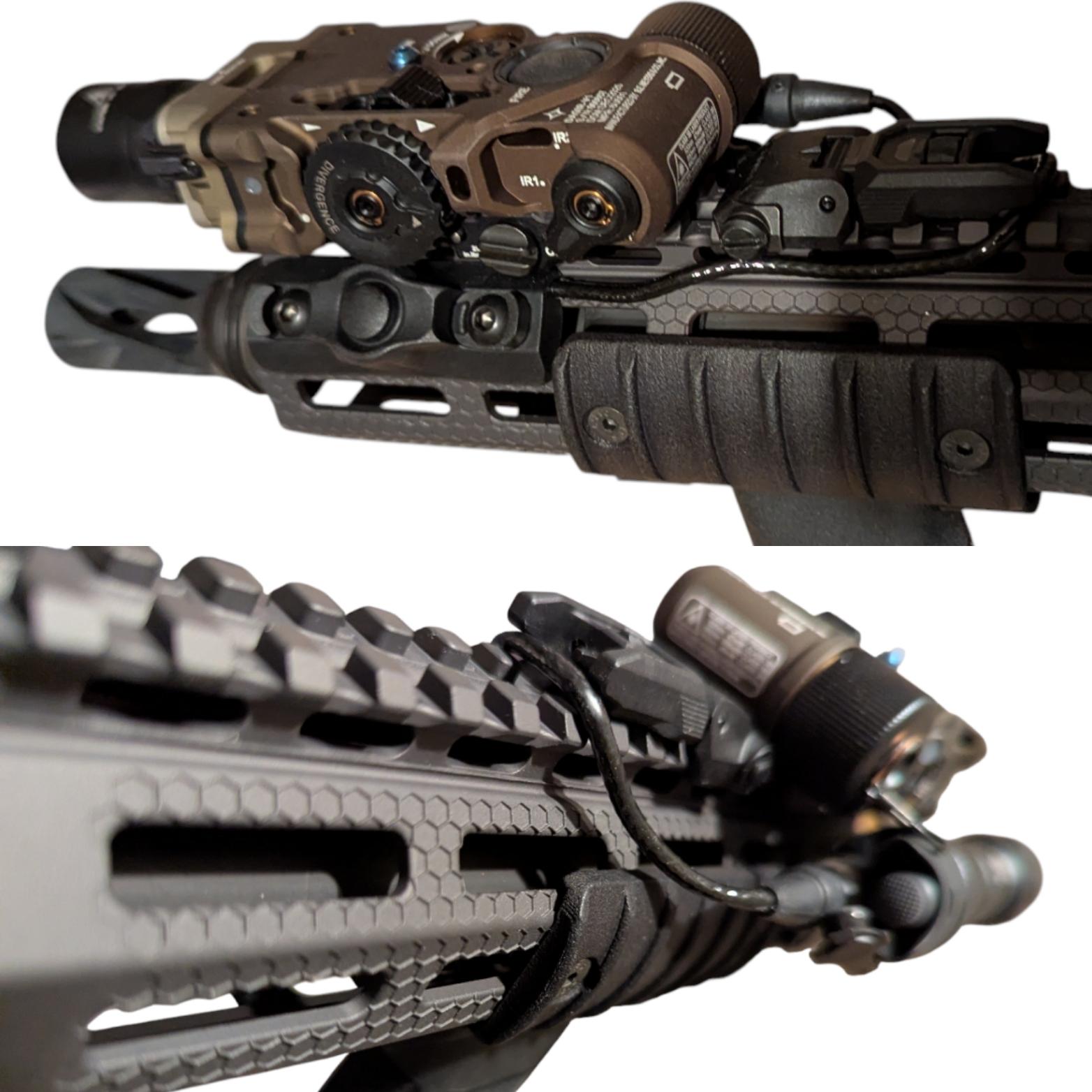
Of course, we can’t talk about the rail without talking about the stippling. Arguably the most immediately apparent aesthetic feature of the MK1, it can only be fabricated by lasering the raw aluminum rail once it’s been cut from the extrusion. The end result is an aggressively textured surface that provides for a way better grip on the rail, especially when rain, sweat, mud, or blood are brought into the mix. When wearing gloves, it really helps the shooter to lock in their grip. I’ve only ever handled the MK1 bare handed, but having worn gloves while using aggressively textured guns and grips in the past, the hexagonal stippling on the MK1 certainly has the feel that a gloved grip on it isn’t going anywhere.

Something easy to appreciate that isn’t immediately noticed is along the length of the top rail, which is continuous and uninterrupted picatinny slots. Where every AR platform rifle otherwise that isn’t manufactured with a one piece, “monolithic” upper, there are flats where no picatinny slots are machined into the rail. These flats usually appear in three locations: the rear most section by the charging handle, the interface between the upper receiver and the handguard rail, and sometimes the front most position where a front sight would be attached.
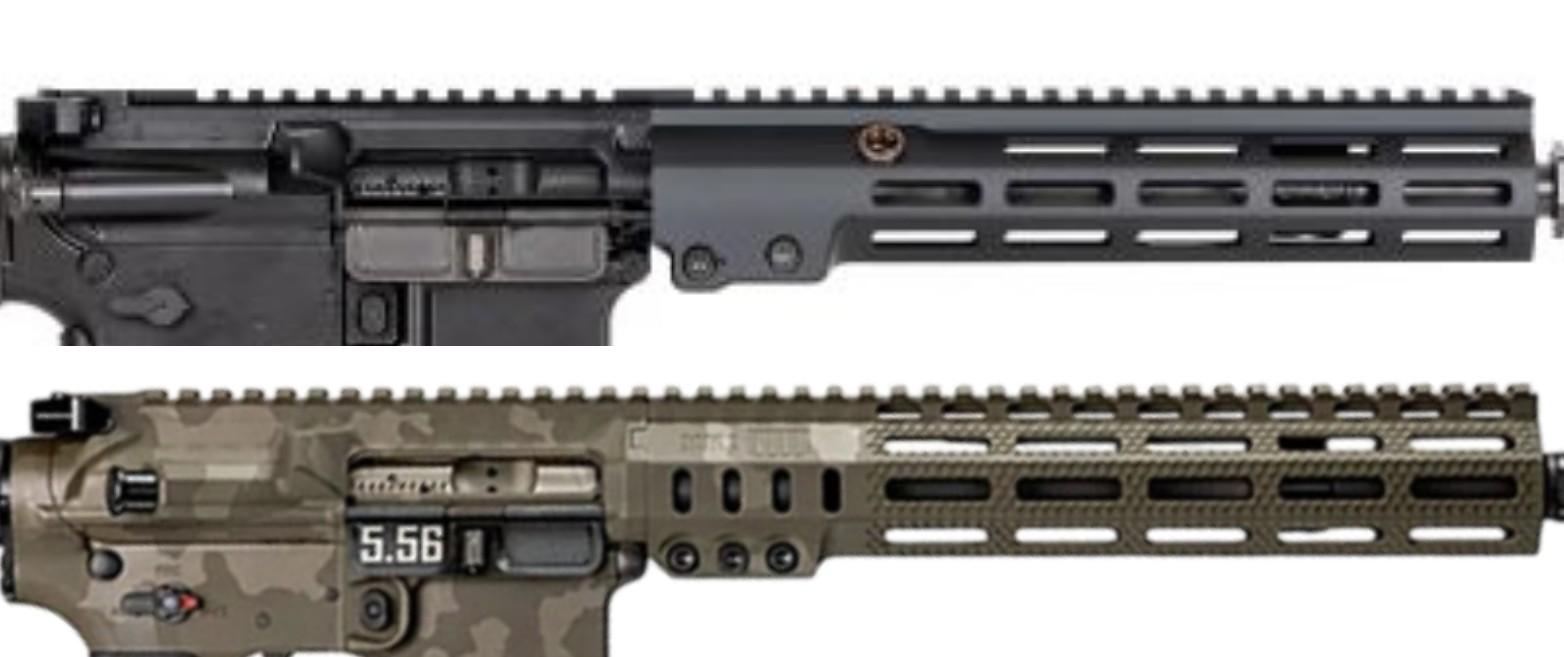
SOLGW sought to make sure all of that space on top of the gun was usable to provide more granular mounting options in response to the rapidly evolving optic and enabler products coming to market. On the MK1, the entire length of the top rail is uniform after shifting the slots over a bit to ensure there was as much mounting flexibility as possible, which especially helps on shorter guns with regard to mounting lasers and clip-on enablers.
• Under the hood & Small details
Having covered the more prominent features that stand out and are worth noting about the MK1, there’s everything else SOLGW did to be accounted for that can be reviewed quickly. Things like the added fencing to protect the mag release and bolt release from exterior bumps by gear or the environment, and the flared magazine well along with the enlarged trigger guard improve handling.
The entirety of the BCG is coated with Nickel Teflon, to make cleaning easier. The commercial versions of the MK1 utilize a C158 bolt, with an upgraded version in development. While the levers are standard manganese phosphate coated, the safety barrels are treated with NT7 coating which makes it much smoother to operate. On the contract guns, the safety barrels are made from stainless steel and then NT7 coated, to improve corrosion resilience against salt and rust since it’s considered a wear item after dragging back and forth on the detent.

The LPK’s small parts and springs are all mil-spec stainless steel on the commercial guns, and DLC coated titanium on the contract guns. SOLGW actually redefined the parts dimensions to retain proper fit and function after coating them with enough surface treatment to ensure up to 500 hours of anti salt corrosion. The MK1 ships with SOLGW’s “Liberty” 2-Stage trigger and charging handle.
The A5 buffer system, a staple of SOLGW rifles, uses an enhanced stainless steel buffer spring for added corrosive protection, with the A5H2 buffer. The B5 Systems Type 22 grip ships standard on all MK1s, and the gray anodized finish that the contract guns will use is also available commercially; it makes for a sharp appearance that’s unique in the sense that you don’t see too much gray anodizing these days, while calling back to the days it was much more common earlier in the AR-15’s life.
• Test Drive
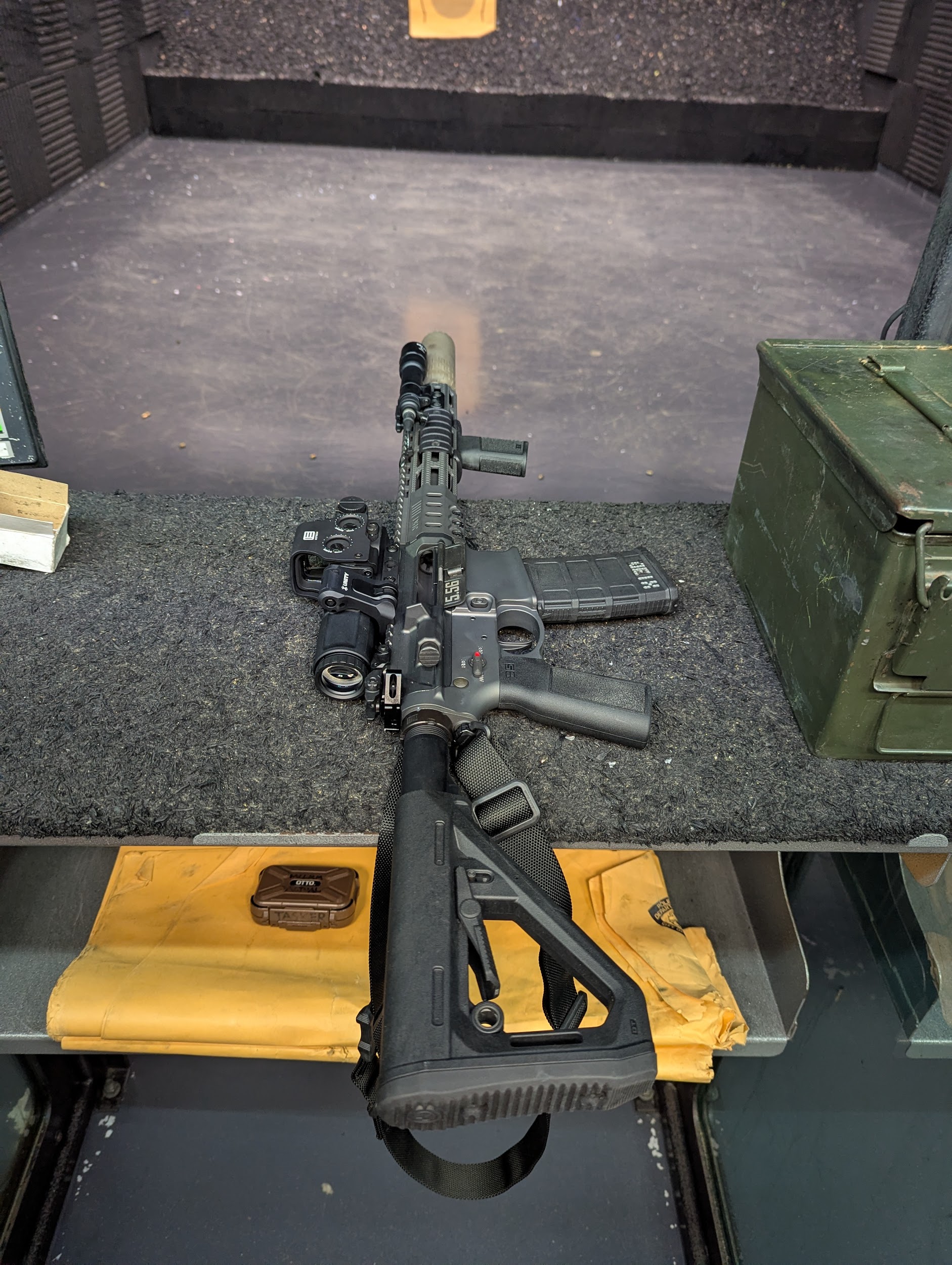
So of course, having a MK1 on hand meant seeing in person what all the hype was about. Mike explained that during the down select there was a “breaking in period” for each shooter testing the MK1; since it has mechanically true raceways without any obstructions in the buffer tube, it ends up having a much more linear recoil impulse that doesn’t rely on the weapon’s weight to stabilize it during faster strings of fire.
While this contributes to keeping the MK1 at its lighter weight for its size, it also means the rifle doesn’t torque under recoil the way we’re used to; as a result, shooters that were compensating for muzzle rise between their grip and shifting their weight over the gun reported that their groups were hitting low during bill drills. They needed a few mags to get a feel for the rifle equipped with the HUXWRX suppressor. We paid attention for this during our own spin on the MK1 and noted that with the Flow 556K equipped, the recoil impulse was extremely light and linear, and therefore much easier to keep on target for repeated shots.
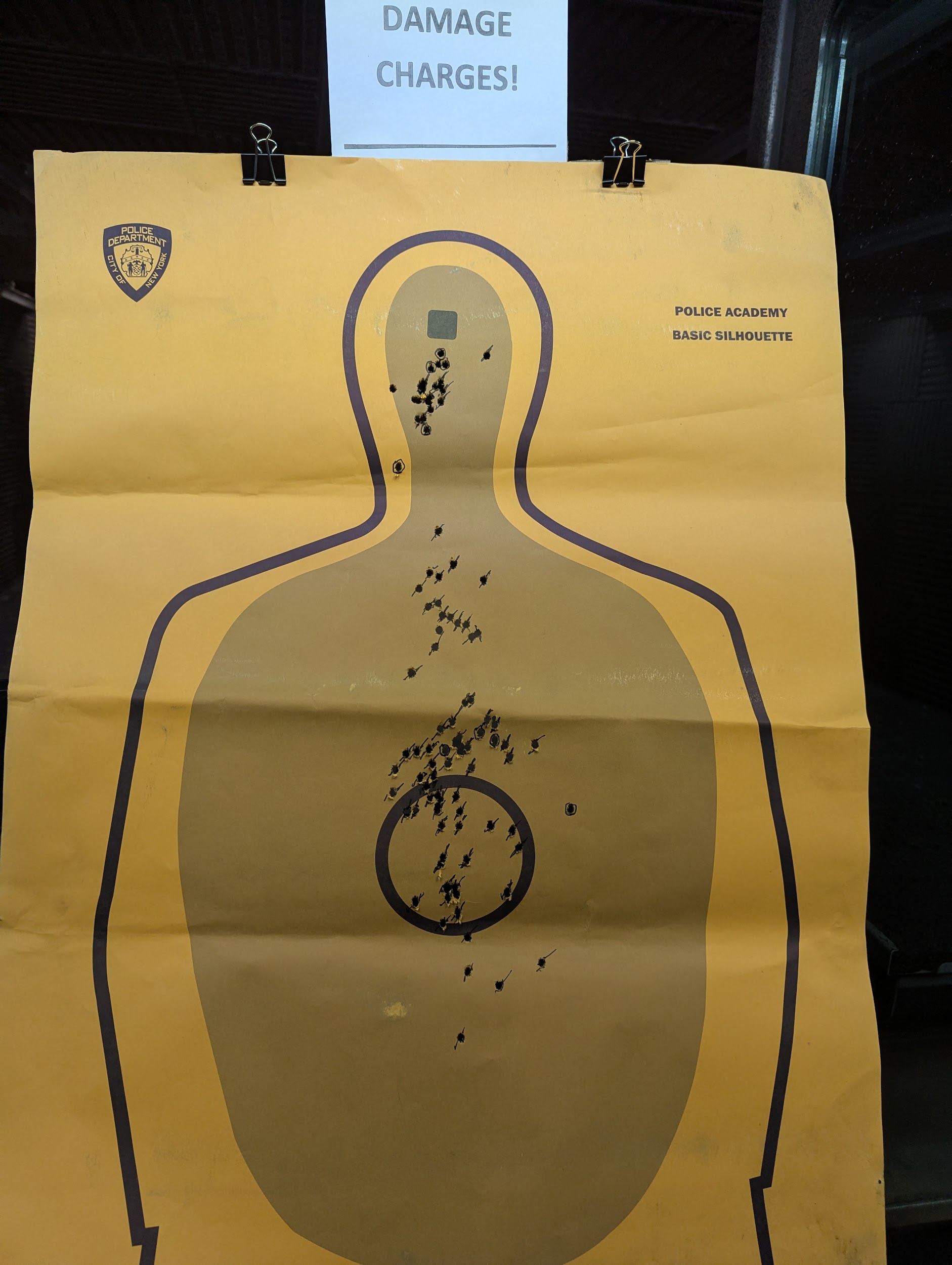
There are so many other people that have covered the MK1’s accuracy and precision capability that it would have been redundant to do the same here. It’s much easier to point you in their direction, and in the meantime reiterate that the 11.5″ MK1 performs the way you’d expect an 18″ barreled AR-15 to. A co-worker stated rather enthusiastically that the MK1 was boring in how easy it was to repeatedly make hits with, both semi-auto and with controlled pairs. On the clock, split time data showed the MK1 drilled 10% faster than its nearest competitor due to this ease in handling, during a different down select. We didn’t even zero ours by the time we shot it (a busy day job left no time for it), and though the indoor range provided only a max of 12 yards, the targets didn’t show us anything to complain about.
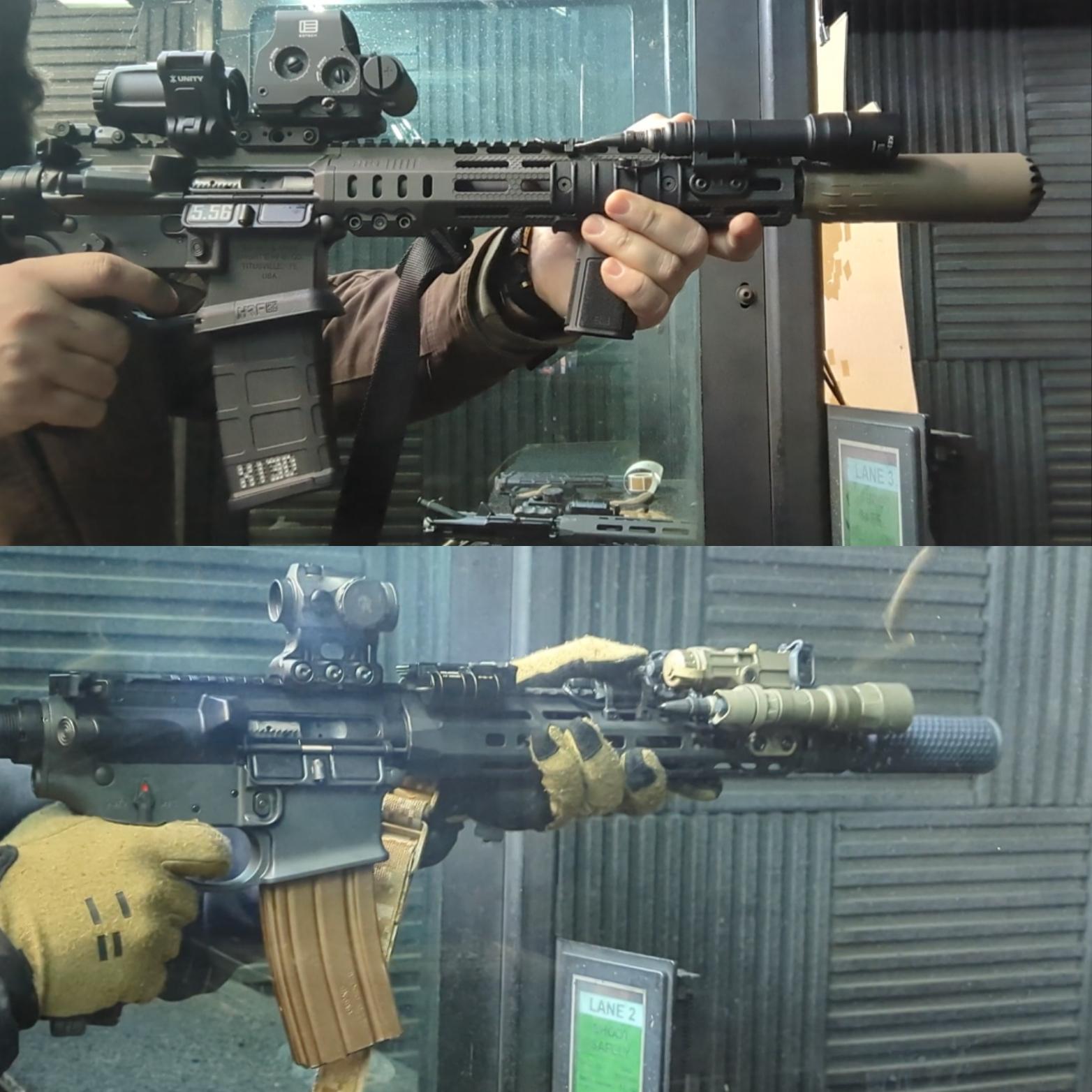
There’s been some conjecture as to whether or not the MK1 upper receiver is compatible with other AR-15 lowers on the market. The MK1 was designed to be backwards compatible with any TDP M4A1 component if needed, with the logistics of LSCO in mind; therefore, the upper half of the MK1 will work on any mil-spec lower and vice versa between other uppers and the MK1 lower. We tested this both ways with an SR-15, and both versions cycled just fine. If you come across any information suggesting that the MK1 won’t work because the back side of the ejection port cover rod channel is exposed, disregard that information and point whoever told you that to this article.
So there really isn’t much to “review” about the MK1; the quality, capability, and innovation indicative of an AR-15 with a $2700 price tag is all there, when you compare it to comparably priced rifles of the same breed. This isn’t just an EXO3 or M4-89 with a face lift; When Mike was thinking about submitting a rifle for that SOCOM contract, others balked and told him “You don’t swim in these waters,” and Mike said “Bet,” and his answer didn’t just win, it raised the bar.
SOLGW proceeded to build into the MK1 resilience and reliability like they’ve never done before (in terms of both service life and heat mitigation, combined especially with accuracy), along with the enabler compatibility enhancements, and all without introducing proprietary components. It’s easy to understand why the MK1 is seen as setting the new standard for any that would seek to follow or offer comparable alternatives. Suffice it to say, the MK1 is absolutely the SOLGW’s entry into that top shelf, enhanced quality bracket of ARs on the market more often attributed to the likes of the KAC SR-15, HK416, and Hodge AU Mod 2, and they didn’t quietly enter.
They kicked the fuckin door in.
• Going Back
In the beginning of this piece, Mike was quoted in saying the MK1 will change the geometry of the AR; in comparison to a TDP M4A1 and newer permutations since, like the Block II and the URGI, we can see what he means now that we’ve taken a closer look at the MK1. It’s not that the gross shape or size of the rifle overall is going to dramatically change, because it didn’t. But look at what went into the MK1 at the finer levels.
The raised top rail for the cable routing channel. The increased usable space along the top rail. The added texturing to the rail and fencing on the receivers.
The updated dimensional specs for the small parts to account for the thickness of the amount of coating necessary for the requisite levels of resilience.
The heat mitigation accomplished by the venting and surface treatments and material selections.
The 5/8×24 thread pitch at the muzzle. The new P3 rifling and barrel material like ARMAD that maintain precision accuracy while sustaining the higher heat and pressure of the supercharged ammo.
These were all done very deliberately. None of it was arbitrary. And now they all set the tone for what the customer at the professional level is going to look for; the minimums the rest of the industry will have to meet, and the features they’ll have to mimic.
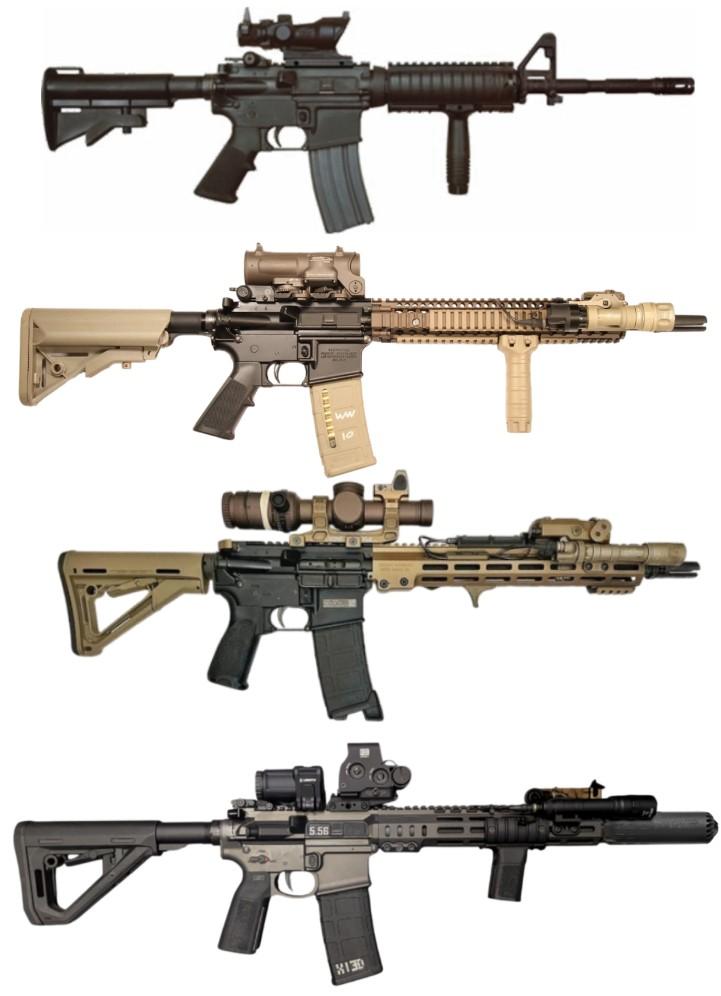
This is what Mike means when he says the MK1 will change the AR’s geometry. We can say without doubt that the geometry of a TDP M4A1 is noticeably different from that of an M4A1 Block II, or the later URGI version; incremental changes that brought the weapon into modernity as time and technology progressed, like going from a drop in quad rail to a free float quad rail to a free float M-LOK rail to a free float M-LOK rail that integrates with the upper receiver with heat mitigation exhaust ports, cable routing, and grip texture all built into the rail. Here it has happened again, and in a world where enablers that cost $120,000 are mounted to a $4,500 rifle being carried by guys that have a big enough budget to special order their own custom helicopters, two things become apparent:
1.) Technically, the rifle is now the accessory, if you’re comparing the costs of enabler, optics, lasers, and all the money being thrown around.
2.) The MK1 wasn’t an end of year budget justification expense when it was being purchased by an organization that can get whatever it wants; it gave the organization what it wanted.
• The New Prediction
Let’s call it. High pressure is the future of ammunition for the military, but as we speak the ammo and gun(s) are in co-development. It’s not like the supercharged ammo is completely refined and sitting on the shelf waiting on the guns and vice-versa. Pressure will increase, case technology will continue to develop and projectiles will develop as well. The guns are also getting stronger, lasting longer, while also trying to maintain some semblance of shootability. Where will this new frontier take the industry?
DISCLAIMER: The following is native speculation based on known or existing features and technology currently available or in development across the industry; a “What if?” look of sorts at their application and combination going forward. None of this is attributed to SOLGW or claimed by them to be in development for their product offerings going forward.
According to SIG, the 6.8×51 Common Cartridge is loaded to around 80,000 PSI (over the SAAMI standard 55,000 to 62,000 PSI), though it can be loaded up to 125,000 PSI. They say they download it to increase component longevity. That pressure is extremely high already, but now consider also that RUMINT suggests pressure capabilities of up to 140,000 PSI with this new ammo tech brought forth by NGSW as Crane and the Army Research Lab continue to develop it.
I was talking about this with a friend of mine that recently got into reloading ammo. Incredulously he responded, it’s not possible to fit enough powder in a casing to cause a blast with that much pressure, and still have room for that pressure to build; How could this be?
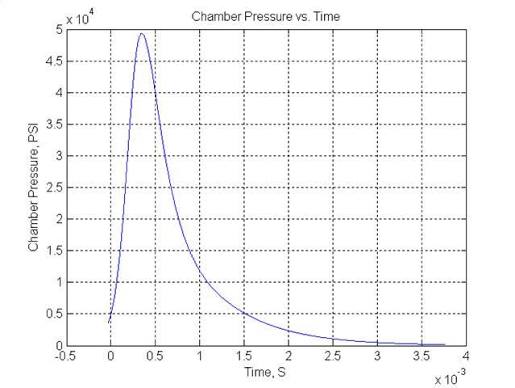
Logic and deductive reasoning would suggest that the DOW has developed a new powder that is more than capable of burning to produce such a high pressure to therefore move the projectile at speeds high enough to achieve overmatch and armor defeat against a near peer infantry, within the confines of these new two piece casings. With those boxes checked, let’s follow the trail of where else that leads us.
This added pressure resulting in added speed (with mid 80K PSI pressures seeing close to a 400 FPS increase) also results in decreased drop at distance, a flatter trajectory in other words. Since the projectile is flying out to distance faster than gravity can pull it to the earth at the same rate of a standard projectile loaded to 55K PSI, the ballistic coefficient has now jumped for that projectile: With increasing velocity more than 300 to (possibly) 800-1000 FPS more for certain 5.56 projectiles (the chronograph image below compares 77gr MK262 to 73gr high pressure ammo from an 18” barrel, for instance), resulting in MPBR distance increases as well as increased distance for speed, drop, and less holdover than normal. This allows for “point and click” shooting within 300-400m in some cases.

Let’s combine that with the innovations of the MK1 we went over in detail.
The ARMAD barrel steel is comparable to that which HK used in HK416 in the context of the extended service life with standard ammo it provides for. But the enhanced ammo affects the barrel steel at the molecular level due to the added heat and pressure, therefore necessitating the various heat mitigation innovations that SOLGW applied to the MK1. A standard CHF CL/Nitride barrel using this enhanced ammo would be destroyed in under 5000 rounds.
Now throw the P3 rifling into the mix, and remember that the 11.5″ barrel MK1 is boasting 18″ barrel SPR ballistic performance, and combine it with a concept like gain twist rifling that starts slow and speeds up along the length of the barrel. Think about how that might be beneficial with the super charged ammo’s ballistic performance, and the effect of its heat and pressure on the barrel’s throat.
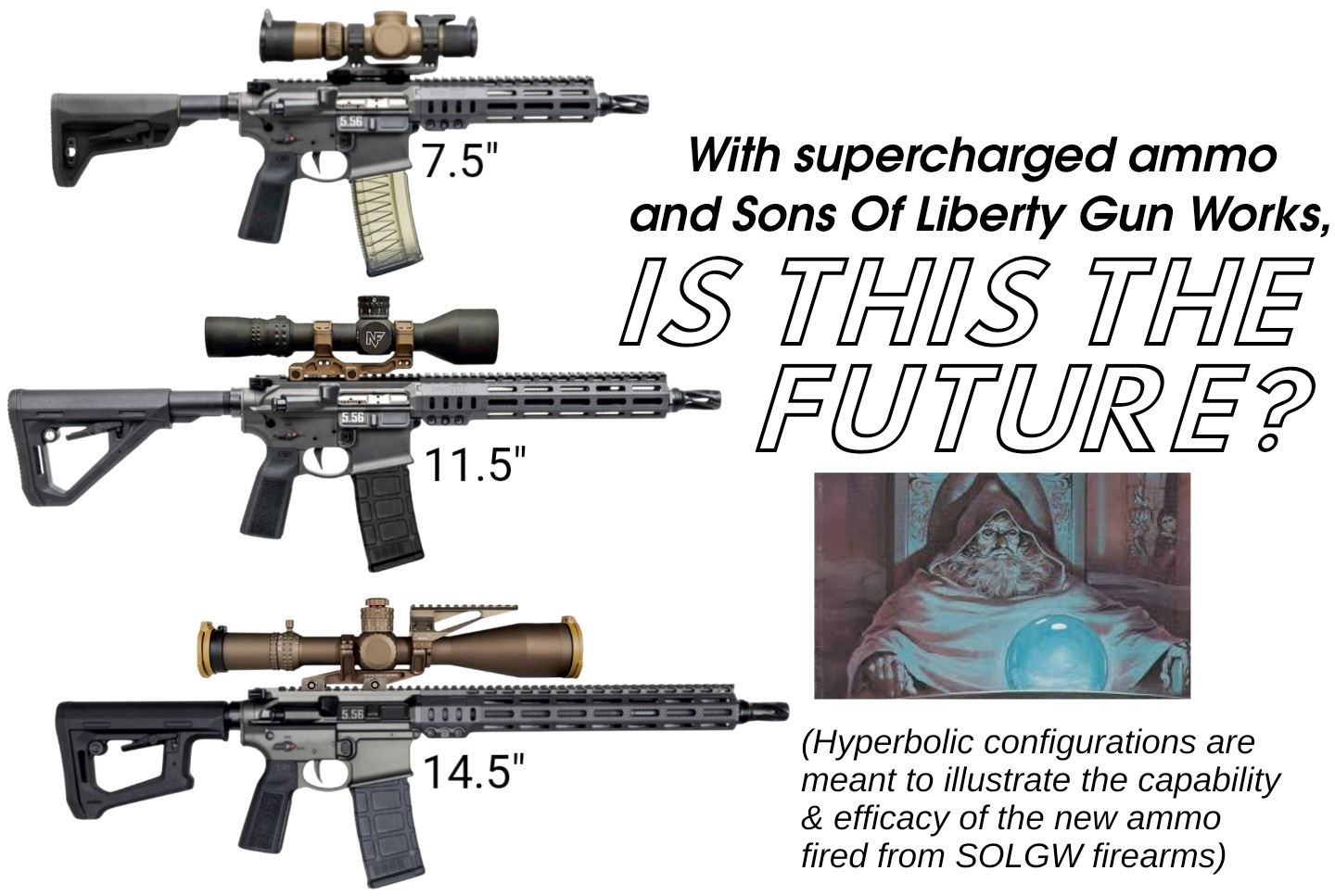
All together, if you could therefore imagine an AR platform rifle with a barrel length between 7.5″ to 14.5″ that has a performance capability envelope comparable to that of the longer (18-20″) rifle length configurations of the AR-15 because it’s pushing something like a 75gr projectile to the tune of 4000FPS, you have now rendered those larger configurations obsolete as you have retained their specialized capability and performance in a GPR (or carbine sized) package, in conjunction with all the heat mitigation, elemental resilience, and enabler compatibility accoutrements SOLGW came up with.
That’s already crazy to consider, but this doesn’t stop with 5.56 however. The same can be done with 7.62×51, 6.5 Creedmoor, 6mm ARC, 6mm MAX, .300BLK, etc. It was previously concluded that merely swapping an SR-25’s barrel to one chambered in 6.8×51 wouldn’t make it able to handle the increased (80K-125K PSI) pressure of the Common Cartridge ammo; but with an ARMAD barrel and all the other innovations SOLGW brought to the AR platform, a MK1 style Large Frame AR chambered in 6.8×51 not only seems feasible, but also believable and perhaps even likely, because SOLGW just introduced those capabilities to the SOCOM ecosystem and pulled a Deebo on the 2008 Obama Campaign in saying “Yes we can,” and so delivered.
Imagine that. The M7 would follow the SCAR in irrelevance, and all the MRGGs and M110s probably wouldn’t be far behind.
Stay Dangerous.
Stay in this L.A.N.E.